What Can Architects and Urban Planners Do About Climate Change? A UCLA Arts Conference Seeks Answers
The Green New Deal is a congressional resolution introduced in the House of Representatives on February 7, 2019, by Representative Alexandria Ocasio-Cortez of New York and Senator Edward J. Markey of Massachusetts.
The brief resolution (only slightly more than 2000 words) acknowledges that “human activity is the dominant cause of observed climate change over the past century.” Such dire outcomes are noted throughout the proposal: global warming will cause mass migration, wildfires, a loss of more than 99 percent of all coral reefs, nearly half a billion people exposed to deadly heat stress, to name only a few.
It also recognizes that climate change is not simply an environmental problem — but a socio-economic issue, affecting vulnerable communities and exacerbating social inequality. The resolution seeks to achieve a net-zero carbon footprint in the United States economy while creating millions of sustainable, well-paying jobs in clean energy industries.
UCLA Arts Professor Dana Cuff, center, and conference attendees listen to panelists discuss how to avert the climate crisis. (Patrick Shao / UCLA Arts)
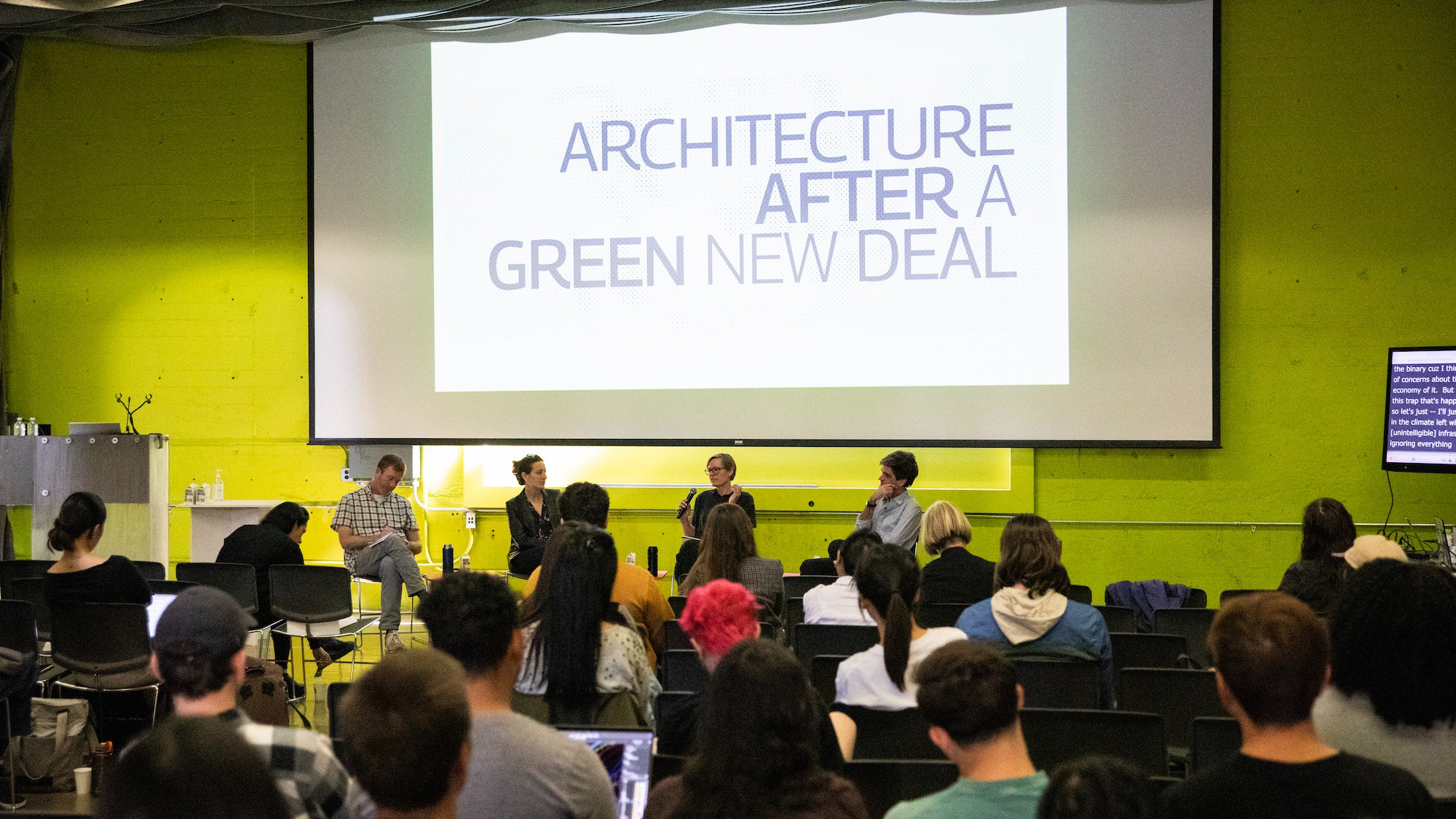
Architecture Ph.D. candidates Dexter Walcott and Shota Vashakmadze’s two-day conference, "Architecture After a Green New Deal," hosted by the UCLA Department of Architecture and Urban Design, within the UCLA School of the Arts and Architecture (UCLA Arts), drew inspiration from the congressional resolution. The conference aims to avert climate disaster by creating an opportunity for dialogue between architects, scholars, urban designers, and environmentalists.
The conference kicked off at Perloff Hall DeCafe on Friday, Nov. 3, with an introduction by department Chair and Associate Professor Mariana Ibañez. Subsequent speakers included UCLA Arts faculty such as Cristóbal Amunátegui, Michael Osman, and other esteemed guests.
“At the Department of Architecture and Urban Design, we spend equal amounts of time trying to answer questions that respond to the great challenges of our time as we try to formulate new questions we think we should be asking,” Ibañez said in her opening remarks. “We are now asking what it is that architects, urban designers, planners, and others involved in shaping the built environment can do to become better stewards of the environment. Architects are good at synthesizing complex sets of information, and I trust that that skill will help us contribute to this enormous challenge that is the climate crisis.”
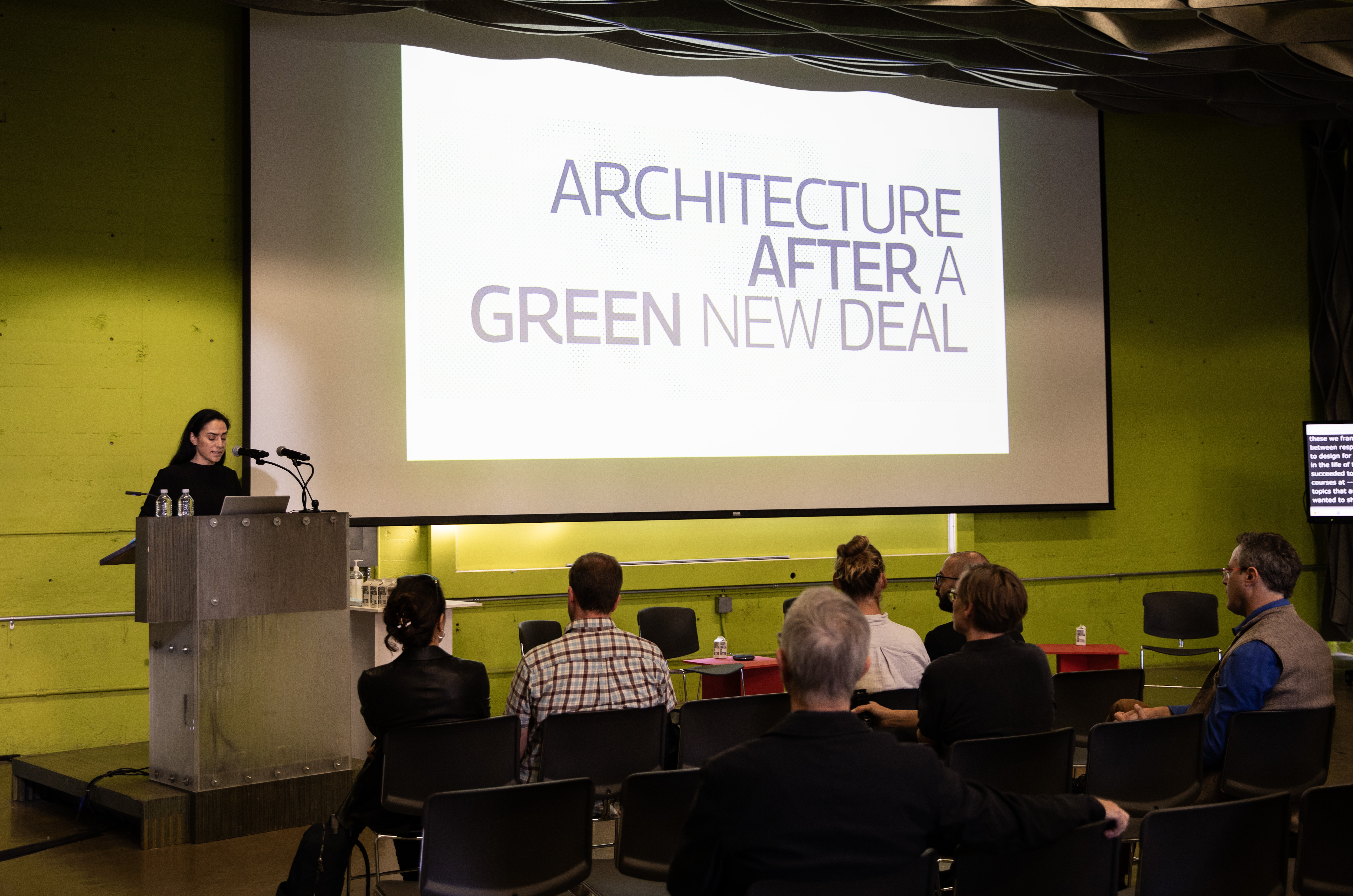
Department Chair and Associate Professor Mariana Ibañez, left, delivers the opening remarks to the two-day conference. (Lucza Brewer / UCLA Arts)
Walcott and Vashakmadze first conceived of the conference in 2022, with the intention of centralizing climate in their work at UCLA by linking critical studies to design pedagogy.
The conference, however, is only one part of UCLA’s larger commitment to sustainability and climate justice. In 2013, UCLA launched the Sustainable L.A. Grand Challenge with the goal of developing the technologies, policies, and strategies to transition L.A. County to 100% renewable energy, 100% local water, and enhanced ecosystem health by 2050. All of this is intended to transform Los Angeles into a green global model.
In the intervening decade, several major milestones have been reached such as the creation of the L.A. Sustainability Leadership Council, co-chaired by former L.A. Mayor Eric Garcetti and UCLA Chancellor Gene Block, to strengthen the partnership with the city and other regional leaders. The initiative also contributed research and expertise to L.A. city’s aptly-titled sustainability plan, L.A.’s Green New Deal.
Multiple UCLA Arts initiatives and research centers also focus on environmental justice and sustainability. The Department of Architecture and Urban Design’s cityLAB has long been leading discourse around sustainable, equitable urban planning through research and design. Dana Cuff, cityLAB director and UCLA Arts professor, moderated the conference’s panel on public policy.
Similarly, the Department of Design Media Arts’ Counterforce Lab, directed by UCLA Arts Professor Rebeca Méndez, has addressed the ecological crisis and environmental injustice with art and design since its inception in 2015.
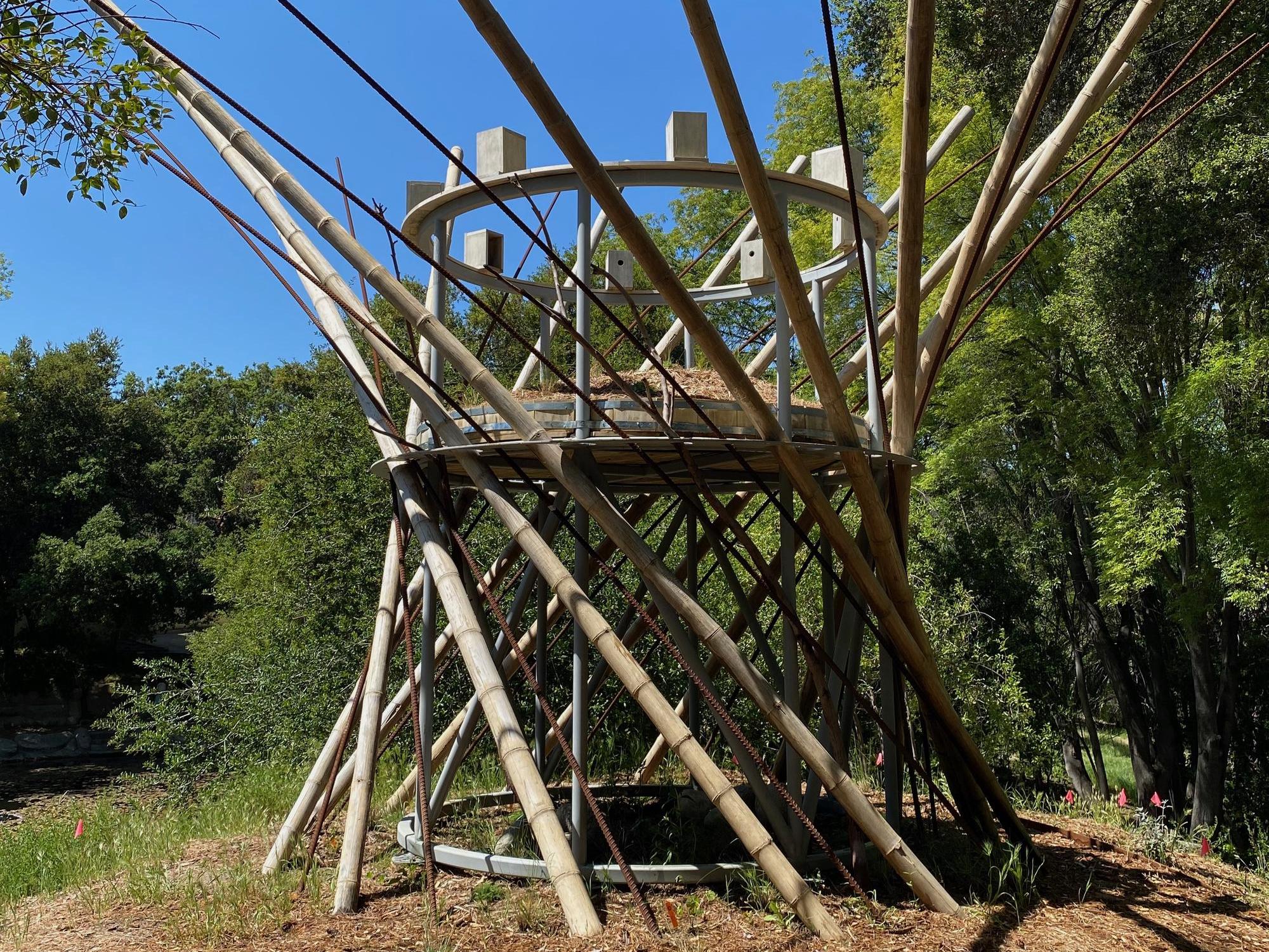
Counterforce Lab’s Biophilia Treehouse is a public arts initiative to create and grow living sculptures using native trees and plants that constitute a complete ecosystem for some of L.A.’s most threatened birds. (Counterforce Lab / UCLA Arts)
Together these UCLA initiatives acknowledge that the climate crisis is a complex issue that can’t be easily resolved with a one-size-fits-all solution.
“For many years, climate discourse was about technical problems. However, many of the aspects of climate change which challenge us as a society are social and political problems,” said Walcott. “Man-made climate change is and will change everything about our world and architecture’s place within it. So the questions that are before us at this conference are how do Green New Dealers see the change happening, and how will architects be a part of this type of change?"
Stephanie Carlisle, senior researcher at the Carbon Leadership Forum, provided a response to Walcott’s query. She noted there are thousands of architects working for the General Services Administration, an independent agency of the United States government established to help manage and support the basic functioning of federal agencies.
“A lot of the profession seems to not acknowledge they even exist,” said Carlisle. “Most licensed architects don't build any affordable housing and don't know how to. If there's a concern for making the profession relevant, it's less about how we can get paid more, and it probably should come from a place of how we can be of service.”
After many thought-provoking presentations and discussions, day one concluded with food and music in Perloff Hall’s courtyard, creating an opportunity for further dialogue.
The conference reconvened the following morning for an afternoon of smaller, more conversational working groups composed of students, faculty, Friday’s panelists, and the public. Topics included architectural practice, public infrastructure, organizing for a Green New Deal, and theories of climate justice.
Conference co-organizer and Ph.D. candidate Dexter Walcott, center, leads a working group on day two of the conference. (Patrick Shao / UCLA Arts)
The small groups read an assigned reading and then collectively worked to see what small-scale actions could be taken given content that was presented the previous day. The groups sought to mobilize the broad, interdisciplinary perspectives shared by conference presenters toward actionable questions of what architects can do in each of these spheres.
“A Green New Deal offers architects an unprecedented opportunity to contribute to the broadest, shared goals of social and environmental justice,” Walcott and Vashakmadze said in a collective statement after the conference. “The process of designing and implementing a Green New Deal — of its policy goals being materialized in built works — can produce an enduring legacy in both the built environment and in a renewed, democratic social contract. This is an opportunity for architects not only to imagine new projects, but to realize them in the collective project of a just transition.”
By Sean Arenas
Header image: Carbon Leadership Forum Senior Researcher Stephanie Carlisle, center, speaks on a panel moderated by UCLA Arts Assistant Professor Cristóbal Amunátegui, right. (Lucza Brewer / UCLA Arts)
Stay engaged. Use #UCLAarts to stay connected.


