Zoom fatigue is real: here's how to prevent it
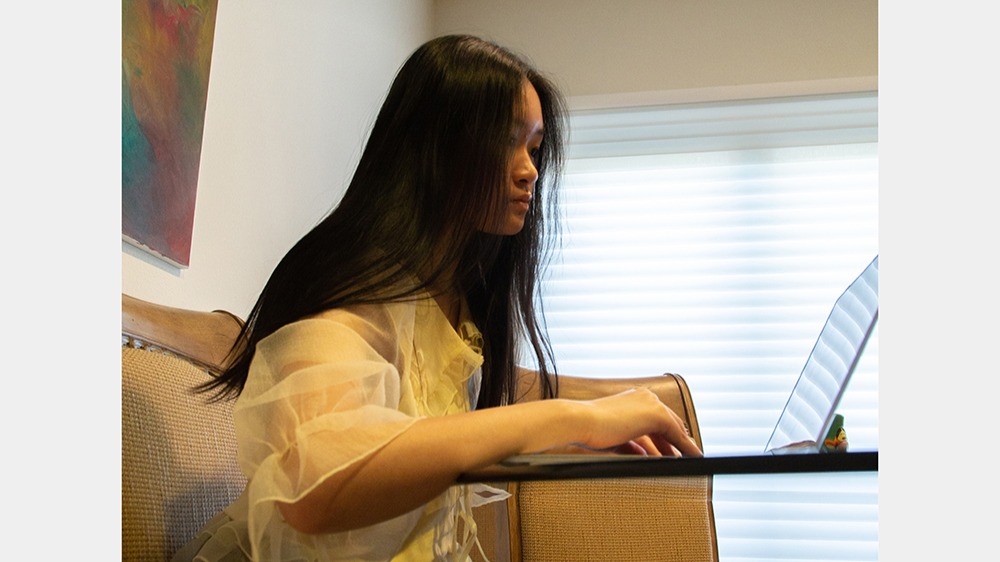
We’ve now reached the one-year mark of the COVID-19 pandemic and UCLA's move to remote learning and instruction. Students say they are feeling burned out by video chat platforms and work that requires looking at a screen.
A survey that students conducted in January found that students across the UCLA School of the Arts and Architecture are averaging 14-15 hours per week of Zoom for classes, and another 13-14 hours of Zoom per week to complete their coursework. Additional hours are spent on Zoom for work study, internships, and extracurricular clubs and organizations, leaving students struggling with too much screen time and too little free time.
“I think students are adjusting as best as they can, but I think there just needs to be more empathy with that. And that can come in the form of an increase in breaks or an adjustment of curriculum or the structure of classes,” said Joy Chen, a second-year student in the Department of Design Media Arts.
Chen is a member of the Dean’s Student Council, which meets regularly with the school’s leadership to let them know what issues their fellow classmates are facing. Zoom fatigue and burnout have come up as top issues. Studio classes in the school can be three to four hours long, and lecture and other seminar classes typically run close to two hours. The marathon Zoom sessions come on top of other obligations, Chen said.
"Students aren't just students. They wear a lot of hats and they have jobs, internships, they have to take care of their family. There's just a lot going on,” she said.
Chen oversaw a Zoom fatigue survey that received 77 anonymous responses, split evenly between undergraduate and graduate students, with every major within the school represented.
Half of the respondents say they’re sleeping 4 to 6 hours per night, and the other half reported 7 to 9 hours of sleep per night. Around 75 percent of respondents say the pandemic has severely affected them. A little more than half said they felt severely affected by the political and social climate of the past year, including the Black Lives Matter protests over racist violence, the presidential election, the Jan. 6 insurrection, and attacks on Asian Americans.
Troubling news events are “constantly happening, and I think we can't just ignore it because we're in school,” Chen said.
Students reported physical health impacts of remote learning, such as back pain from not having chairs with proper support, eyestrain from staring at screens, acne, and headaches. They also reported mental health impacts: an increase in anxiety and depression, feeling drained of energy, and a lack of motivation.
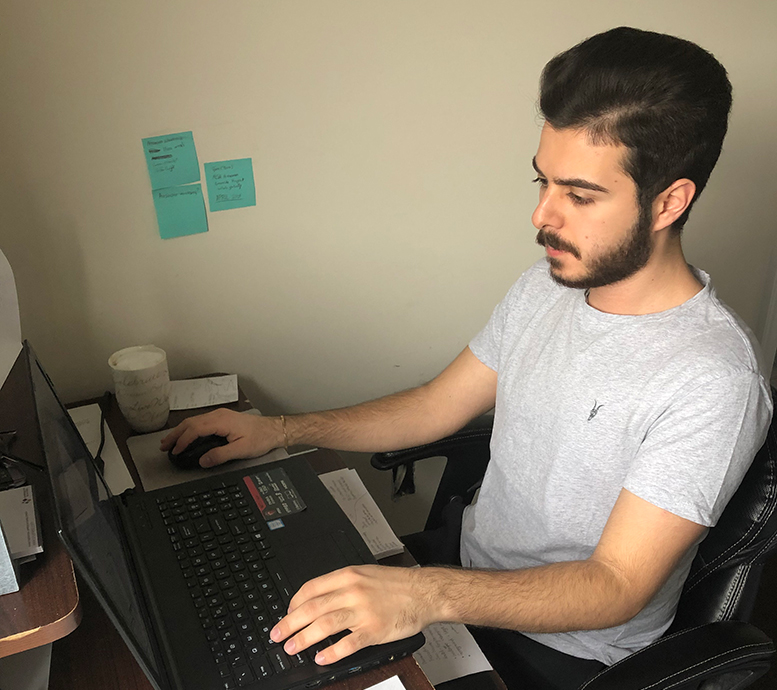
Artin Sahakian, an architecture student at UCLA, studies from his family's home in Toronto.
One survey respondent offered this description of their emotional state: "I personally am not taking care of myself properly, as a result of being on my computer all day and taking on too many commitments. I find myself crashing constantly and have more severe depressive episodes... We are more than just students, as we are workers, family members, club members, etc. Many students are stretching themselves thin to feel productive during the pandemic, and nobody is functioning the same as if we were on campus.”
Chen believes that remote learning is especially difficult for some students who struggle with feelings of imposter syndrome and of not deserving a place within a competitive field. For art and architecture students, it means seeing your classmates post their work on social media and comparing your own productivity or creativity to theirs.
"We're visual, so you see that stuff constantly,” she said.
Another challenge exists for students who are living in different time zones. Chen recalls working on a project with a classmate in China who was struggling to attend meetings and classes in the middle of the night.
While resources exist for students to help alleviate mental and physical strain, Chen says students either had not connected with the resources or don't feel like they have time in their schedules to take advantage of them.
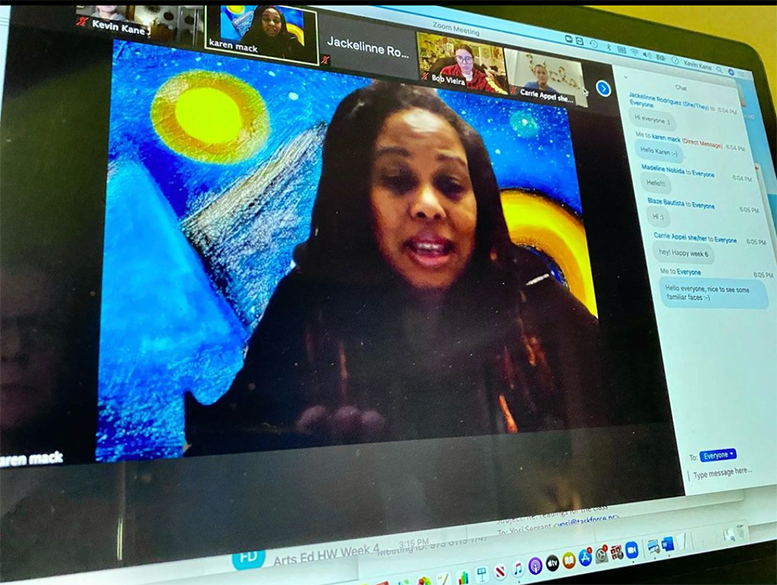
Victoria Marks can relate to what the students are going through. A professor in the Department of World Arts and Cultures/Dance and the school’s associate dean of academic affairs, Marks sent a letter to the school’s department chairs, asking that faculty consider giving students more substantial breaks in classes that meet for more than one hour, allow for video-free breaks during classes if appropriate, as well as to check in with their students to see how they are doing.
"Faculty are also struggling with their own Zoom fatigue,” Marks said. "It's actually more fatiguing to sit in front of my computer all day and not commute, not run out to get food, just sitting still. I'm more tired than I was before the pandemic."
Marks cites a recent peer-reviewed article from Stanford researchers about the psychological sources of Zoom fatigue, which suggests turning cameras off from time to time, and hiding self-view while in meetings.
“Constantly seeing ourselves on the screen,” Marks said, "it's like we're in continuous surveillance mode, not only looking and listening to others, but seeing how we are responding, taking cues that we need to be more physical in our responses, in the little rectangle that we're in. And so just turning off the self-view is a relief, to not continuously look at myself, and also that frees me up to turn my focus away: to doodle, to shift my positioning in my chair, to stand up.”
Another piece of advice that Marks has found helpful from the Stanford study is pushing the screen further away from your face. Generally, we sit typing-distance from the screen, and, Marks said, “that kind of proximity with other people only generally happens with family members or with people that you have close relationships with, and so our nervous systems are put on the alert when we are that close up with that many people that we don't necessarily know very well.”
Or, Marks says, you could also just do without the video all together. "What if in our classes, there was a designated moment where everybody was asked to turn off their screens? How nice it would be to say, this is our screen off moment, and then come back.”
Dr. Drea Letamendi agrees with these suggestions. A clinical psychologist at UCLA, she serves two offices in student affairs. She’s associate director of mental health training, intervention and response for the Office of Residential Life, and she’s the interim director of the UCLA RISE Center, the outreach arm of UCLA Counseling and Psychological Services.
Since the start of the pandemic, the RISE Center has produced videos, guided meditations, online yoga classes, Spotify playlists, and other tools for students to improve their resilience and mental wellbeing. These resources are meant to meet a rise in “academic stress, loneliness, and the need for community building and the need for resilience building” that the pandemic has contributed to, she said.
“The Zoom fatigue is real. This isn't an artificial source of stress or exhaustion. There's some interesting components about Zoom that zap our brain faculties, that really strain our cognitive abilities,” she said.
Letamendi also cites the Stanford research paper on the impact of constant eye contact with a room full of people, the challenge of taking in many nonverbal cues, and the mirroring effect of watching yourself on screen.
“There's lots of studies that show that we can be pretty self-critical, and many students of color sometimes internalize the discriminatory and oppressive and negative biases that occurred in relation to their academic performance," she said. Seeing yourself on screen "introduces self-doubt, perhaps imposter syndrome, perhaps self-criticism that impacts learning.”
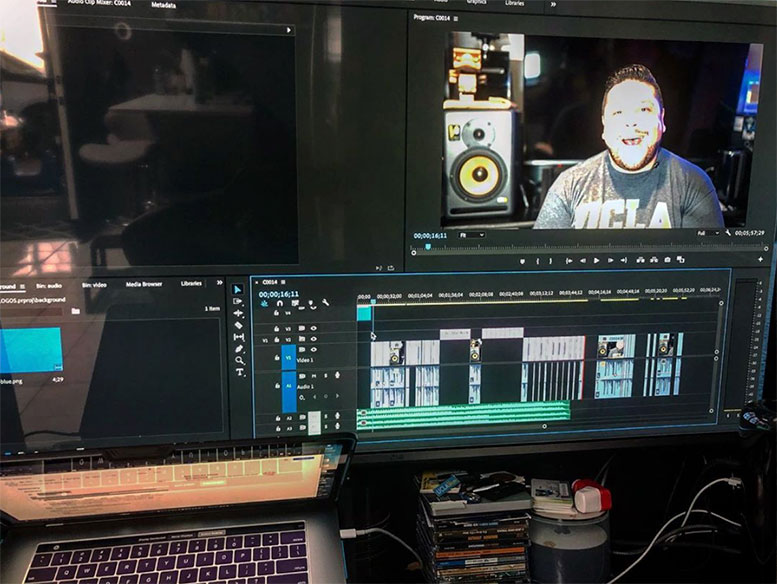
Gustavo Tepetla, a design media arts student at UCLA, works on a video editing project at home.
Breaks are especially important in handling long hours each day on Zoom, she said.
"We need upwards of 20 to 30 minutes between any engagement to calm the body, recover, move the body... and we're not really providing ourselves those opportunities.”
Letamendi teaches a psychology course and asks her students to take screen breaks during class.
“These are real screen breaks, meaning we don't take a break off of Zoom to then hop onto our phones and look at social media or check our email. That's really not healthy. We take digital and screen breaks, and we use that time to move our bodies, stretch, go for a quick walk, nourish our bodies with food and water.”
Faculty should make a habit of checking in with their students, holding office hours, having drop-in spaces, and offering campus health and wellbeing services, she said.
"I think one of the best messages we can give as instructors is being real, being authentic and saying, yeah, this isn't easy, and to name some of the reasons why we also feel the heaviness of the pandemic," she said.
Ultimately, she says, everyone needs to give themselves credit for continuing to work and study during a pandemic that’s now lasted a year.
"It's okay to be less than what you might have tried to be. It's okay to not be perfect right now. It's okay to not be your best self, because all of us are shouldering so much adversity and so many adjustments and transitions, that just to get through the day is successful.”
Story by Avishay Artsy
HEADER IMAGE: Joy Chen, a design media arts student, works on a laptop at her family's home in Orange County.
Stay engaged. Use #UCLAarts to stay connected.


