You See LA: April 2025
Five Things to See and Do in L.A., Handpicked by UCLA Arts' Anya Booker
The arts are an essential part of UCLA. They inspire dialogue, encourage creativity, and drive real lasting change, across disciplines, borders, and backgrounds. They also create opportunities for increased engagement with our surrounding communities.
Anya Booker, UCLA Arts’ associate dean and executive director for anti-racism, equity, diversity, and inclusion, has curated a diverse selection of things to see and do in Los Angeles.
The World Stage
4321 Degnan Blvd., Los Angeles, Calif.
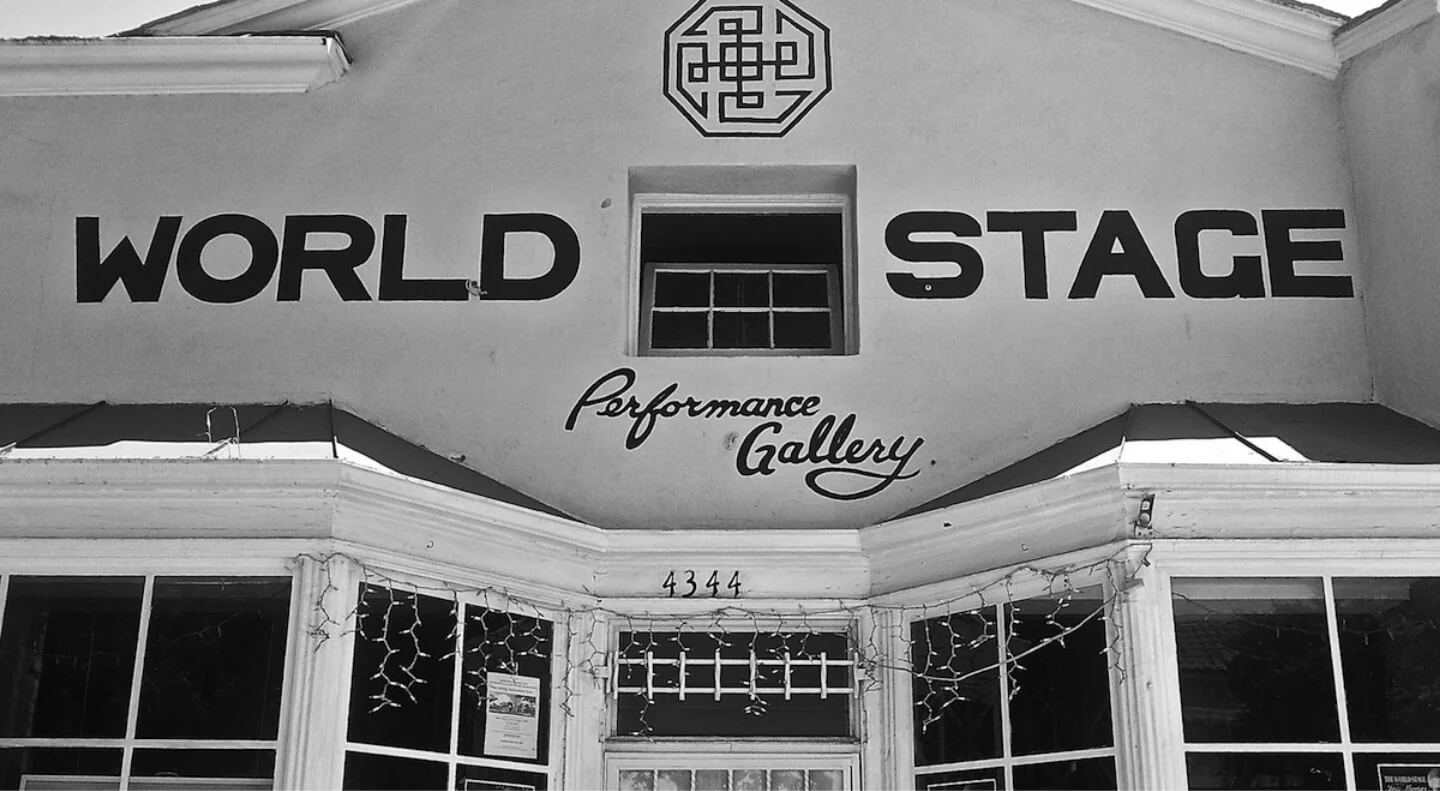
Exterior of The World Stage, a performance art space in Leimert Park Village. (The World Stage)
It is both cliché and yet still a beloved notion to describe something as “the art of…” when highlighting its excellence or depth of truth. “The art of…” conveys the highest quality, the most consideration for something—the art of the bespoke, the art of becoming, the art of the question, the art of teaching. But what, then, of “the art of being an artist?”
It begins with receiving a call from the art form, a beckoning, for more than mere attention. If an art form calls you, it is an invitation to falling in love, to studying like you have never known, to seeing with “eyes beyond the eyes,” to hearing with an inner ear. No matter your genre of practice, The World Stage, a performance art space in Leimert Park Village, is a place for “ear training,” for being gifted an attunement to the melody of creating.
My ear training started as a baby. My father was both a doctor and an audiophile. I have never met anyone who loved anything as much as he loved music. We lived in a perpetual soundtrack. We spent hours and hours in record stores and even more time living in rhythm and blues, classical, funk and folk, operas, and gospel. His time at home was spent listening to music or playing the organ, his guitar, or the conga drums, a way of healing his mother’s early death and his time as a Navy flight surgeon during the Vietnam War.
I was first allowed to file the albums in his music room while being treated to his surround sound. Two Klipschorn speakers, woofers, subwoofers, a tweeter, two massive organ speakers, the organ itself, all connected to a magic box that controlled the delivery of magic. Levels of bass and treble and lights of power and mystery. All flanked by shelves and shelves of albums which meant I spent a lot of time studying the album art. Oh, the covers. Like all libraries housing rare and prized collections, there were strict rules: records had to be placed carefully into their jackets, stored upright, and never—under any circumstances—should anything be placed on top of them. Don’t even think about it.
Eventually he trained me in the ritual of playing an album. How to meticulously clean the needle and the vinyl itself. There were specific tools and a particular cleaning solution. His movements followed a precise choreography. With the utmost care, he positioned the turntable’s arm, gliding it effortlessly over the vinyl’s grooves before gently lowering it—just so—ensuring not a single note was missed.
The day came when I asked him to play an album of my own. He couldn’t say no, but my request came with a test. I was given the chance to select five albums to play for a month, and, if after five months any records had a scratch, then my record playing days would be over. What my “experiential-pedagogy-dad” didn’t know is that I’d been playing records for my mother long before his test. I deeply loved the music and the freedom it would bring me to enjoy my imagination. I also loved him, so I had already studied his every move. Needless to say, when my month was up, I was given free rein. My mother later told him I’d already been at it for over a year at that point, and her favorites were as perfect as when he bought them for her.
When my father was dying, I put my ear pods in his ears, and we listened to Earth, Wind & Fire together for hours until his breath left him.
My father taught me how to love a thing, how to care for it, to honor it, and how to learn about something by giving it love back.
Stepping into film school was one of those times for me. I was helped along by turning to The World Stage to do what I am proposing to you now. I let someone else’s love teach me the difference between listening and hearing, how to think about what I was receiving, how to create something worth listening to, and how to learn what to keep and what to let go. He attuned my ear to griots, to the oral tradition, and to the storytelling that would become sacred for me. He attuned my soul to who and what I went to grad school to become.
His music room prepared me for The World Stage. A visit there will carry you into a space where you will travel through the rhythm of memories, and every note feels like it was played just for you. If you listen closely—with love—you will witness the power of community and be welcomed to join in its creation.
Theme Building, LAX
201 World Wy., Los Angeles, Calif.
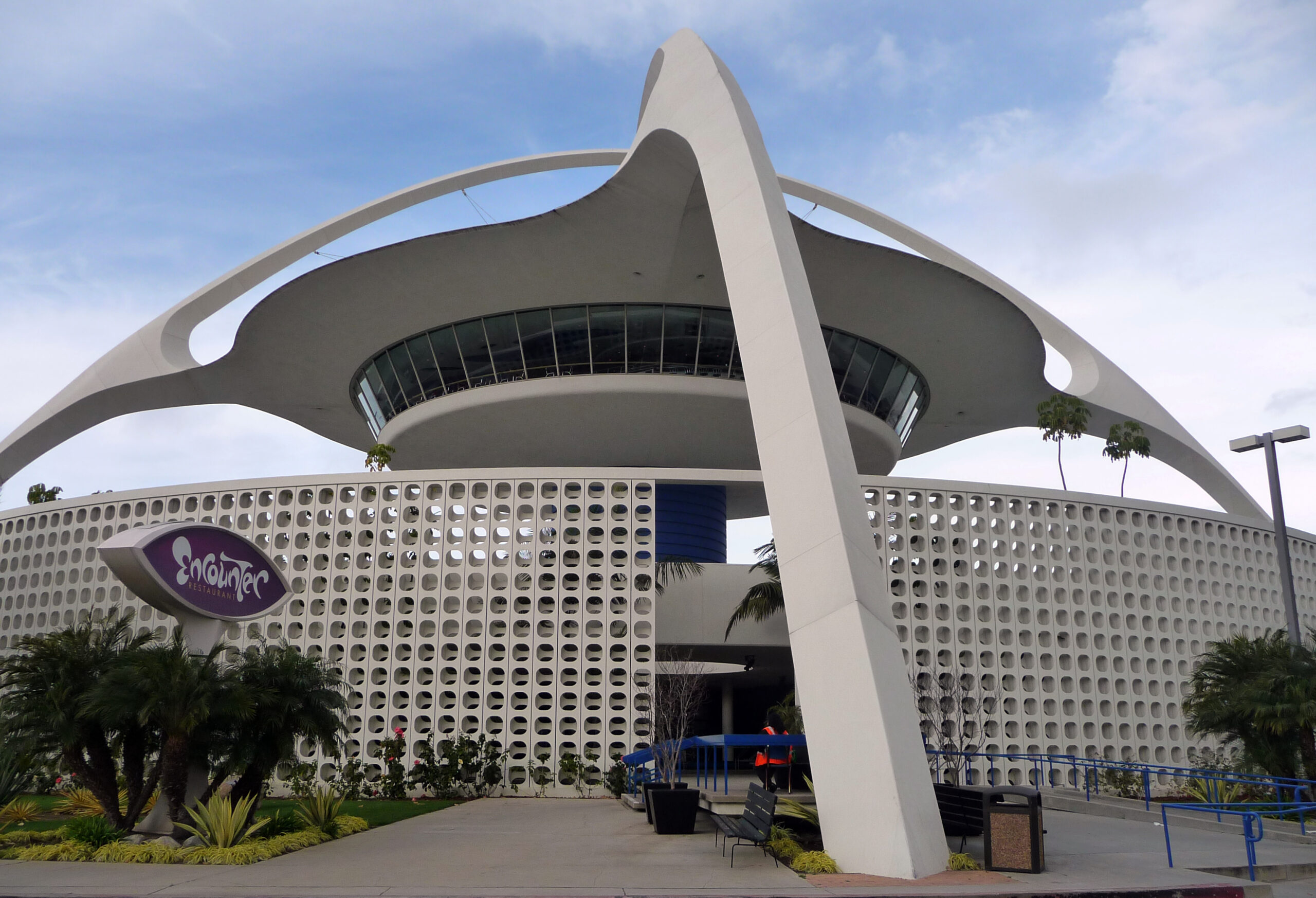
Exterior of Williams' Theme Building, Los Angeles International Airport. (Los Angeles Conservancy)
Paul R. Williams has more of a story than I can share here, but what it offers us is a profound realization of how the art of being an artist also calls for limitlessness. Williams was a Black architect whose genius lay in both mastering established techniques and inventing new ones. Williams was born in downtown Los Angeles on Feb. 18, 1894. He owned an architecture practice by the age of 25, and his life’s work is all over Los Angeles and beyond.
During segregation, Williams designed almost exclusively for white clientele. As a consequence, he would not be allowed to sit beside the people who he was designing homes, hotels, and airports for. Williams’ refusal to be denied his talent and his passion resulted in teaching himself how to draft blueprints upside down—so as not to offend anyone. His journey begs the questions: What it will take for you—for me—to become the artists we are meant to become, and what limitlessness are we willing to invent?
My mother, who was raised primarily in the south, always told me, “Never, ever, let anyone take you away from who you know yourself to be.” Like Williams', she confronted those who wanted her to remain in her place, but she came from people who knew better about themselves. Both Williams and my mother knew something about the art of being who you are.
When I see LAX and the shape of the Theme Building, I see the subtext of their stories. It is in learning all that Williams contributed to us that bolsters me to remember my mother’s daily refrain, “Remember, you are limitless.” No form of racism could keep Williams from his art, his genius, and nor should it keep you from yours. As my Dad would tell you, there is no place you cannot go or be.
Mercado La Paloma
3655 S. Grand Ave., Los Angeles, Calif.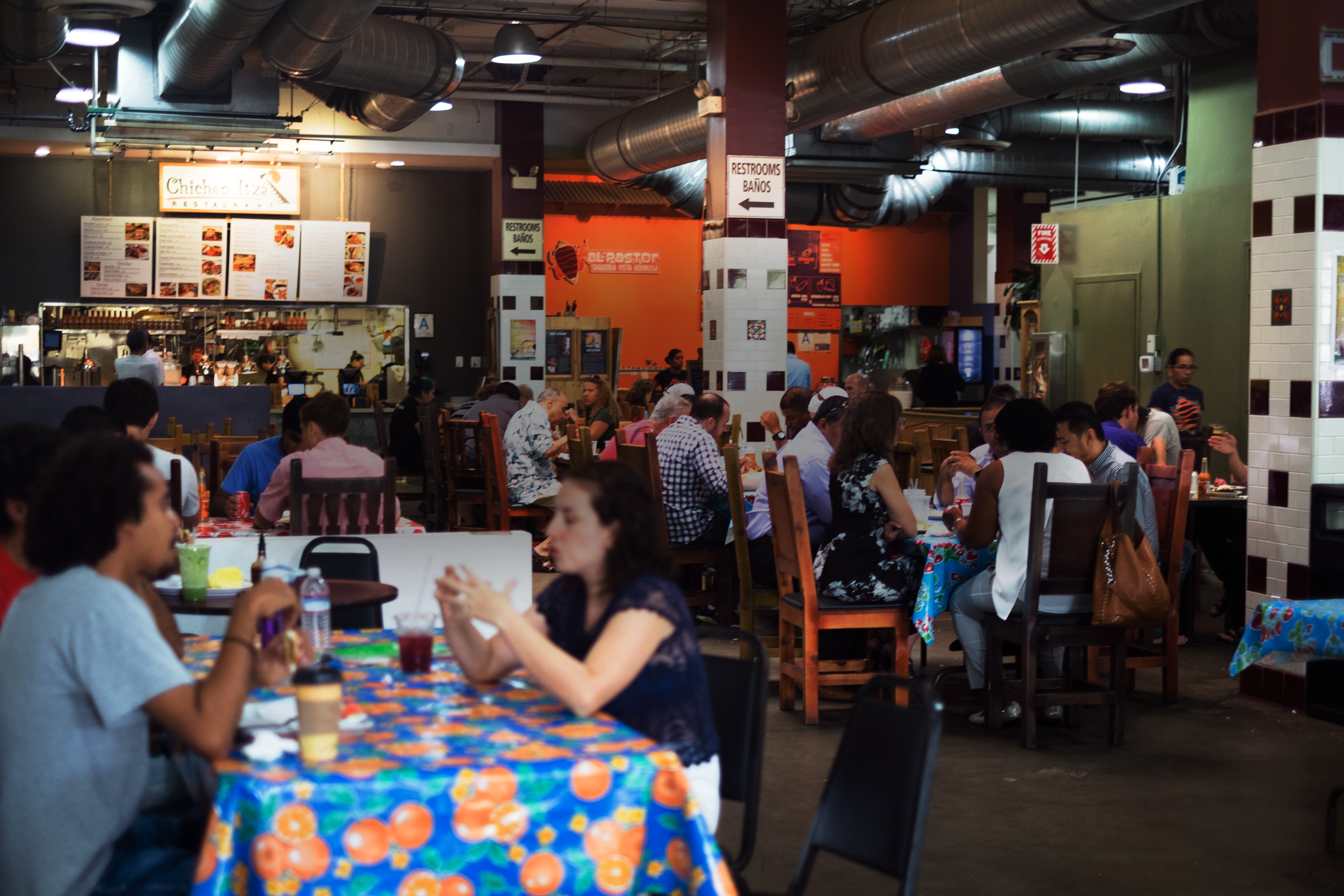
Diners enjoy the variety of foods at Mercado La Paloma. (Mercado La Paloma)
I was invited for a lunch meeting but found myself sitting on a bridge.
You can experience the call and response of a place. As much as the music room was my father’s sacred domain, I felt the creative freedom my mom cultivated. I danced and cartwheeled and played with abandon, so now when I am writing a script, developing a play, creating a course, or hearing dialogue, it is this memory that carries me to new visions, characters, outlines, and the feelings my imagination craves.
So, lo and behold, in this mosaic of a space, Mercado La Paloma, I was on the bridge between home and belonging in the new. Mercado is a cultural hub of artisans’ shops, restaurants on “Best Of” lists—including a mention in the Michelin Guide—and it is evidence of Angelenos’ homage to namesakes and traditions. Who created this idea, this collection of non-profits and restaurants? My legs were dangling between the past, present, and future as I took in the delicious demonstration that art is everywhere—always. We are artists if we so choose. There is most certainly the art of being oneself, of family, of breaking bread, of laughter and debate, and so on, and in Mercado La Paloma, my whole creative self claims it all.
By claiming, however, I’m not referring to taking. I’m naming that bridge that offers a foundation, a landmark to traverse, for what we know as our own and what we recognize and honor in another. Part of the art of being an artist is staying receptive, ever ready for the soft opening of surprises, the echo of ancestors, the hopscotch from one world to another. In so doing, operate like a Sankofa bird—look back and forward. The freeways you take will carry you over Tongva pathways. Listen for what the 405, 110, and 5 freeways have to teach you. What wisdom was paved over?
Mercado La Paloma conferred with my spirit. I heard Aretha Franklin’s “Bridge Over Troubled Water” and Sam Cooke’s “A Change Is Gonna Come.” I caught wind of the “we” edict in Mercado. We are the ones here now. We are the bricklayers this time. What bridges will we build together?
Octavia’s Bookshelf
1353 N Hill Ave., Pasadena, Calif.
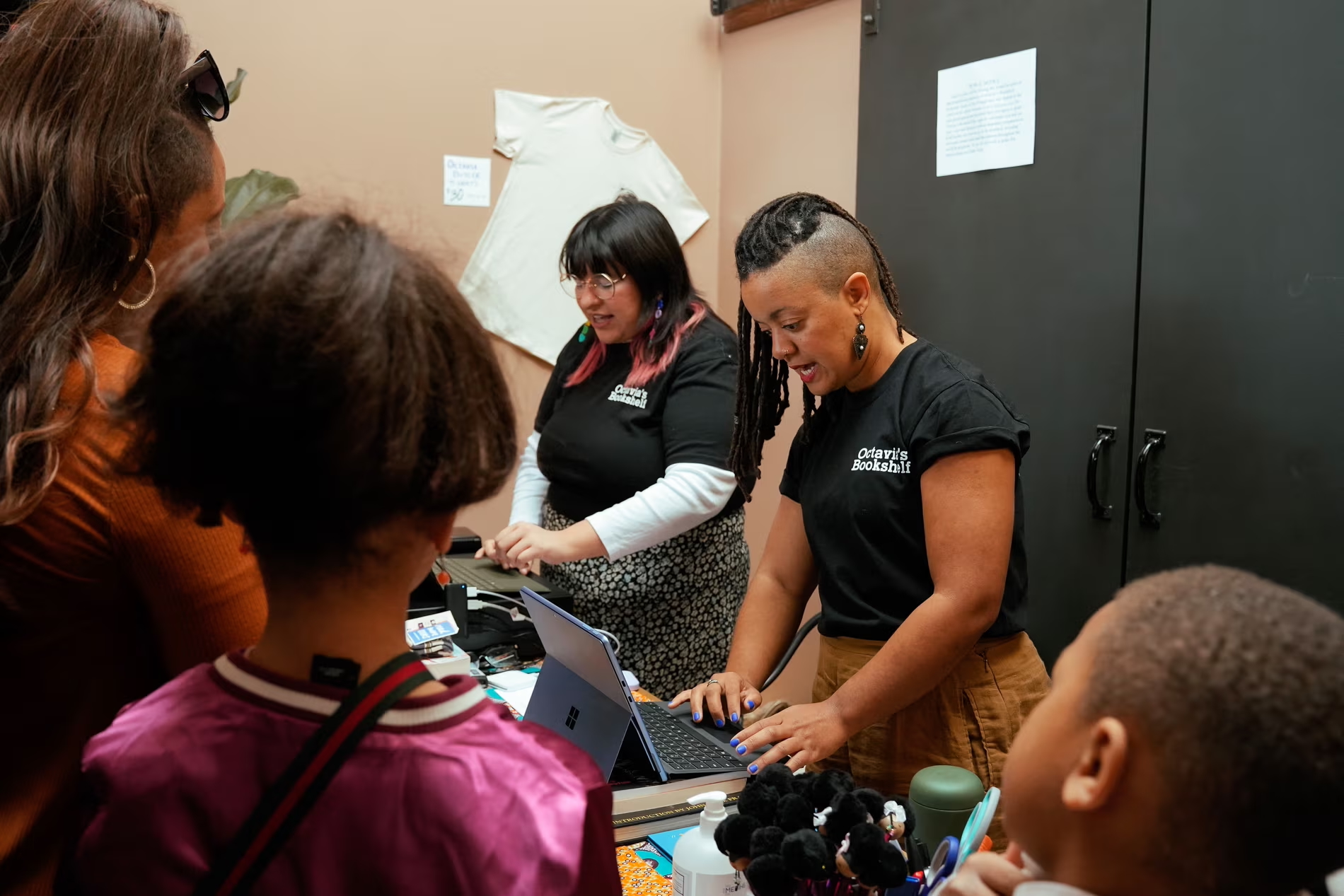
Octavia’s Bookshelf, Pasadena’s first and only Black-owned bookstore, was inspired by speculative science-fiction writer Octavia E. Butler. (Jireh Deng / The Guardian)
Octavia’s Bookshelf was created in honor of Octavia Butler. Butler was an author whose visionary art demands more remembrance. She saw the fires coming. In fact, she saw much more than that. She should be read. In Parable of the Sower and Parable of the Talents, you will experience the art of Afrofuturism and sight.
Sight is the ability to see beyond what is in front of us. In academic settings, some cosmologies and abilities associated with them, such as this one, are often discounted as “being without evidence” and therefore invalid. Something as unexplainable as sight is to be “othered” and not worthy of consideration. Flip that perspective like Williams at a drafting table. The exclusion of sight as a form of intelligence is the actual cliché.
I consider the gift of sight—and our proximity to it—as a vital source for artists who embrace the art of becoming who they are called to be, because I believe we create for more than just ourselves. Butler’s work is proof that sight is a way to ask more of ourselves and to respond with the truth of what we hear.
Untitled and Unbanned, UCLA’s Broad Art Center
240 Charles E. Young Dr. N, Los Angeles, Calif.
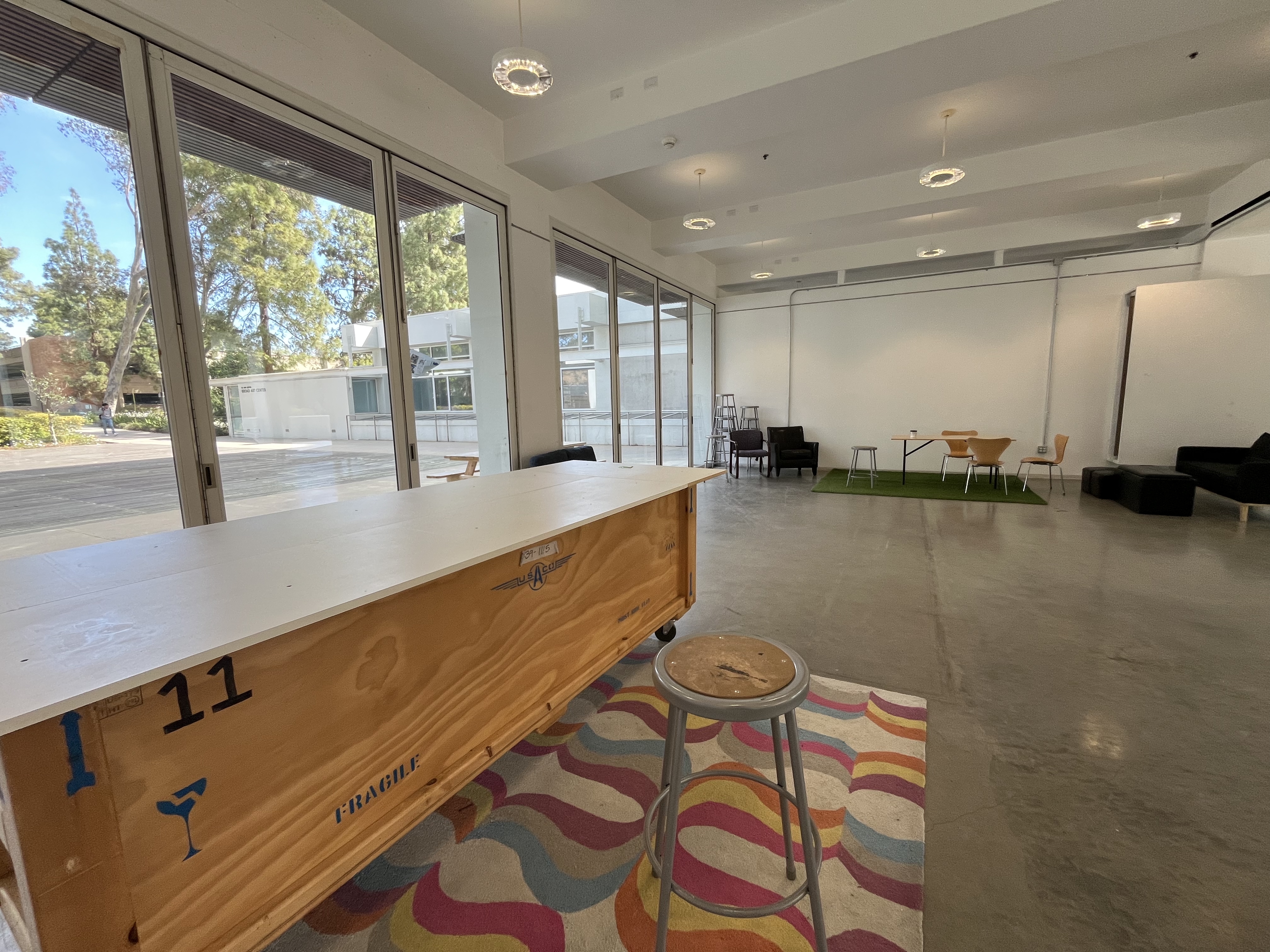
Untitled has undergone several transformations over the years—starting as a café, then becoming an exhibition space, and ultimately evolving into a student lounge. (UCLA Arts)
I have the honor of reimagining our collective use of “Untitled,” a communal space within UCLA Arts’ Broad Art Center. While doing so, I am adding a corner and a program called “Unbanned.”
While erasure is far from new, recent fervor for it represents a widely regurgitated spectacle of deceits. Some libraries and museums are currently forced to consider closure more than curation. Perhaps the most precarious and precious part of the art of being an artist involves the unencumbered right and willingness to receive another’s art or story. As artists interested in impact and transformation, creating continues with our own invitations to receive one another.
Unbanned provides a space for us to exchange the ever-growing set of banned books. In the 2023–2024 school year, PEN America found more than 10,000 book bans. Imagine that—or rather, unimagine it, as it were.
Unbanned is a call and response with the Hammer, the Fowler, and UCLA’s Center for the Art of Performance, and the spaces that elevate our connection to art—and each other. So, this is my call to you. Explore all of the You See LA spaces and find your way to the places that call forth the best in you and answer with whatever is needed for your art.
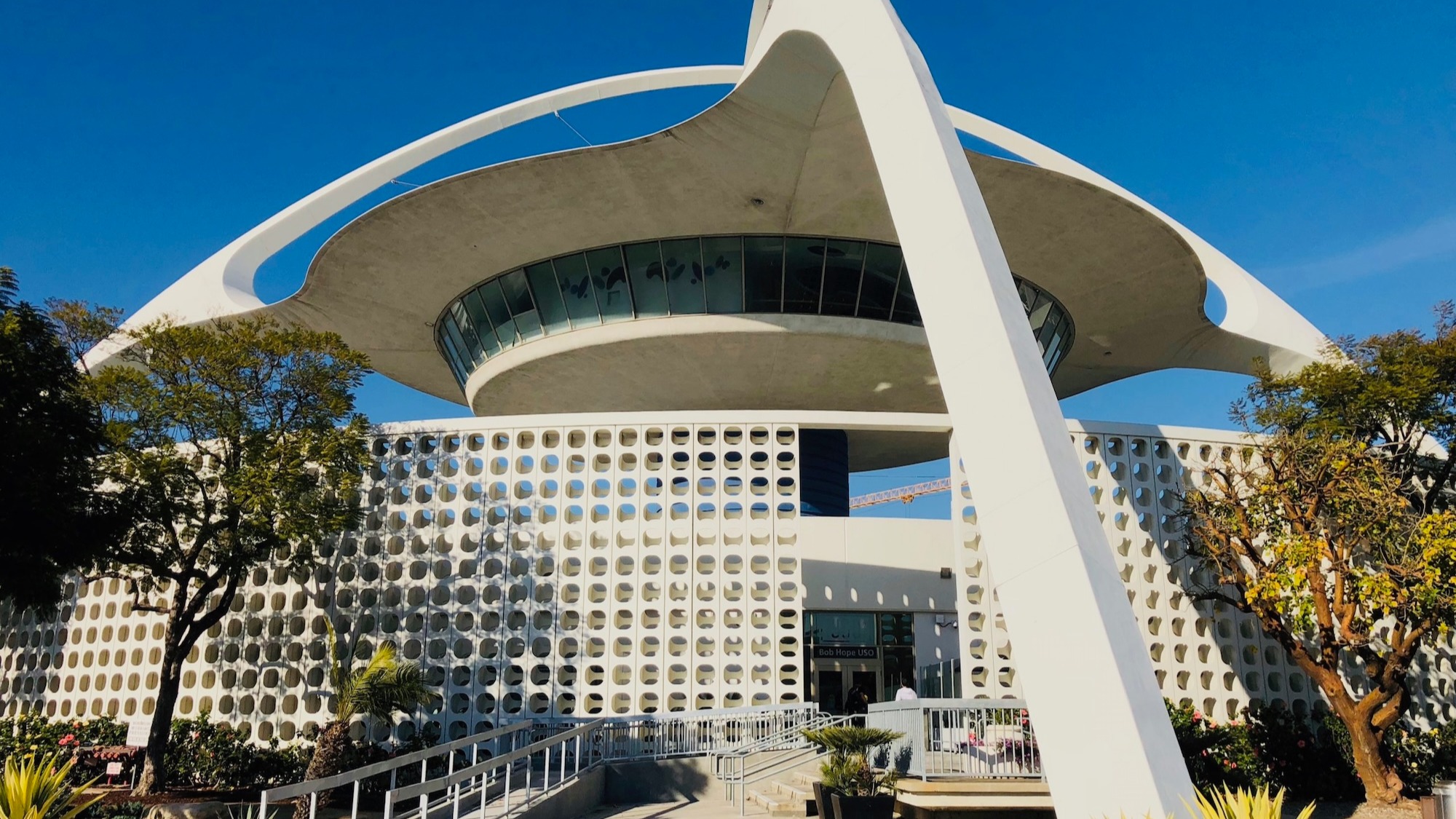
Header image: Completed in 1961, the Theme Building at the Los Angeles International Airport was designed by Black architect Paul R. Williams. (Los Angeles Conservancy)
Stay engaged. Use #UCLAarts to stay connected.


