“You Can’t Say It Doesn’t Exist”: A Curator on the Art of Latin American Women from 1960 to ’85
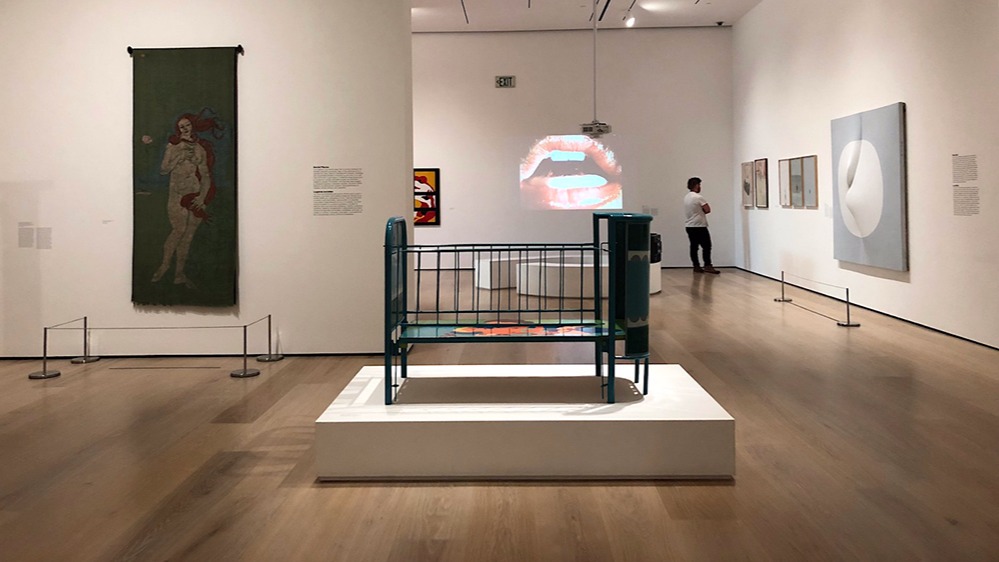
Part of Pacific Standard Time: LA/LA, Radical Women: Latin American Art, 1960—1985 at the Hammer Museum reappraises the contribution of Latin American women artists and those of Latino and Chicano heritage in the United States to contemporary art. In a way that no other exhibition has done previously, Radical Women gives visibility to the artistic practices of women artists working in Latin America and US-born women artists of Latino heritage between 1960 and 1985—a key period in Latin American history and in the development of contemporary art. Fifteen countries are represented by more than one hundred artists.
"LOS ANGELES — There is an astounding display of art by Latin American and Latina women currently at the Hammer Museum. The number of artists — 120 — amazes alone; their work, which spans 1960 through 1985, is all political. Many of these women have never been widely studied or shown in museums. In fact, this history has been largely ignored, as if it hadn’t existed at all.
Cecilia Fajardo-Hill and Andrea Giunta, the two curators of the show, spent seven years preparing for Radical Women: Latin American Art, which will be traveling to the Brooklyn Museum and the Pinacoteca in São Paulo. While the exhibition includes some known artists (Lygia Pape, Ana Mendieta, Marisol), Fajardo-Hill and Giunta encountered several names for the first time in their research. During that process, they faced pushback from other scholars who believed that some artists weren’t worth their time and claimed the art was kitsch or insignificant. “A key prejudice is that women artists are simply not as good as men,” writes Fajardo-Hill in the exhibition catalogue.
When I met with Fajardo-Hill in the courtyard of the Hammer Museum, she explained, “We did not take no for an answer. And especially we did not take no for an answer from men.” Rather than rely on the prejudiced opinions of certain scholars, Fajardo-Hill and Giunta often found themselves turning to the knowledge of living artists of the time.
The resulting display makes it overwhelmingly clear that these women were in active, passionate conversations with one another. (“It doesn’t matter if you don’t like the art,” said Fajardo-Hill, “but you can’t say it doesn’t exist.”) Hailing from Central America to Argentina, they protested the dictatorships across the South American continent, made plain the monotony of domesticity, and expressed their sexuality in intimate self-portraiture, exposing breasts, vaginas, and tongues.
In the aftermath of feminist art historian Linda Nochlin’s death, and in the midst of sexual harassment allegations in the art world and beyond, Radical Women is a poignant and necessary exhibition. Because, as Fajardo-Hill frankly puts it, we’re still proving art history that women artists are worth looking at and women are still fighting to control their own bodies.
Elisa Wouk Almino: There has only been one other large-scale museum exhibition in the US dedicated to Latin American women artists, at the Milwaukee Art Museum in 1995. At the same time, you’ve mentioned that there are still people in your field who question the need for exhibitions dedicated only to women artists. Could you talk about why you chose to pursue this show, what kind of historical gaps it fills, and why you think we still need exhibitions dedicated to women artists?
Cecilia Fajardo-Hill: As art historians you address which areas of the field you think are missing. The moment between 1960 and ’85 — everywhere in the world, not only Latin America — people were experimenting with the languages that became what is contemporary art today: video art, photography, conceptual art, and installation art. It wasn’t different for Latin American and Latina artists. But when you look at the books, women are not there. The history that has been told solely deals with men. And it is a wrong history.
When people during the first four years of the research told us that this exhibition was not relevant and unnecessary, it comes from a patriarchal perspective where they accept the history that we have as the status quo. And it’s very comfortable to think that history is OK, especially when you’re a man. I’m not OK with it. Because I know there have to be women. Linda Nochlin’s question was why there have never been great women artists. For us it was, where are the women?"— Elisa Wouk Almino, Dec. 8, 2017

This post is an excerpt, read the full interview at the Hyperallergic website.
Read more about the Hammer Museum's Radical Women exhibition here.