Yasmeen Lari offers a hopeful message to UCLA Arts graduates
The esteemed architect delivered the keynote speech at the UCLA School of the Arts and Architecture
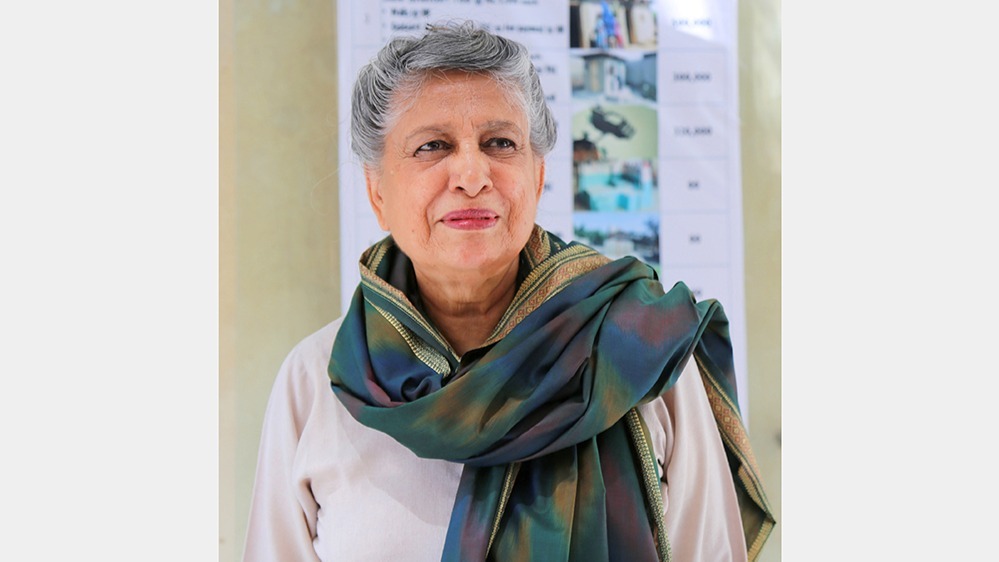
Esteemed architect and humanitarian Yasmeen Lari delivered an inspiring keynote address for the UCLA School of the Arts and Architecture’s 2020 gradutes at an online commencement ceremony held on June 13.
Yasmeen Lari is Pakistan’s first female architect. This past February, she was awarded the prestigious Jane Drew Prize for raising the profile of women in architecture. She has advised UNESCO on heritage conservation, and, since 2005, built homes for tens of thousands of people affected by floods and earthquakes in her home country. Read more about Lari's background here.
Here is the transcript of Yasmeen Lari's keynote address:
Hello, everybody. Greetings from Pakistan. Congratulations to all the graduates of the UCLA School of the Arts and Architecture. You can be justifiably proud for having successfully accomplished the rigorous and demanding years at such a renowned institution.
Congratulations also to all the parents, grandparents, families and friends, for your role in nurturing another young generation of great promise. And congratulations to the committed faculty members who have been there every step of the way.
I have to say that when I received the gracious invitation from Dean Steele, I was a little surprised. I thought he was being kind because my son Mihail Lari and son-in-law Scott Murray, are so deeply connected to UCLA and the Hammer. I wondered, how could a university in the US be interested in inviting a barefoot architect such as myself, who relinquished her elite status a couple of decades ago?
As I explored further, I discovered that unlike other institutions, UCLA holds a profound belief in the tenets of social justice. I'm therefore truly honored, truly honored, to be invited to speak at this important occasion, to graduates whose spirit for social good resonates with my own struggle for social and ecological justice for marginalized sections of society.
You know, this has never been more important in the world, and never been more important right where you are today, especially these last few weeks. I salute the young people of America, such as yourselves, and my own grandson, Shea who's in college in California, and legions of others, regardless of the threats they face, are walking the streets of America every day, vociferously raising the voice for justice.
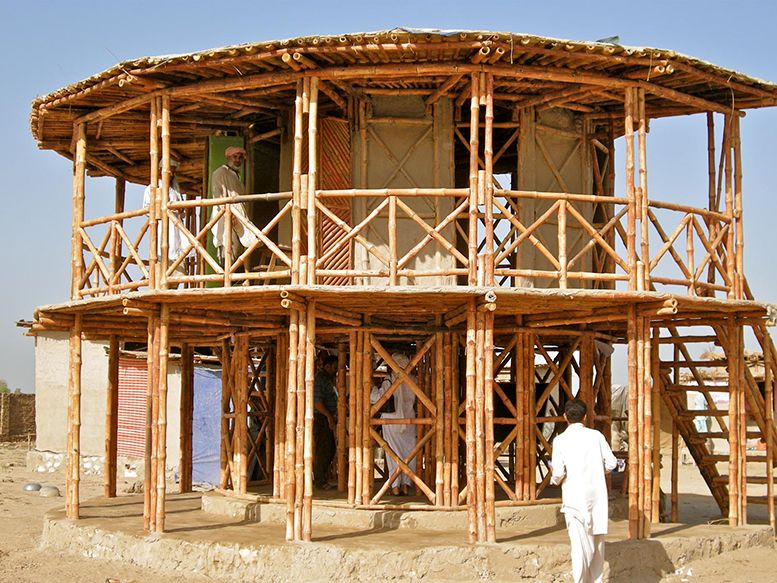
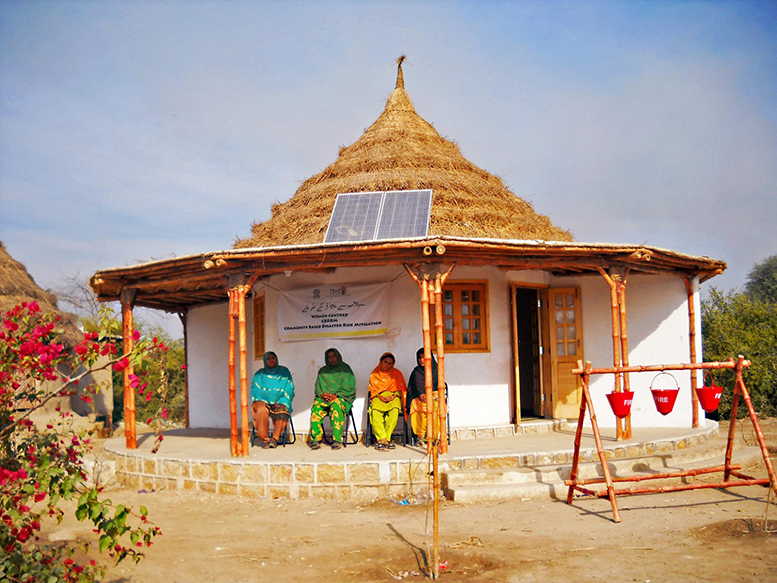
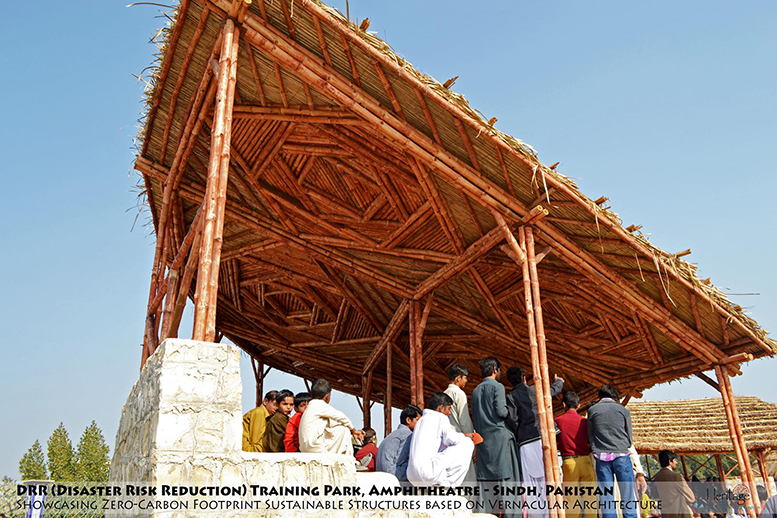
Now living in a third world country, for me the pursuit for justice has been paramount. As you may be aware, I decided to push for low cost, zero carbon, zero waste through a strategy called barefoot social architecture, or BSA, for the disadvantaged. This came about as a result of my walking barefoot in empathy with those who are today my fellow travelers.
Last year, I was delivering a keynote at the Vienna Biennale on the use of my barefoot model as a mechanism for healing the planet. I found that many in the audience were perplexed and asked why barefoot? I had to respond, it is because the work I do today is with people who walk barefoot. They have no shoes.
I had overlooked that in affluent countries, nobody is used to people walking without shoes. Of course, in my country a vast number are without shoes because of lack of resources. But walking barefoot also helps you to respect the soil on which you tread. It is due to the inspiration gained from Pakistan's age old vernacular traditions that I feel compelled to utilize the planet's resources in a judicious manner.
Now for several years now, I have watched with growing dismay the damage being caused to the Earth's ecosystem due to wasteful and highly consumptive ways of living and building, as the recommendations of the Brundtland Commission of 1987 for sustainable development continues to be ignored.
Even as French economist Thomas Piketty presented irrefutable attestation of rising inequalities due to the accumulation of wealth by only 1%, I'm distressed at the condition of the others, a large number of whom we know suffer from deprivation of the highest order.
I watched Al Gore's undeniable evidence regarding global warming and climate change. With recurring calamities of earthquakes, floods and tsunamis, and even as 189 countries signed the Paris Climate Agreement COP 2015, we know that the agreed 1.75 centigrade temperature rise remains elusive.
I was proud when Pakistan's Nobel laureate, young Malala Yousafzai, who just graduated from Oxford campaigned for education and not leaving girls behind. But I'm disappointed that my country and many other less developed countries, or LDCs, continue to have the lowest education rate for girls. And I'm desolate, as women's voices continue to be muffled in spite of the #MeToo movement, and women leadership figures remain abysmally low with no hope of gender equality.
I remembered Dr. Martin Luther King's dream for equality and justice, and Nelson Mandela's victory in dismantling apartheid, and Barack Obama elected twice, a black president. But destroyed to realize that some people will never be as equal as others. And like the multitude of protesters in the United States and around the world, I'm heartbroken that racism thrives in the 21st century, and the vulnerable Breonna Taylors and George Floyds of the world seem forever to be targets of brutal victimization.
And then, there's COVID-19, a virus that knows no borders. Which underscores tragedy at the fragility of human life with no assurance of safety due to your wealth or status, but has impacted minorities at such high rates in the United States. But I'm also optimistic that the realization brought about by the pandemic, and the light that so many of you are shining on institutionalized discriminatio, will lead to the fashioning of a more equitable world.
As financial markets lose trillions of dollars, we know that investment directions in visual and creative arts will be forced to seek altered priorities. And we must be ready for a paradigm shift in our design conceptions as we prepare ourselves for a world that requires a major reset.
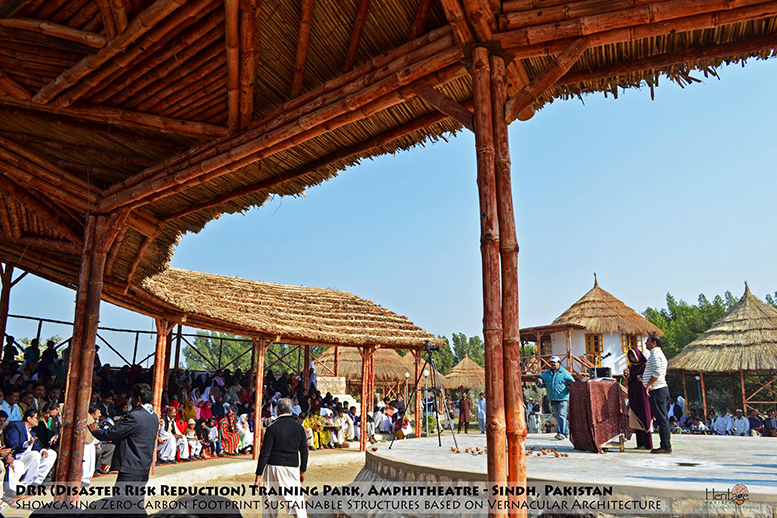
This may be unsettling, as there is a great deal of comfort in opting for well-trodden avenues, but I can tell you from my own experience, nothing could be more enriching than the exploration of an unpaved vagabond pathway.
Imagine what could be if you assume the lead to fashion a divergent but more egalitarian, just and human world, and transform the present carbon-intensive environment through an inspired visual arts vocabulary, which would tread lightly on the planet. Imagine if you create art and design not for just the select few.
After all, it is the power of design that will be in demand. Because as the levels of inequalities and poverty rise, there is a mass of humanity that needs excellence of design for their survival. Remember, it is not only the privileged who have a right to enjoy handsomely-designed environments. The disadvantaged and those that live at the margins need more, not less, design to achieve a better quality of life.
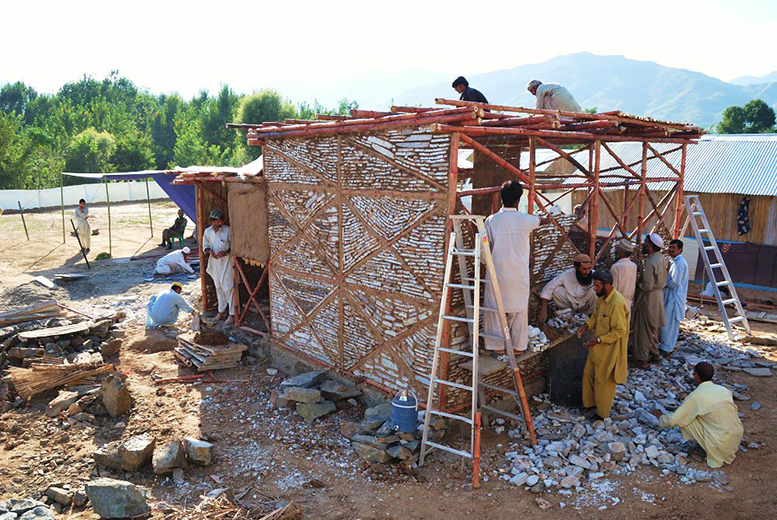
As more studies emerge regarding the nexus between climate, crisis, pandemics and poverty, there appears an opportunity for spawning a multitude of green strategies. As UN Secretary General António Guterres articulated just recently, and I quote, "by making the transition to low-carbon, climate-resilient growth, we can create a world that is clean, green, safe, just and more prosperous for all."
As the lockdown comes to an end, we are confronted with an entirely variant worldview that will lead architecture and urbanism especially into divergent directions.
The question is, will architects continue to design iconic and ostentatious megastructures? Or will they veer towards democratization of architecture, based on community participation, cobuilding and cocreation, a new way of conceptualizing? Can the use of high-energy-consumptive cement and steel be minimized by creating hybrid structures? A combination of high carbon skeleton with low-carbon infill and finishes, incorporating my favorite zero carbon materials, lime instead of cement, bamboo rather than wood, and lime-stabilized earth and aggregate that will make cement concrete redundant.
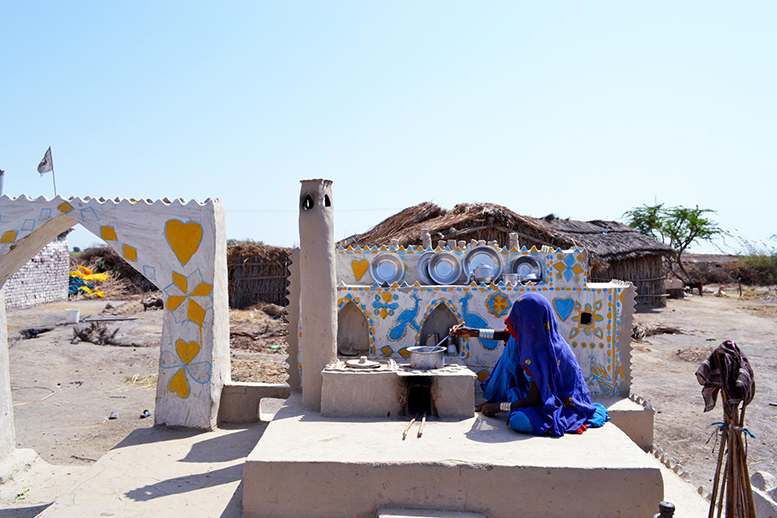
Inevitably New York, with its highest infection rate and its high-carbon high-density glittering towers, will no longer be urbanists' future beacon. Instead, as we get accustomed to carrying out business remotely, maybe eco-urbanism will take root, drawing upon age-old wisdom and traditional environments found in countries such as Pakistan.
Aiming for low-rise medium density, formations with open-to-sky terraces for families to remain in contact with nature when a pandemic strikes, with pedestrian enclaves and local round the corner shopping without being disrupted by vehicular traffic, which should be rightly relegated to the periphery.
As the need for extensive vehicular mobility is curtailed, and consumption levels are reduced, in the new world order, what if eco cities could embody the virtues of carbon neutral environment? Nature conservation, and biodiversity enhancement, and conversion of existing vehicular roadways into landscaped forested walking streets for lowering pollution levels -- interventions that lead to better health and well being of humankind. Because make no mistake, human and planetary health will now take center stage.
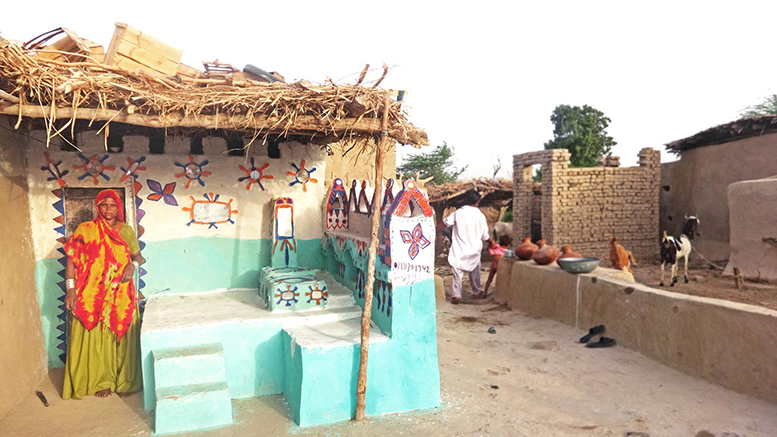
What if creative professionals switch to more sustainable lifestyles, adopting movement such as transition design or degrowth in the West, or my own barefoot social architecture for sustenance of the disadvantage in the third world?
And this is the time that credence must be given to women designers. Their voices must be brought to the table in an effort to fashion a compassionate and humanistic world without conflict and exploitation.
This is also the time for all of you here today, imaginative, creative thinkers with the capacity for enterprise and adventure to provide leadership to the world. Even as you may be dismayed by what you are, what you see, these challenging times may also present exceptional opportunities for mending the existing imbalances and stitching the highly damaged tapestry of our planet.
Now, what was it that Vincent van Gogh said? "I dream my painting and I paint my dream."
Class of 2020 as I wish you bon voyage on your new journey, I urge you to never stop dreaming, whatever the odds. God bless you. And Godspeed.
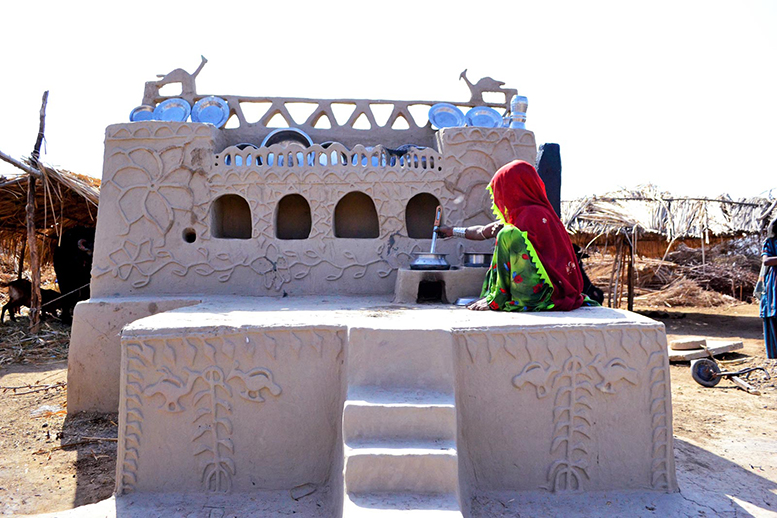
Images courtesy Heritage Foundation of Pakistan.
Stay engaged. Use #UCLAarts to stay connected.


