Wu Tsang and the search for open-ended identity
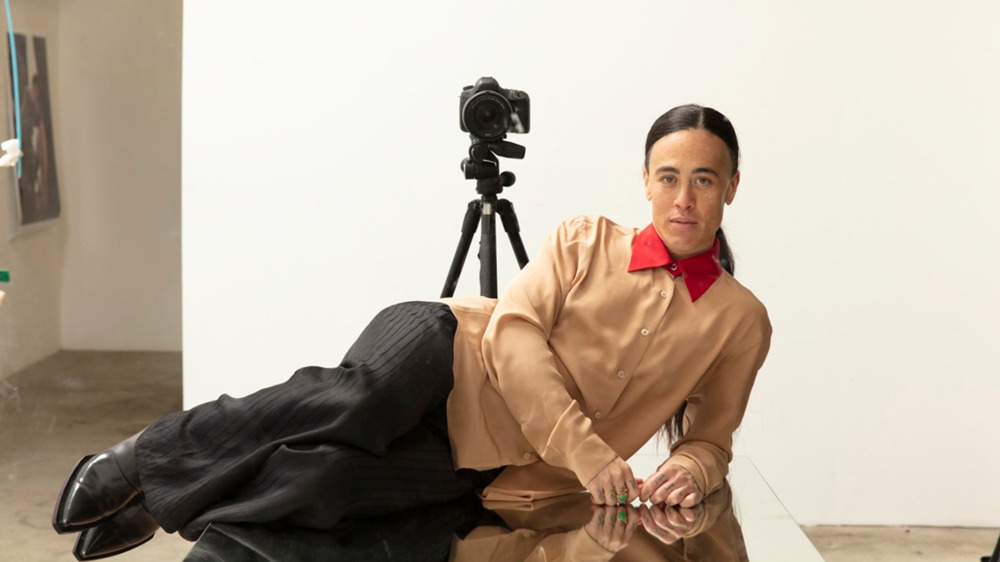
Filmmaker, performance artist, and UCLA Department of Art alum Wu Tsang, who was recently awarded a MacArthur Fellowship, is profiled by Cultured Magazine. Tsang creates new conceptual and visual vocabularies for exploring hidden histories and marginalized narratives in works that collapse the boundaries between documentary and fiction.
"In her 2008 video The Shape of a Right Statement, Wu Tsang stages a one-to-one vocal performance of blogger and autism rights activist Amanda Baggs’s 2007 viral video In My Language. Speaking in the staccato tone of the computerized voice that Baggs uses, Tsang intones: “It is only when I type something in your language that you refer to me as having communication. … there are people being tortured, people dying because they are considered non-persons because their kind of thought is so unusual as to not be considered thought at all. Only when the many shapes of personhood are recognized will justice and human rights be possible.”
MODEL STUDY (0X5A3256), 2019 Tsang’s “full-body quotation” of Baggs speaks to several major issues at the heart of her practice. Foremost is her endeavor to communicate the impossibility of communication, the ways we can never fully understand other people. Simultaneously, Tsang makes space for marginalized narratives through playing with modes of language that allow for open- ended understandings of others. Whether communicating through dance, poetry, translation, or other methods of storytelling, Tsang evades using language or images as agents of fixity, creating forms of connection that can accommodate queerness as a continual process of becoming.
In the decade since The Shape of a Right Statement, Tsang has continued to address these themes as her practice has gained wider institutional recognition. In the past year alone, she was awarded a MacArthur “Genius” Grant, nominated for the Hugo Boss Prize, and received a United States Artists fellowship. Tsang’s career success has positioned her in such a way that she now speaks about marginality from the institutional center. She is conscious of the ways that her position is all too easily framed as representative of an increased visibility of queer artists of color. Tsang aims to pivot the conversation away from visibility, toward legibility and communicability.
“My practice is very social,” Tsang says. “I’ve always felt that making things is about communicating with people. I like to make films and especially documentary as a genre because it immediately brings up the problem of representation. Representation presupposes a subject, it presupposes individuality in this way that I like to try to challenge. Cinema can allow me to do that because it’s sort of magical. You can mess with time, you can mess with what it means to be a character or what it means to have interiority or a story."— Ashton Cooper, Apr. 8, 2019


This post is an excerpt. Read the full article on the Cultured Magazine website.
Stay engaged. Use #UCLAarts to stay connected.


