Why music from 1594 still moves us in 2016: The deep meaning of 'Tears of St. Peter'
L.A.Master Chorale performs the premiere of Peter Sellars' staging of Orlando di Lasso's "Lagrime di
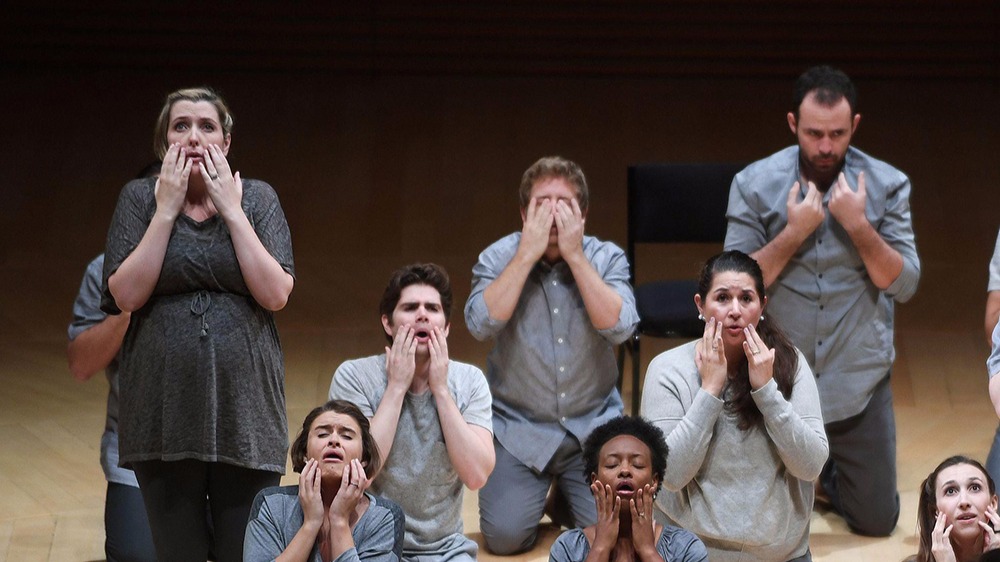
World Arts and Cultures professor and renowned theater director Peter Sellars opens the Los Angeles Master Chorale's new season with Lagrime di San Pietro (Tears of St. Peter) at the Walt Disney Concert Hall. Mark Swed, Los Angeles Time music critic calls Lagrime "a major accomplishment for the Master Chorale, which sang and acted brilliantly. It is also a major accomplishment for music history."
"Music historians have never quite known what to make of the late Renaissance composer Orlando di Lasso, or, for that matter, even what to call him. (Sometimes he’s Orlande or Roland, and sometimes De Lassus.) Musicologist Richard Taruskin calls him, simply, a loose end. Di Lasso’s style never fully conformed to the luxurious perfection of his age. His bizarre harmonic explorations, along with his attraction to lurid or mystical subject matter, could get him into trouble.
He wrote some 300 Masses, more than 2,000 compositions over all, but we don’t know how many exactly. (There has never been a compete published edition of his works.) One thing, though, has long been fairly certain: It is best to steer clear of Di Lasso’s last piece, “Lagrime di San Pietro” (Tears of St. Peter).
But when someone says, “don’t,” that has more than once told artistic director Grant Gershon what the Los Angeles Master Chorale should do. On Saturday night at Walt Disney Concert Hall, he opened a new season with 21 singers from the chorus premiering a revelatory staging by Peter Sellars of Di Lasso’s 21-madrigal cycle.
Because Di Lasso’s music is full of sublime beauty, the most convenient way to deal with the unrelenting despair of “Lagrime,” on the rare occasions it is performed or discussed (it is, for instance, treated as a mere aside in the Cambridge University Press volume of “Orlando di Lasso Studies”), is to bask in glowing religiosity. But the revelation offered by Sellars and Gershon is to avoid Revelation altogether. For them, “Lagrime” is a profoundly human contemplation of the relationship of these two men."—Mark Swed, Music Critic, Nov. 1

Read the full article at the Los Angeles Times website.