When Dance Scores Become Fine Art Prints
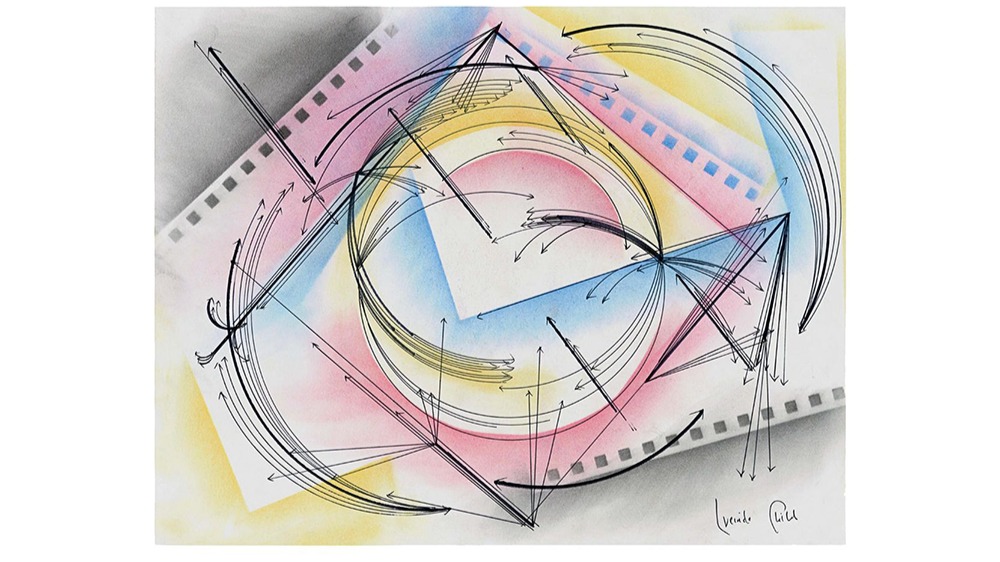
In the spring 2020 during the early throes of the coronavirus pandemic, all dance and live performances were halted throughout the United States and much of the world. The impact to the livelihoods of dancers and choreographers was immediate and long lasting. The Choreographers’ Scores: 2020 was conceived and curated by Kristy Edmunds, Director of UCLA’s Center for the Art of Performance as a collaboration with 26 US-based choreographers to create a handmade score to be editioned as fine art prints. Each artist received a commission to contribute a score in visual time, and to do so from where ever they were sheltering throughout the summer of 2020. The resulting edition is a rare collection of works on paper that reveal the unique and intimate explorations of these artists, and insights to their choreographic ideas while awaiting their return to the studios and stages. We'd like to thank The Lapis Press for their wonderful work in this process. Learn more about Lapis.
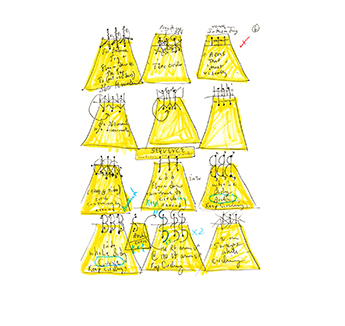
Score by Elizabeth Streb, founder of STREB Extreme Action. Courtesy CAP UCLA. In the early days of the pandemic, as the full impact of lockdowns began to sink in, Kristy Edmunds, executive and artistic director of UCLA's Center for the Art of Performance, had an idea: If she couldn't commission artists to perform, what about instead commissioning them to each create a score for a dance work?
Twenty-six artists participated, drawing, writing, collaging and/or painting submissions. Some are based on actual scores or artifacts from previous works; some are road maps to new projects; others are notes for pieces that were interrupted by COVID-19. Each is available for purchase as a limited-edition fine-art print, with sales benefitting the choreographers themselves and funding future live dance performances at CAP UCLA.
"I was beginning to organize my archival materials early in the pandemic, and this one paper landed on my floor. It was a sketch from the '80s, of a very early work I made at PS 122 called Friends. Looking back, I came out as a lesbian shortly after that work—from my perspective, it kind of marks that, though I don't think you'd look at the work and go, 'Oh, a coming-out piece.' The black lines were the spatial illustration of where the 15 performers went, what their options were. All the women—a wide net of friends I'd brought together to do this piece—had their toes on it at the start, then moved out from there.
"At the same time, I started thinking about my own footprint, and how it was somehow also like standing on an edge, this precipice, while sheltering in place in L.A. So I got some gold paint for the bottom of my foot." — Ann Carlson, interdisciplinary artist
"The score was a way to think through how to do a digital work for the National Arts Festival in South Africa in a way that wasn't just video capture. It was a manual that could be both a road map but also a thinking space.
"Putting things on paper is how I fundamentally work. Of course, the body holds ideas. If I can put words to what the body knows, it means that the body already knows it. It's not the other way around for me." — nora chipaumire, contemporary choreographer
— Dance Magazine, Aug. 11, 2021


This post is an excerpt. Read the full article on the Dance Magazine website.
HEADER IMAGE: Lucinda Childs' score. Courtesy CAP UCLA.
Stay engaged. Use #UCLAarts to stay connected.


