West of West: Shaping Architecture Through Curiosity and Collaboration

In 2014, Department of Architecture and Urban Design alumni Jai Kumaran and Clayton Taylor (both M.Arch. ’11) founded West of West, an architecture and research practice with completed projects in Los Angeles, New York, Tokyo, San Francisco, Seattle, Austin, and Portland. Kumaran, Taylor, and their team engage with design, art, culture, and technology to shape contemporary life and the built environment at all scales.
Their work emphasizes collaboration with pioneering people and organizations to create environmentally and socially responsive buildings and communities. Projects range from new models of housing and retail environments to creative workplaces and experimental urban infill structures, interweaving innovation with craft.
West of West’s honors include an Honor Award from AIA San Francisco, two awards from AIA Los Angeles, recognition for three projects in Architizer’s A+ Awards, a place on The Architect’s Newspaper’s list of the Top 50 Architects and Designers, and features in Dwell, ArchDaily, Dezeen, and The New York Times. Most recently, West of West were recognized as the only two-time winners of the Small Lot, Big Impacts initiative led by cityLAB at UCLA.
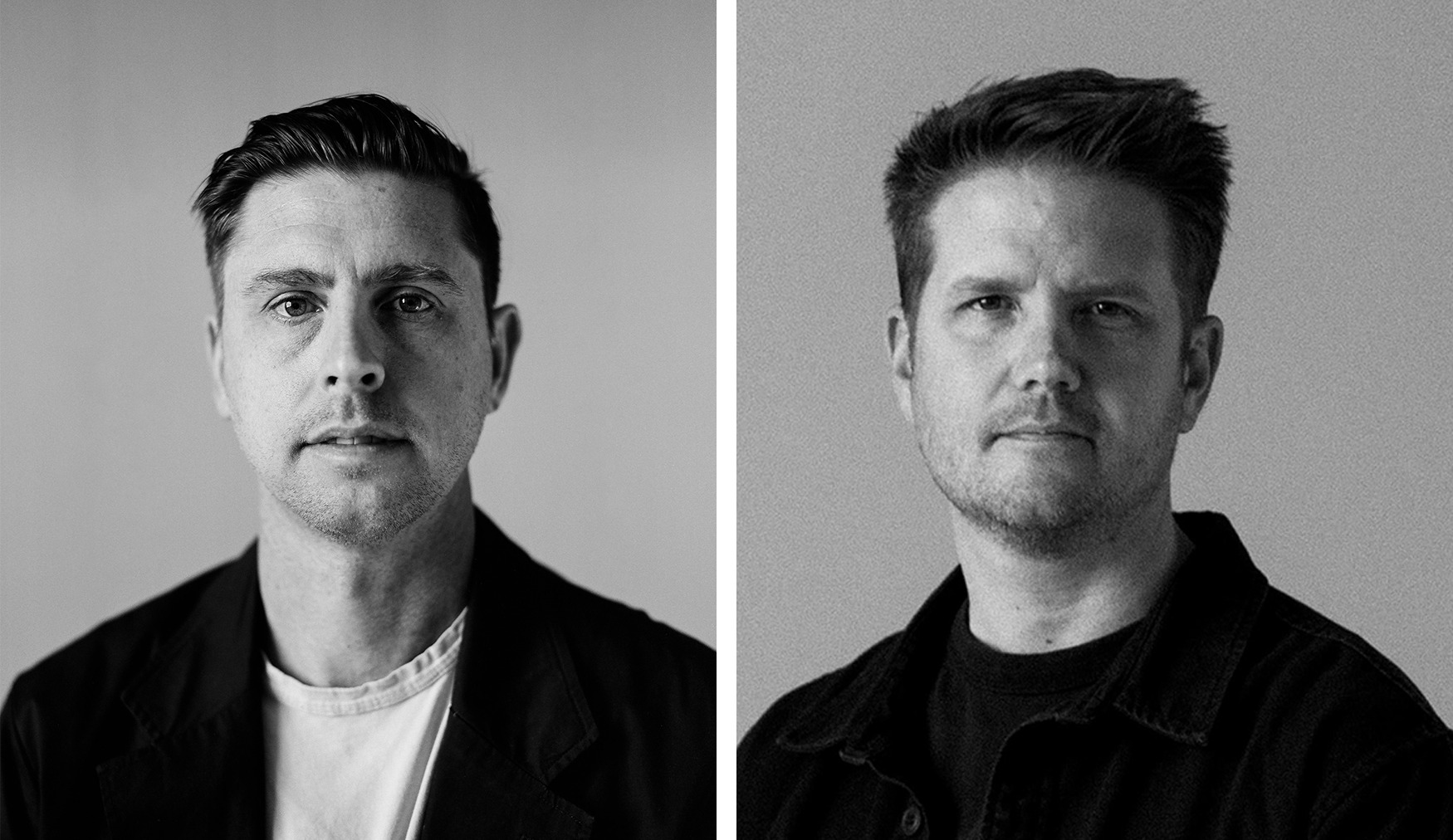
From left to right, Jai Kumaran and Clayton Taylor. (Courtesy of West of West)
What initially drew you to the UCLA School of the Arts and Architecture?
Clayton Taylor: I was initially drawn to UCLA because of its position in Los Angeles and the way the architecture department positioned itself in relation to the arts. I’ve always seen UCLA as a creative laboratory, and I loved the idea of exploring what that means in the context of Los Angeles.
Jai Kumaran: The academic structure—specifically the year-long research focus of the M.Arch. II program. I was interested in developing a deeper relationship to the reasons why we create architecture, and for whom.
Were there particular professors, classes, or projects that had a lasting influence on you?
CT: Working with Thom Mayne (founder of Morphosis Architects and professor emeritus) and Karen Lohrmann (former faculty member and cofounder of the studio practice SdMKLm) was pivotal—their mentorship created the perfect balance of rigor, experimentation, and context-driven design, which continues to shape how I approach both creative practice and professional work. In addition, the opportunity to interact with Dana Cuff and Neil Denari and discuss my projects with them elevated the conversation even further, exposing me to different perspectives and ways of thinking about architecture and its role in the world.
JK: The research studio was led by Thom Mayne, who I had interned for previously. I admired his expansive, all-encompassing vision, his L.A. Now studios, and wanted to be a part of anything he was doing at UCLA.
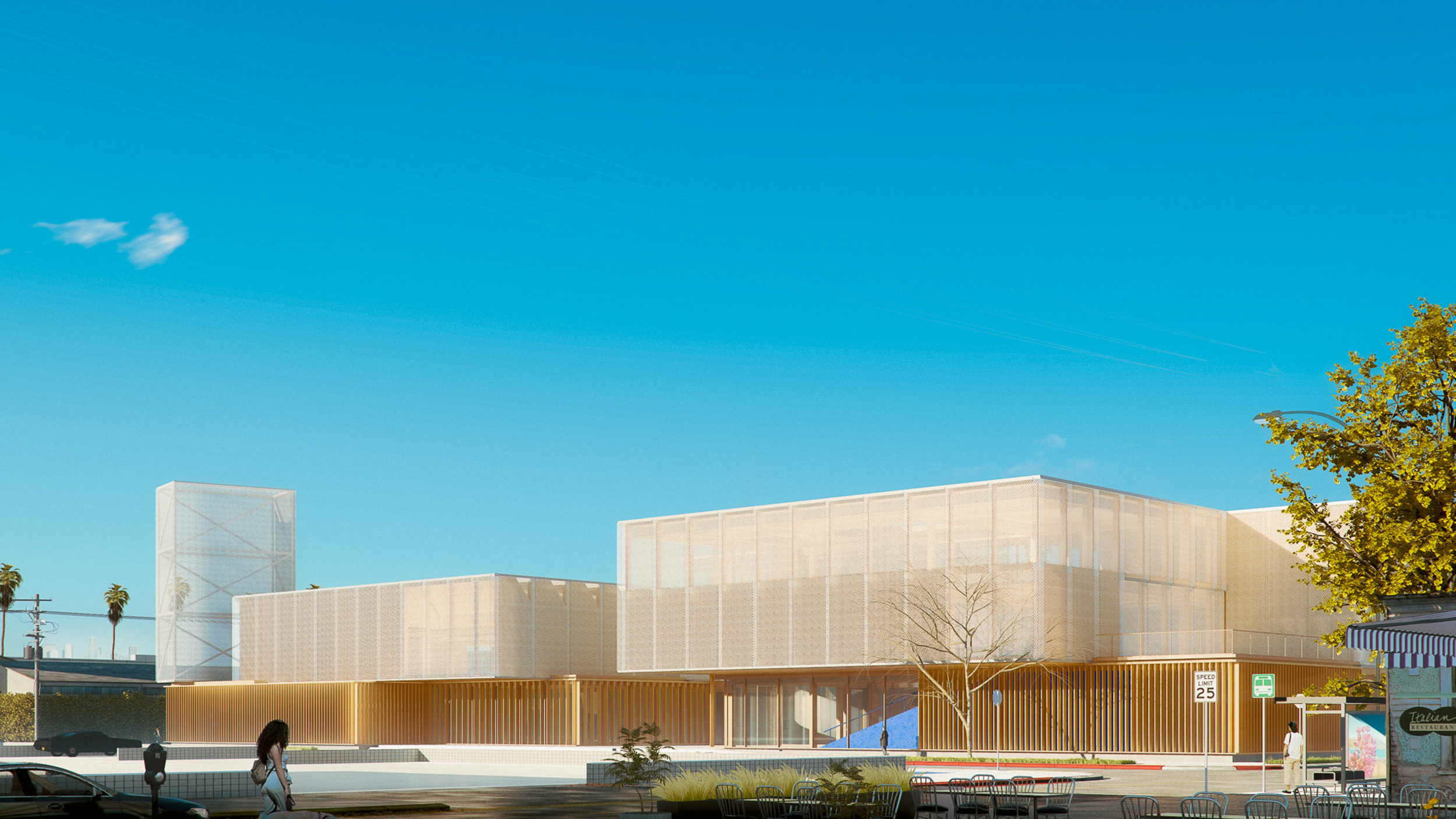
Located in the heart of historic Hollywood, this project for the headquarters of a media production company utilizes a variety of mass timber construction techniques to produce a series of volumetrically diverse spaces. (Courtesy of West of West)
Which skills or lessons from UCLA Arts have proven most valuable in your professional life? How did you learn or develop these skills at UCLA Arts and can you name an example of when they were especially useful?
CT: The most valuable skill I developed was learning how to analyze projects at the urban scale. Even when I’m working on projects that don’t appear to be rooted in urbanism, that way of thinking still informs my work.
At UCLA, we learned to balance “hard data”—facts, figures, and measurable conditions—with “soft data”—cultural perceptions, behaviors, and less tangible insights. This combinatory approach has stayed with me throughout my career. For example, in our recent Small Lots, Big Impacts project, our studio relied on that same framework to ground our design research.
JK: Ultimately my education at UCLA taught me how to ask better questions.
What are some challenges you faced after graduating, and how did your education at UCLA Arts prepare you for these challenges? How did you overcome them?
CT: After graduation, my biggest challenge was defining the role of the architect within the broader process of city-building. It wasn’t only about how a building is constructed but about how it fits into the cultural and social context it serves.
Because UCLA emphasized cities and cultural context, I left with a framework that prepared me for this challenge. That perspective helped me see architecture not just as isolated projects but as part of larger partnerships and systems. It also gave me the clarity to start my own practice—so I could focus on not only the design of projects but also the people and communities they support.
JK: Architecture is a profession that is constantly evolving, and whose best practitioners have a broad range of creative, analytical, pragmatic, and visionary characteristics. I believe that UCLA was instrumental in broadening my perspective on what architects can do and how we can influence the world. This viewpoint remains critical to my practice to this day.
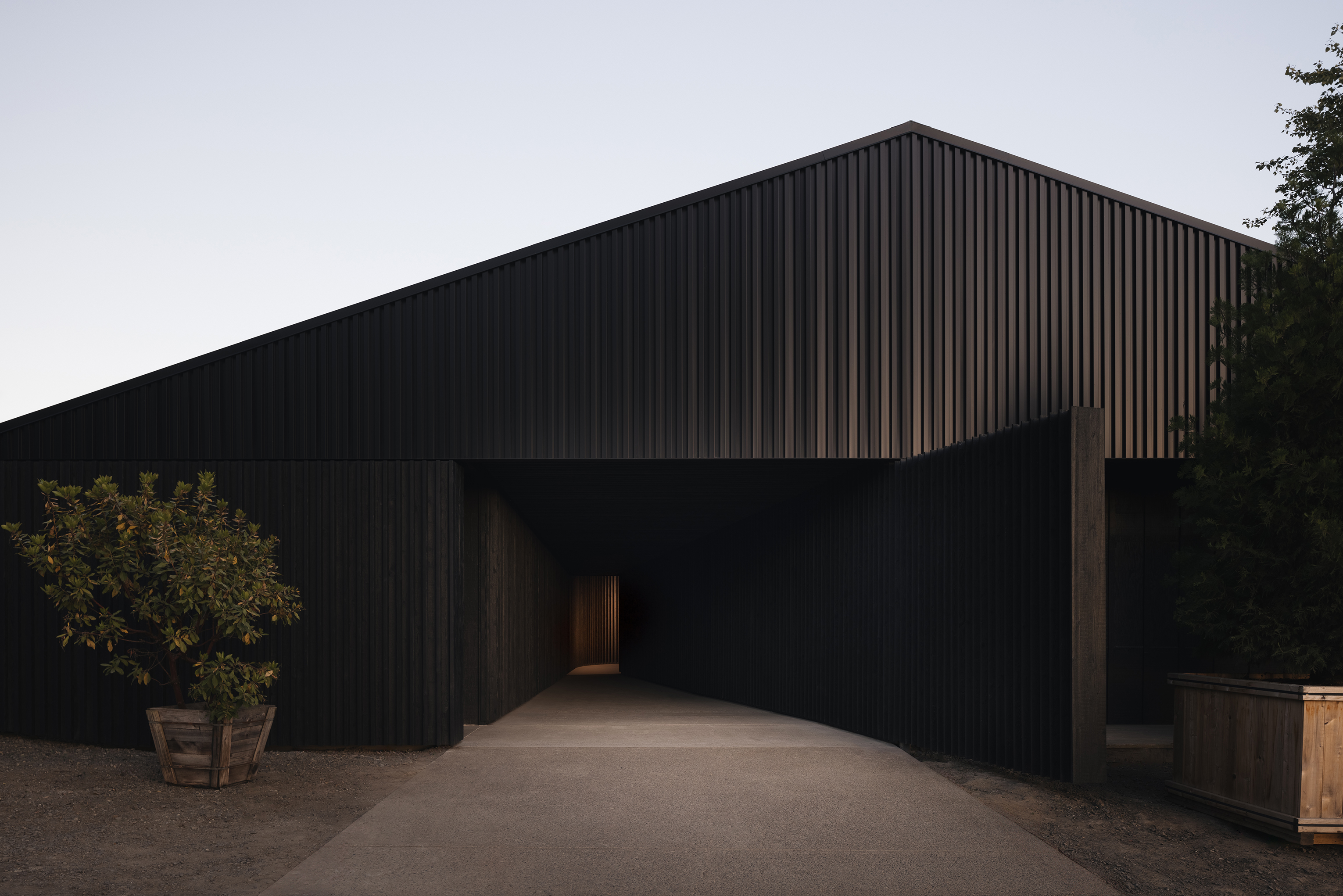
This building first was a sheep barn before being converted into a production space, and now into a barrel hall with five private tasting rooms, a small gallery, and supporting spaces. (Courtesy of West of West)
What advice would you give current UCLA Arts students who are preparing to launch their careers?
CT: Experiment and stay curious. Explore Los Angeles fully and find something unique that resonates with your personal interests. Architecture is a broad profession, and school is the best time to search, explore, and test where your passions lie.
JK: Be nimble. Be curious.
Why is an education in the arts and architecture—and the pursuit of creative practice—so important today, perhaps more than ever?
CT: An education in the arts and architecture fundamentally expanded how I see and experience the world. I always wanted a creative career, but architecture gave me the discipline to shape that creativity into a growing practice.
Today, this feels more important than ever. My creative practice grounds me and gives me a sense of direction that I believe is critical. Without the time and structure to find that direction at UCLA, I think I’d still be searching.
JK: An education in the arts provides a conceptual foundation for all things through a rigorous process of internal and external collaboration. The more our world moves into a digital realm, the ability to create real things that exist in the real world is a means of expressing a truth that is un-corruptible. There is power and honesty in the creative practice—the literal act of creation—that is increasingly meaningful.
Header image: Ladderblock, by West of West, is a winning submission in cityLAB at UCLA’s Small Lots, Big Impacts design competition. (Courtesy of West of West)
Stay engaged. Use #UCLAarts to stay connected.


