Voices of VAPAE
Reflections from students and alumni of the UCLA Visual and Performing Arts Education Program
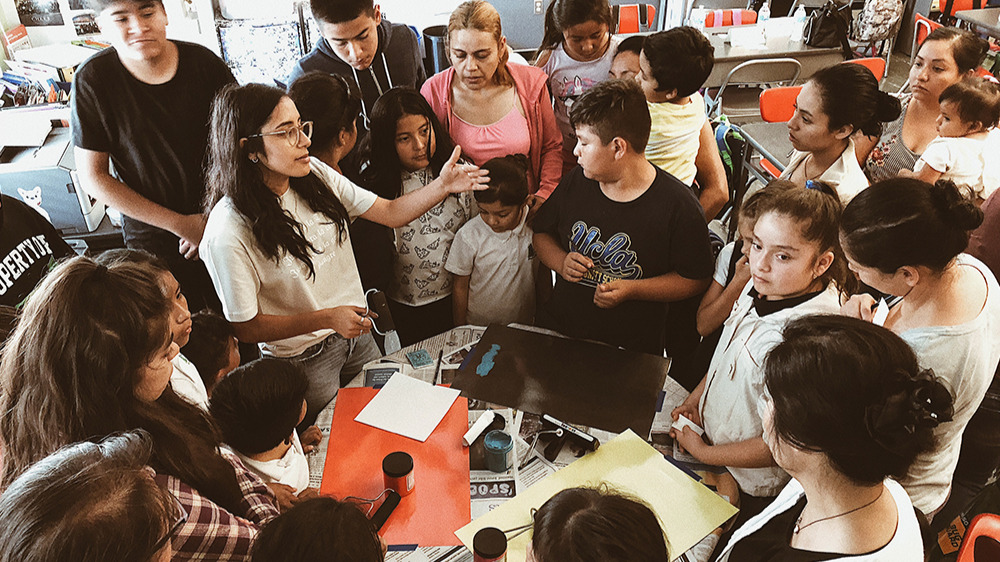
On what sets VAPAE apart:
Jessi Pontillas: VAPAE gives you, as an artist, the chance to challenge yourself. It asks you to demystify and break down the art form you've worked on mastering for years.
Vanessa Chung: I can’t emphasize how innovative the classroom-to-community model is. The program allows aspiring teaching artists to experience the philosophies around learning, both as a student and a teacher, and sometimes both concurrently, bringing investigation and inquiry to the forefront. This is especially unique to the VAPAE program, which encourages students to be both teachers and artists, while integrating their time in the university with their work in the community.
Matthew Broking: Throughout my K-12 public school education, there were few occasions where we were taught artistic techniques. These projects lacked substance and the instructions never truly allowed for a student’s individual voice. At the end of every art project, we would end up with a wall full of art that looked nearly the same. VAPAE undergrads are trained to be mindful of their own student’s cultures and to be reflective of themselves and their surroundings in their art. This allows both students’ and teachers’ artistic voices to come through.
Maria Vazquez: I am Chicana/o studies major, with a triple minor including education. I took my first VAPAE class to fulfill my education minor requirements. VAPAE has provided a very different and vulnerable space for me at UCLA. As a visual artist and aspiring educator, VAPAE has become one of my biggest support systems on campus and has ensured that I develop tangible skills to bring into my future communities. It is a personal and intimate program. It’s also placed me in discomfort, which has challenged me and allowed me to develop new ideas.
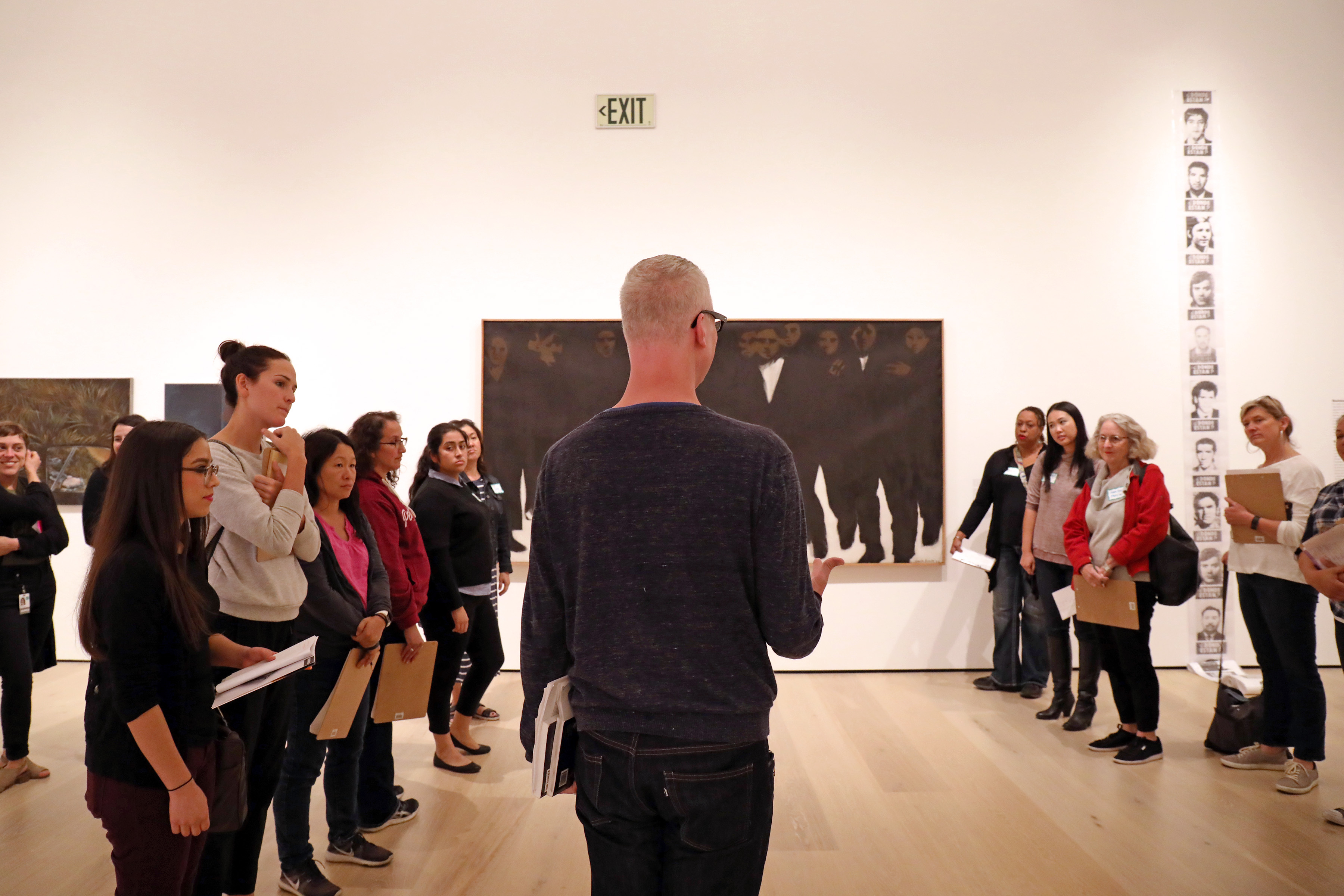
VAPAE LAUSD teacher training at the Hammer Museum
Raymundo Baltazar: VAPAE is a special program because it fully embraces equity, diversity, and inclusion in the arts. It believes that access to arts education is not a privilege, but rather a human right that all students should be able to benefit from regardless of gender, race, or zip code. Further, as a program within a top-ranked research university, VAPAE provides all UCLA students with the opportunity to deeply explore pedagogies that overlap visual and performing art forms, science and politics, engendering and medicine, and more. The program not only allows all creative individuals to be stakeholders in the creation of the next generation of art educators, but it also strengthens the field of arts education inquiry; VAPAE is pushing the boundaries of what a teaching artists can do. Now, as VAPAE’s Community Engagement Coordinator, I have the responsibility to ensure that such access and creative-might continue to empower communities that see arts education as a hurdle, rather than a path to success and higher education.
Lindsey Kunisaki: In every course of the minor, VAPAE faculty modeled the program’s core values as they built a community amongst my peers and our students. They showed us how to not only speak and write about equity, access, and inclusion in the arts, but helped us build the skills to do so in practice, as artists and educators. The VAPAE program instilled in me a consciousness of the social context and responsibility for artistic practice. First as a student, later as a teaching artist, and now as a member of the VAPAE team, this program has shown me that the work of an artist (and an educator, and a university) is not only to reactively reflect, analyze and critique society, but to proactively shape it. I’m proud to be a part of the VAPAE team and look forward to advancing the research and practice of arts education in classrooms and communities.
On the value of being a teaching artist:
Jessi Pontillas: It's important for me to be a teaching artist because I see it as a way of passing down traditions and cultures on to the next generation or to those who are interested in learning. As a teaching artist, you are a significant representation of the techniques and mastery of the art form you practice. Years of dedicated training gives you the ability to become a successful dancer, but it's also important to uplift and empower others through your artwork. That's where teaching comes in. For me, it was important to pursue a career as a dance teaching artist because I wanted to help create spaces for dancers who look like me. Becoming a teaching artist allows me to inspire others and continue to share my passion for dance with my students.
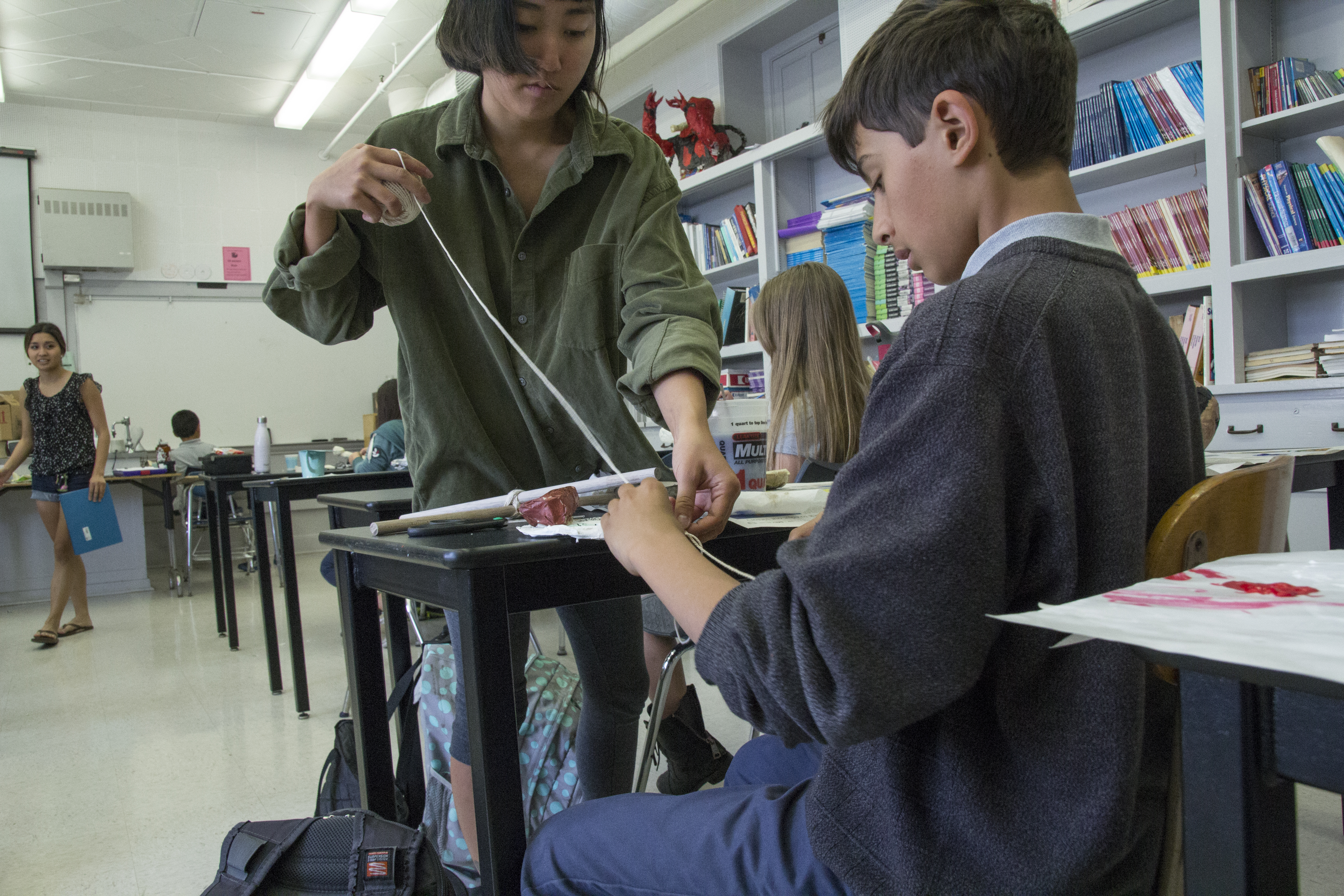
UCLA VAPAE Studio Sessions at Emerson Middle School
Vanessa Chung: I found [VAPAE] to be especially important to my undergraduate art-making practice; working with the Studio Sessions at Emerson program gave me the space to experience vulnerable art making in such a special context. Middle schoolers can be so honest, and it can be difficult to be authentic and forthright as an undergraduate grappling with the arts. Every week, I was moved working with young artists who were so dedicated to making connections between their art and their worlds, and felt pushed, compelled, and challenged to do that in my own work. At a certain point, my work in the art department was intrinsically tied to my afternoons spent with middle school art-makers. My art and teaching practices are still integral to one another—my art is rooted in my identities as an Asian American woman, and my teaching channels those identities as a starting point to share methodologies for students to develop their own approaches to self-expression. It is important for me to use both art making dimensions to make more sense of the world we live in.
Matthew Broking: For me, the most important part of being a teaching artist is the takeaway that the students get. This is directly related to why I find it important to give back to the community. I always learn from my students, and I always try to use that knowledge in my own arts practice. Every time I teach a class, I have an “aha moment” with my students. VAPAE taught me that the teacher is also a student. In order to grow as an educator, one must learn from their students. There are so many ways to tackle an art project and l always find at least one student’s approach to the project as new and innovative.
Amorette Muzingo: I hold so much love and honor for the experience of being a teaching artist, because it’s so much more than entering a classroom, teaching techniques, and producing a work of art. It’s learning the nuances of your students’ moods, what makes them laugh, sitting together and creating work while talking about the minutiae of each others’ day; it’s working to collectively create an environment in which your community feels empowered to express themselves creatively. The relationships and growth that result in a teaching artist practice is one that goes both ways – if anything, my students have taught me so much of what I know of being a teaching artist.
VAPAE lessons:
Lindsey Kunisaki: As a teaching artist in one of VAPAE’s first after-school programs, I had planned on teaching basic musicianship and songwriting. To my surprise (at the time), the fidgeting mass of kindergartners was hardly interested in sitting still for any listening analysis and composition after a grueling school day. They wanted dance, theater, visual art, and science. I had come to teach music. It seemed that their five-year-old curiosities were at odds with my twenty-year-old professional aspirations.
At this point I realized that this learning space was not mine to dictate. VAPAE had taught me that a learning community thrives on shared commitments and values, and as an educator I had a responsibility to cultivate that, even if it meant deviating from my original plans.
I modified my curriculum, now with the priority of understanding and supporting their creative interests rather than imposing my own expertise. My guiding question shifted from “What will they gain?” to “What do they need, and what can I offer?”
Raymundo Baltazar: In 2007, President Barack Obama resurrected the phrase hope as a campaign slogan and though he was not the person who pioneered it, that slogan—which unified many through its broad spectrum of positivity—resonated with me so much that I made the decision to change careers and return to school to complete my undergraduate degree.
Completing my B.A. from the World Arts and Cultures program allowed me to expand on the infinite ways my work as an artist could positively affect the world. However, it was through VAPAE that I learned and subsequently had the opportunity to strengthen my art practice, while actively participating in civic discourse. VAPAE gave me the opportunity to be a participant right at the center of the debate regarding the importance of arts education. It allowed me to claim my place in the rich history of arts education in the U.S. and beyond; VAPAE transformed hope beyond a slogan.
Jessi Pontillas: VAPAE helped me understand the type of role model I am and want to be for my students. I understand who I am as a teacher in a co-teaching environment. I figured out classroom management techniques that work for me, new ways of engaging with dance, and what my goal for my students is at the end of the day: to express themselves genuinely through movement.
Amorette Muzingo: There was a moment when I was in the Arts Education Teaching Sequence at the UCLA Community School, where I had made a joke to the class while doing a quick demo, and not only did I actually make them laugh, but with a very subtle transition, was able to refocus and have their undivided attention. The room was silent! In that moment, I recognized that I had built not only a rapport with 35 6th graders, but had also gained their respect and intrigue. The rest of the day, they were so inquisitive and so excited about creating their sculptures that it felt like I was on the right track to becoming a teaching artist.
On why arts education matters:
Vanessa Chung: The arts in education teach cultural literacy and foster critical thinkers; as a teaching artist, I feel the responsibility to dig deeper into these core values and build more community-based learning spaces. There are many ways that this is both relevant and necessary in our current political and social climate. I believe the arts in education gives us the language to grapple with the difficult things, such as the complexities of cultural, social, relational, and financial capital in our society.
Matthew Broking: Arts education develops a student’s critical thinking and critical reasoning skills, and is also known to benefit students’ overall academic performance. Arts education teaches students to be mindful of themselves and their surroundings, which in turn, benefits themselves and those around them.
Maria Vazquez: A parent from MASA recently said to me, “Everyone needs to try the arts, then afterwards they can decide if they like it or not.” I agree. We need to expose our students, the foundation of our society, to the arts. The arts can heal! Arts education is essential and needs to be experienced by everyone. It’s a medium that allows for vulnerability! That can create a safe space.
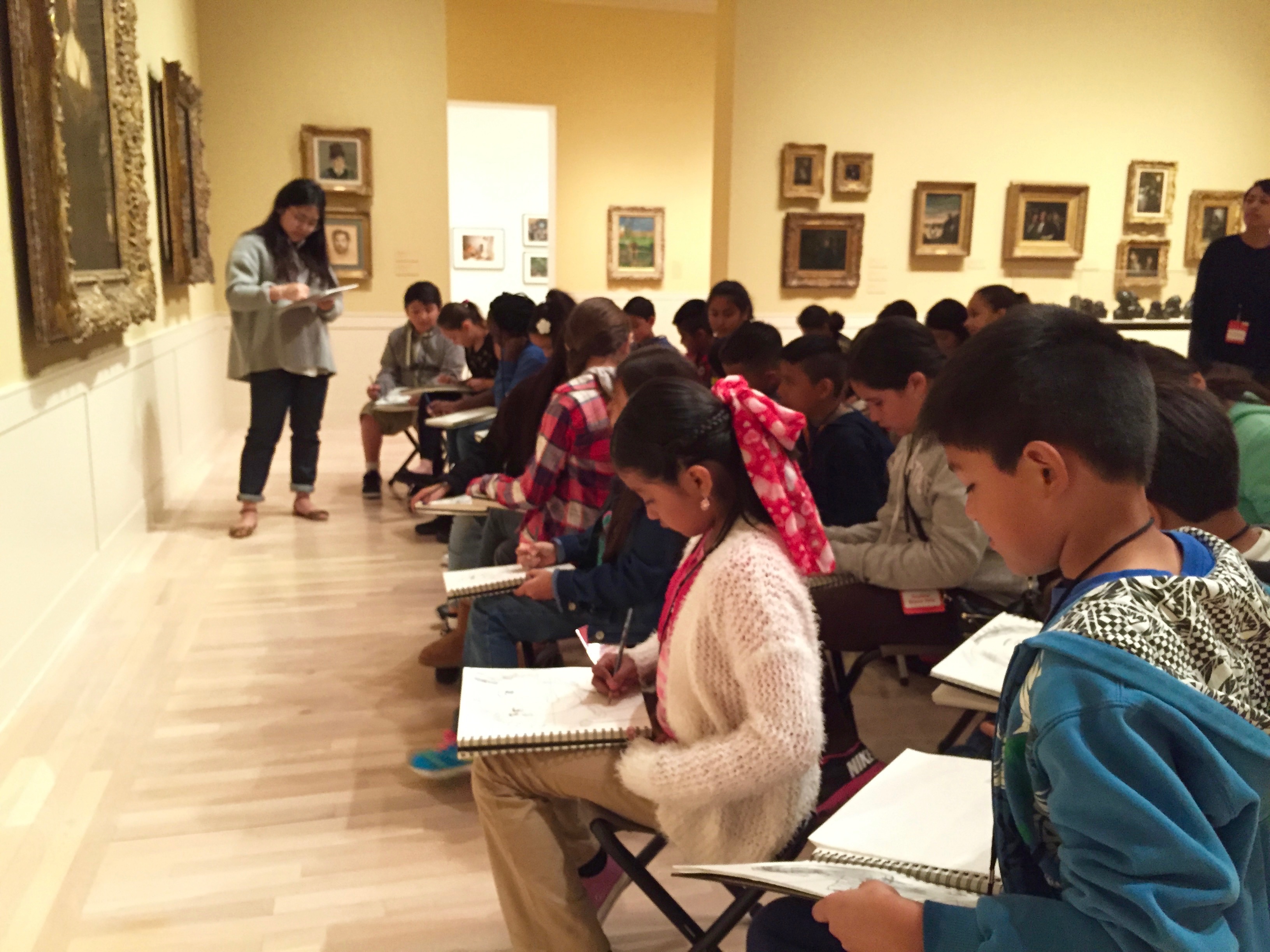
Vanessa Chung teaching in the classroom in resdience program at the Hammer Museum.
Jessi Pontillas: Arts education gives you the chance to explore yourself creatively through various art mediums. Some individuals find expression through art easier than via words or speaking, presenting them with the opportunity to be authentic in their art. It challenges students to think critically and innovatively, finding alternative methods for expressing ideas, emotions, and stories. For students who are less comfortable with the arts, it asks them to take risks and make concrete decisions. Arts education presents the opportunity to discover things about yourself that are often overlooked by the regular school day.
Amorette Muzingo: The fight for equitable arts education in every classroom and community is something I believe in with every fiber of my being. As someone who was very privileged to have been raised in an artistic family who encouraged my creative growth, I want to create the space for that experience to happen for each child, no matter their socioeconomic status or zip code. The arts are healing and thought-provoking – I would go so far as to say essential in one’s own personal growth. Beginning this creative exploration at an early age can only stimulate the next generation of creative thinkers.
On plans for the future:
Matthew Broking: My educational journey has only further demonstrated how sparse the arts are in public education. It will always be a goal of mine to give back to the community as much and as best as I can. It has also been a lifelong goal of mine to eventually become a professor in art and/or design. The work that VAPAE does is so impactful that it's already making a notable difference. The VAPAE community is incredibly supportive and I look forward to seeing the program continue to grow.
Jessi Ponitllas: VAPAE gave me the confidence to make teaching dance a huge part of my career. It taught me how to talk to my students, to get them engaged with not only the movement but the culture and history behind different dance styles. VAPAE has also given me tools that can be transitioned into therapeutic practices as my next goal is to become a dance/movement arts therapist with my own practice.
Maria Vazquez: I’m an aspiring educator with a goal to open up a community cultural center in my hometown, Watts! I’m a firm believer in the skills of the community, however we need to provide them with the resources to hone their skills. VAPAE has supported my belief that working with communities who lack accessibility to the arts is essential for education equity. VAPAE has motivated me to keep my goal alive, to invest into our communities! We need more women of color in the teaching artist field.
Raymundo Baltazar '17 (B.A., World Arts and Cultures, VAPAE Minor); Community Engagement Coordinator, VAPAE
Matthew Broking '18 (B.A., Design Media Arts, VAPAE Minor)
Vanessa Chung '16 (B.A., Art, VAPAE Minor; M.Ed., Arts in Education, Harvard Graduate School of Education); Artist Liaison, Stanford Live
Lindsey Kunisaki '15 (B.A., Individual Major, VAPAE Minor; M.Ed., Arts in Education, Harvard Graduate School of Education); Public Events & Special Projects Coordinator, VAPAE; Director of Education & Grant Writer, Symphonic Jazz Orchestra
Amorette Muzingo '16 (B.A., Art History, VAPAE Minor) Program Coordinator, VAPAE
Jessi Pontillas ’17 (B.A., Dance, VAPAE Minor); Teaching Artist, The Flourish Foundation
Maria Vazquez (B.A. Candidate, Chicana/o Studies, VAPAE Minor)