Vija Celmins’s Surface Matters
Profile of UCLA alumna Vija Celmins in the New Yorker
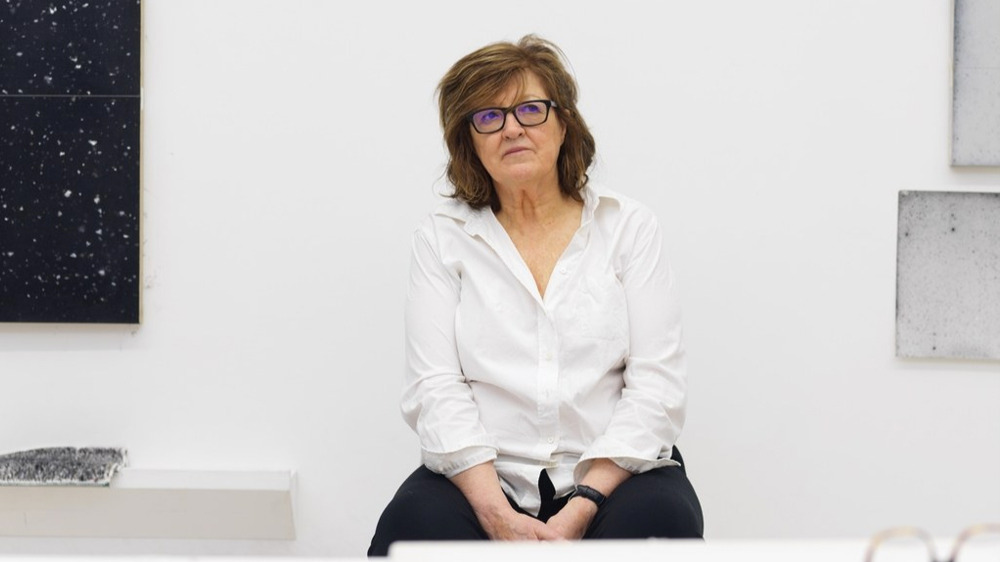
On Sept. 24, Vija Celmins, who earned her M.F.A. from UCLA in the 1965, has a retrospective exhibition opening at The Met Breuer in New York.
"A few days before the opening of Vija Celmins’s retrospective at the San Francisco Museum of Modern Art, last December, the artist, an auburn-haired woman in dark slacks and a slate-blue overshirt, stood in the first gallery and said, to nobody in particular, “This show is too large.” Curators are used to comments like this from Celmins, who is prone to self-deprecation. She once told a collector that the painting of hers he had recently bought was “the worst thing I’ve ever done.” The current exhibition, her largest to date, was scheduled to move on, after San Francisco, to the Art Gallery of Ontario, in Toronto, and on September 24th it will open at the Met Breuer, in New York, where Celmins has lived since the early nineteen-eighties. Gary Garrels, SFMoMA’s senior curator of painting and sculpture, needed about ten years to put it together, in part because Celmins, who turns eighty-one in October, is so quixotic about how, and when, her work is seen. Both Garrels and his co-curator, the Metropolitan Museum’s Ian Alteveer, believe that the effort was long overdue. “Vija is treasured and admired by other artists, and by curators, scholars, and art historians,” Garrels told me, “but beyond the art world she is almost unknown.”This has never been a problem for Celmins. Her art has awed critics and found buyers since she began showing it, in the early nineteen-sixties, and her paintings now bring between three and five million on the primary market. Still, she produces relatively little work and vigorously resists all forms of self-promotion. From the late sixties until quite recently, her subject matter has been limited to a few recurrent motifs—oceans, deserts, night skies, spiderwebs, antique writing slates—which she explores, patiently and obsessively, in drawings, oil paintings, prints, and sculptural objects that are unlike those of any other artist. She has erased the line between figuration and abstraction. Composition, bright color, narrative, and the human figure have no place in her work, which, at its best, conveys a timeless, impersonal, and rather cold beauty that can be inexplicably moving. When I walked through the exhibition with her in December, she was not happy about the lighting in the first two galleries, where her early paintings were hung. (A technician went off to adjust it.) I gathered that she had been driving the museum’s installation staff slightly mad with requests for minute changes in lighting, picture height, wall labels, and other details, and at the same time delighting them with her mordant humor and her lack of self-importance.
One gallery was dedicated to the paintings that she considers her first mature works, all done in 1964—deadpan, single-image still-lifes of functional objects in the studio she had at the time in Los Angeles. There was a goosenecked desk lamp with two bulbs, an electric fan, an electric heater, a hot plate, an old-fashioned revolver that someone had given her to discourage burglars (she’s never fired it), and other items, shown in isolation against blank, painted backgrounds. Some of these, the heater especially, with its glowing red coil, had a somewhat ominous look. The most winning image was an opened airmail envelope, with red and blue markings, on a brown background. “I was painting so fast then, a painting every two or three days, trying to find a sensibility and a touch that was anonymous,” she told me."— Calvin Tomkins, August 26, 2019

This post is an excerpt. Read the full article on the New Yorker website.
Stay engaged. Use #UCLAarts to stay connected.


