Ulysses Jenkins: Journeys of a Video Griot
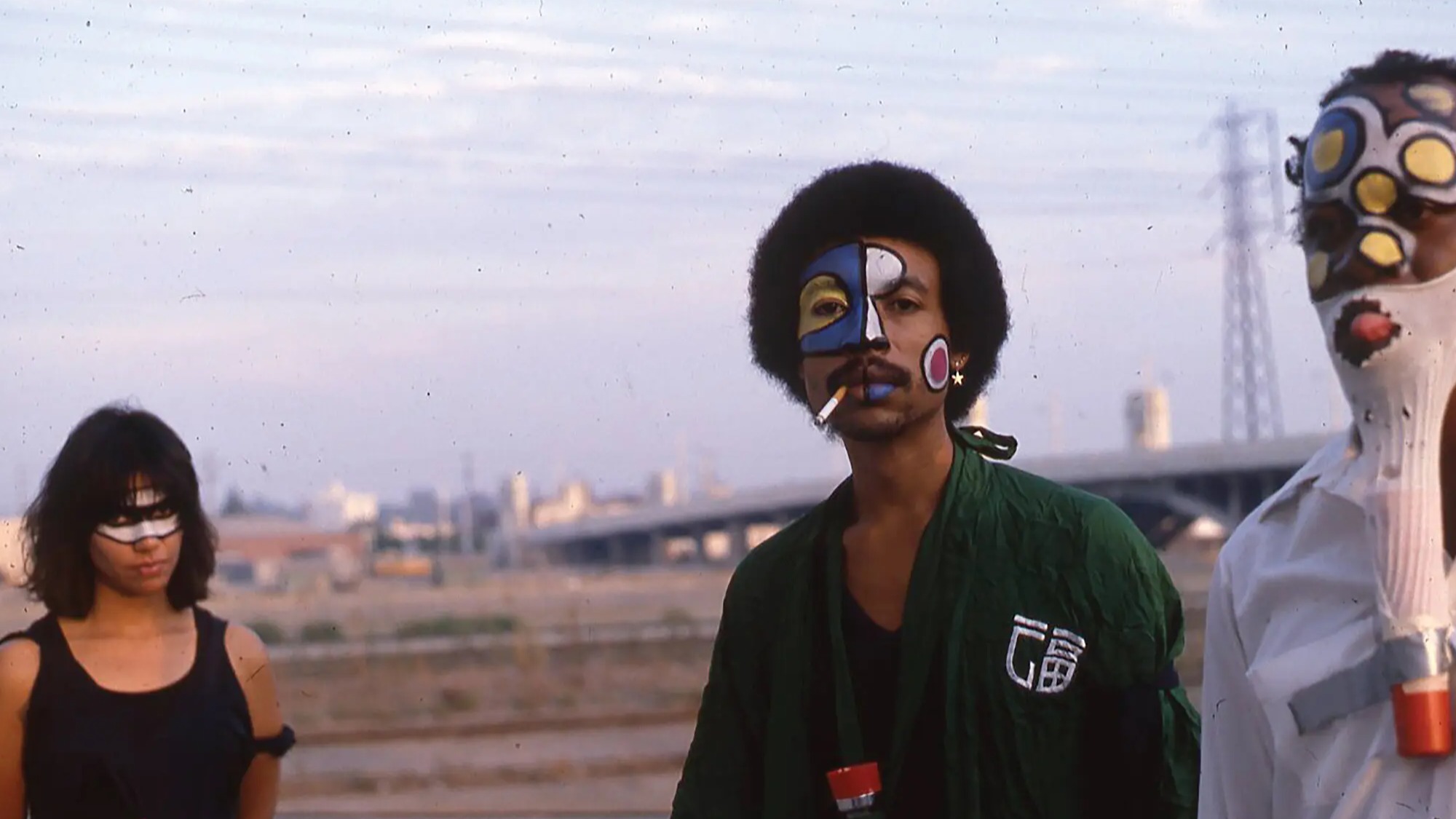
Ulysses Jenkins changed how artists use video, exposing how the medium reinforced racial stereotypes, then using it as a conduit for global community. At the Hammer Museum, he gets his due.
Still from Jenkins’s 1979 video, “Two Zone Transfer.” The video, our critic says, “is a good introduction to Jenkins’s loose and rangy work.” Credit: Ulysses Jenkins and Electronic Arts Intermix
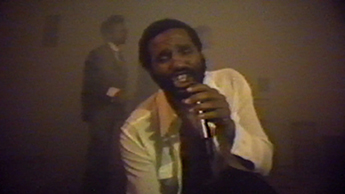

LOS ANGELES — “Two-Zone Transfer” opens with a shot of the artist Ulysses Jenkins waiting for the bus. “Two-zone transfer,” he tells the driver as his coins clink into the slot. The video ends as he disembarks. In between, however, the journey is a restive tour of what Jenkins calls the “same old basic image problems” that have haunted African Americans from the start. In a smoky, surreal visitation, Jenkins encounters three Black men dressed in dark suits, cotton gloves and masks of Richard Nixon and Gerald Ford smeared with shoe polish. They are minstrels, and they stage a capsule history of minstrelsy in popular entertainment. “As far as we’re concerned,” says one, in a disorienting bit of racial cosplay, “your culture needs our interpretation.”
Jenkins disagrees. “Ulysses Jenkins: Without Your Interpretation”— the video artist’s first major museum retrospective, at the Hammer Museum after a stint at the Institute for Contemporary Art (ICA) in Philadelphia — asserts that Black culture doesn’t need white interpretation at all. In fact, interpretation — offered, more often than not, without understanding — is a big part of the same old problem of race in the United States.
“Two-Zone Transfer,” made in 1979, is a good introduction to Jenkins’s loose and rangy work. His grand themes are all there: a two-zone transfer is a bus ticket, sure — but also passage between realms of Black and white; haves and have-nots; harshly lit reality and vignetted dreams.
Jenkins’s work acidly critiques the cloying simplifications of mass media, yet beams with the excitement of holding the means of production. His first videos were documentaries of a sort, shot on a Sony Portapak, a versatile early home video system. “Remnants of the Watts Festival” (filmed in 1972/73 but not finished until 1980 because of his lack of access to editing gear) blends concert footage of the band War performing at a commemoration of the 1965 Watts riots and piercing interviews with festival organizers. This video appears at the Hammer alongside impressionistic shorts about the art of Charles White (1978) and David Hammons (1977/82). Likewise, Jenkins’s first scripted works, including “Two-Zone Transfer,” mix staged, costumed sequences with cinéma-vérité.
The exhibition meanders as it follows the self-styled video griot into the 21st century — but Jenkins has never particularly enjoyed the confines of white walls. The drifts and gaps of the Hammer installation take on a montage-like, doggereal quality of their own. From a framed snapshot of Jenkins at a student protest in 1967 to a 2006 video comparing a flood-ravaged and neglected New Orleans to Sun Ra’s mythic “Planet X,” the show provides some social context, but the impulse remains to err on the side of obscurity: to present without interpretation. Jenkins’s “Video Griot Trilogy,” 1989—1991, screens in the show’s far room; in the first installment, “Self-Divination,” the protagonist wanders the parks and trash heaps of Los Angeles, interspersed with jarring Nazi rally newsreels and calming shots of a sand mandala. Similarly, the exhibition sets the viewer loose in the aesthetics of free jazz and Afrofuturism without mapping the politics.
Then again, the general refusal to over-interpret the exhibition harks back to the blacked-up presidents in “Two-Zone Transfer.” The minstrel in European and North American society evolved as a parody — an ignorant interpretation — of the griot, the storyteller and guide of West African culture. The griot’s oral, musical, performative tradition was able to survive the Middle Passage, when nearly everything else was stripped away. Minstrelsy is white culture’s way of taking that, too.
Jenkins dramatizes this threat of such stereotyping in “Mass of Images” (1978). The black and white video begins as Jenkins, wearing sunglasses and a glossy clear mask, rises up from behind a stack of televisions. “You’re just a mass of images you’ve gotten to know,” he recites, “from years and years of TV shows.” Stills from “Birth of a Nation” and “Uncle Tom’s Cabin” fill the screen. He begins the poem again. “The hurting thing, the hidden pain, was written and bitten into your veins.” Jenkins lunges at the TVs with a sledgehammer — he’d like to smash them, he says, but “they won’t let me.” — Travis Diehl, April 6, 2022

This post is an excerpt. Read the full article on the The New York Times website.
Stay engaged. Use #UCLAarts to stay connected.


