UCLA's Hitoshi Abe and USC's Qingyun Ma on the ugliness of L.A. architecture, 'Uberism' and more
Christopher Hawthorne sat down with Abe and Ma to conduct a kind of exit interview about the decade
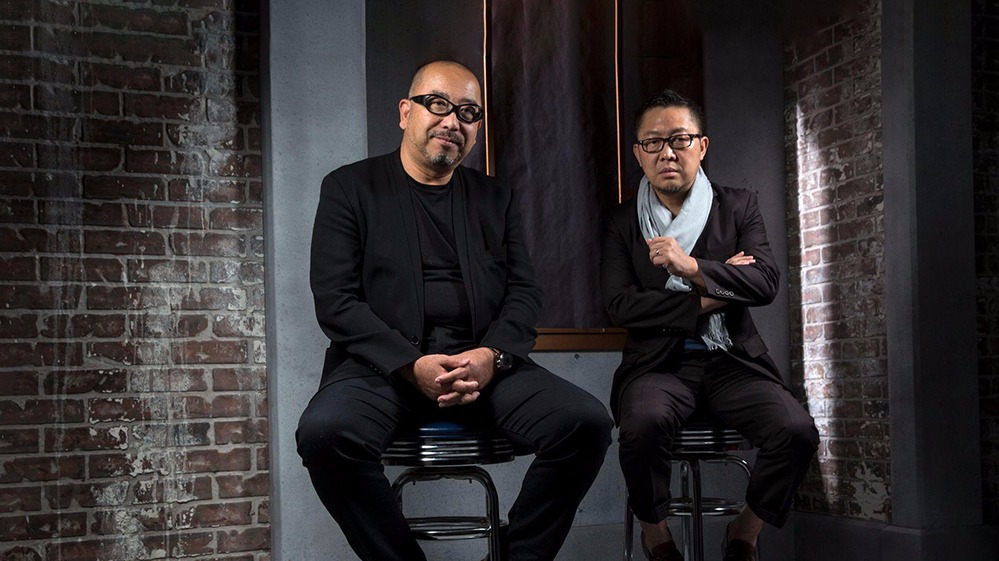
Hitoshi Abe is a professor and the former chair of the Department of Architecture and Urban Design. His firm, Atelier Hitoshi Abe, known for architecture that is spatially complex and structurally innovative has been published internationally and received numerous awards around the world. Since 1992, he has maintained an active design practice based in Sendai, Japan, and Los Angeles, as well as a schedule of lecturing and publishing, which placed him among the leaders in the field. Abe will present a public lecture on Monday, Apr. 24 on the UCLA campus.
In 2007, L.A. architecture saw a major changing of the guard as Hitoshi Abe, an architect from Sendai, Japan, became chair of the department of architecture and urban design at UCLA and Shanghai-based Qingyun Ma took over as dean of the USC School of Architecture. Now both men are moving on from those posts: Abe stepped down last year, while Ma’s final day in the job is June 30. (Both will retain professorships at their respective schools.) For this week’s column I sat down with the two of them to conduct a kind of exit interview about the decade they’ve spent running the two departments.
In a basic sense, what did you set out to accomplish at each of your schools and how successful do you think you were?
Qingyun Ma: To take the heritage of the school and push that forward — that’s what I decided to do. To make a point that this school is about training people to make buildings. It’s boring, maybe, but a fresh view. The second focus was to recruit as many new faculty as possible, although I had to do this in a sort of buckshot way. That resulted in more practicing architects coming to USC, especially as adjunct professors, which is a category over which I had more control than the tenure track. People like Patrick Tighe, Lorcan O’Herlihy, Larry Scarpa. It’s a bit like changing not the bedrock of the institution but the soil.
Hitoshi Abe: In my case, we had a strong faculty and still do, and the curriculum was largely set. Sylvia Lavin [Abe’s predecessor] focused on setting up the curriculum. So the first thing I did was think about how to get all of that talent moving in basically the same direction and build more of a sense of community.
Ma: Maybe this is a cultural difference. I’m shooting buckshot, he’s thinking about community.
Abe: The one big surprise for me was that in America architecture is much more curriculum-based. The time the professor spends with the students is divided, and limited, by semester or quarter. In Japan you work with a professor in your specialty over a much longer period of time ...
Almost like an apprenticeship.
Abe: Right. In the undergraduate program there’s nothing I could do at UCLA — it’s fixed. But at the graduate level you have more flexibility. So we added what we called Suprastudio, a one-year, one-professor course of study. Each program is custom-made by these professors, so the students can spend a lot more time with them. And a funny thing happened after 2009, after the Lehman shock and the economic collapse, when the university had to cut the budget. I began meeting with people from Toyota, Disney — they were excited to collaborate with us. That led us to create an Ideas Campus in Playa Vista. — Christopher Hawthorne, Apr. 20, 2017

Read the entire interview on the Los Angeles Times website.