UCLA’s 2023 Dancing Disability Lab Supports Cross-Disability Solidarity
Dancers with disabilities gathered at UCLA for a week of workshops, choreography, and discussion
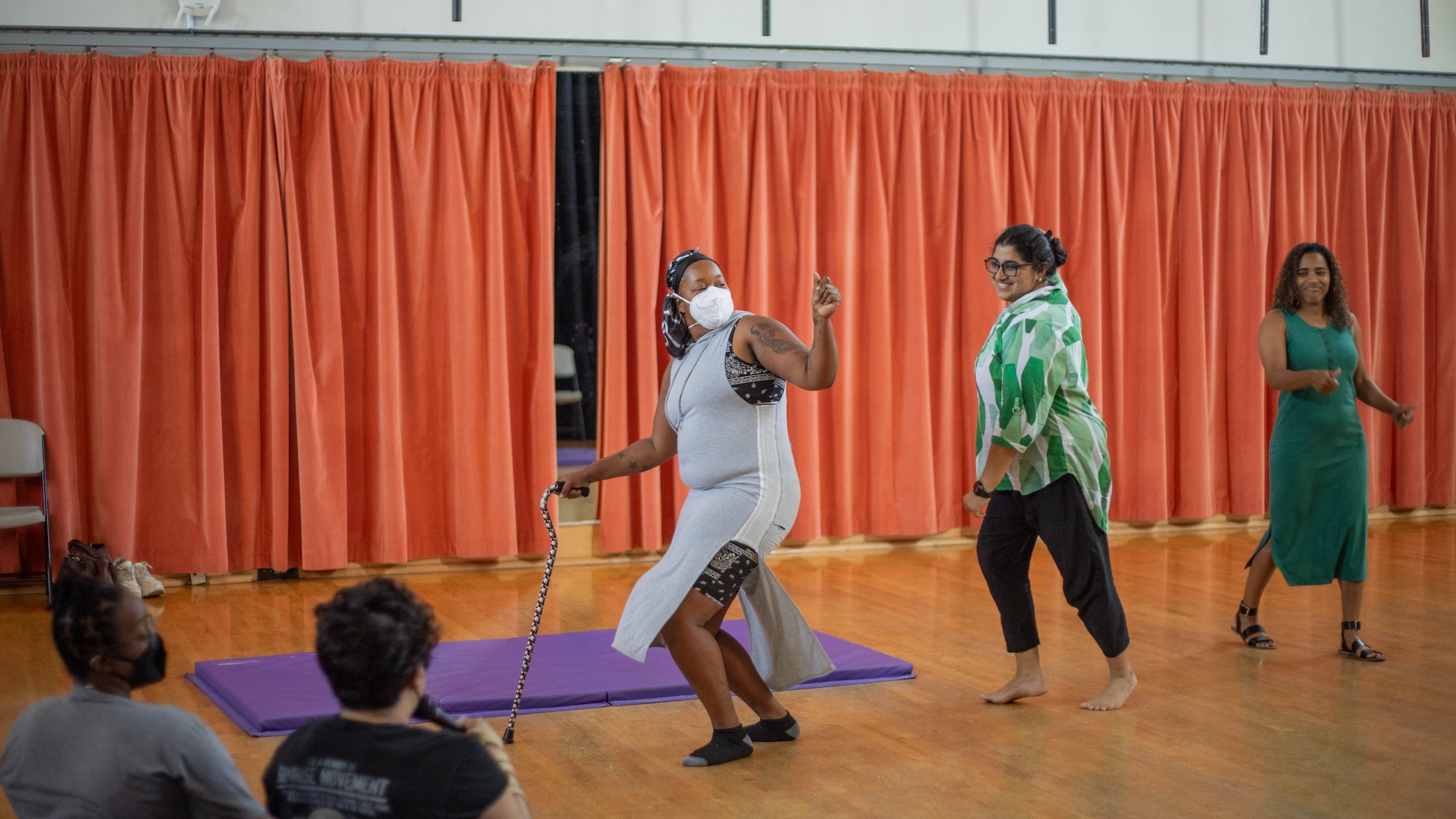
During a sweltering week in July, dancers from around the world assembled in a studio in UCLA’s Kaufman Hall. The palpable energy and enthusiasm in the room defied the heatwave outside. The 10 participants, each identifying as having a disability, were gathered for the 2023 Dancing Disability Lab, now in its fourth iteration. Together the artists shared a conviction that dance is a way of living fully and a means to social change.
Hosted by the Department of World Arts and Cultures/Dance and the new disability studies interdepartmental degree program/B.A., the Dancing Disability Lab, founded in 2019, is directed by UCLA School of the Arts and Architecture choreography professor Victoria Marks. This year, the Lab was facilitated by Disabled artists and disability justice organizers Kayla Hamilton, India Harville, and JJ Omelagah.
The week-long lab prioritized individual and collective access, manifesting in dancing that incorporated mobility aids like canes, chairs, and walkers and discussions that integrated audio description and American Sign Language. Access thus emerged as an aesthetic, challenging conventional ideas about productivity, rigor, and authority. Process was prioritized over product.
According to Marks, “The Lab is about more than inclusion. It presents processes and instructions that are about our collective survival.”
Each participant led a workshop for the group, where they shared artistic practices and exchanged ideas. These workshops were the foundation for continued movement exploration and discussion. The Lab concluded with an open studio event where the artists shared their work with the public.
Several of this year’s participants set aside time to reflect on their personal history with dance, the importance of disability advocacy and justice, and their experience with the 2023 Dancing Disability Lab.
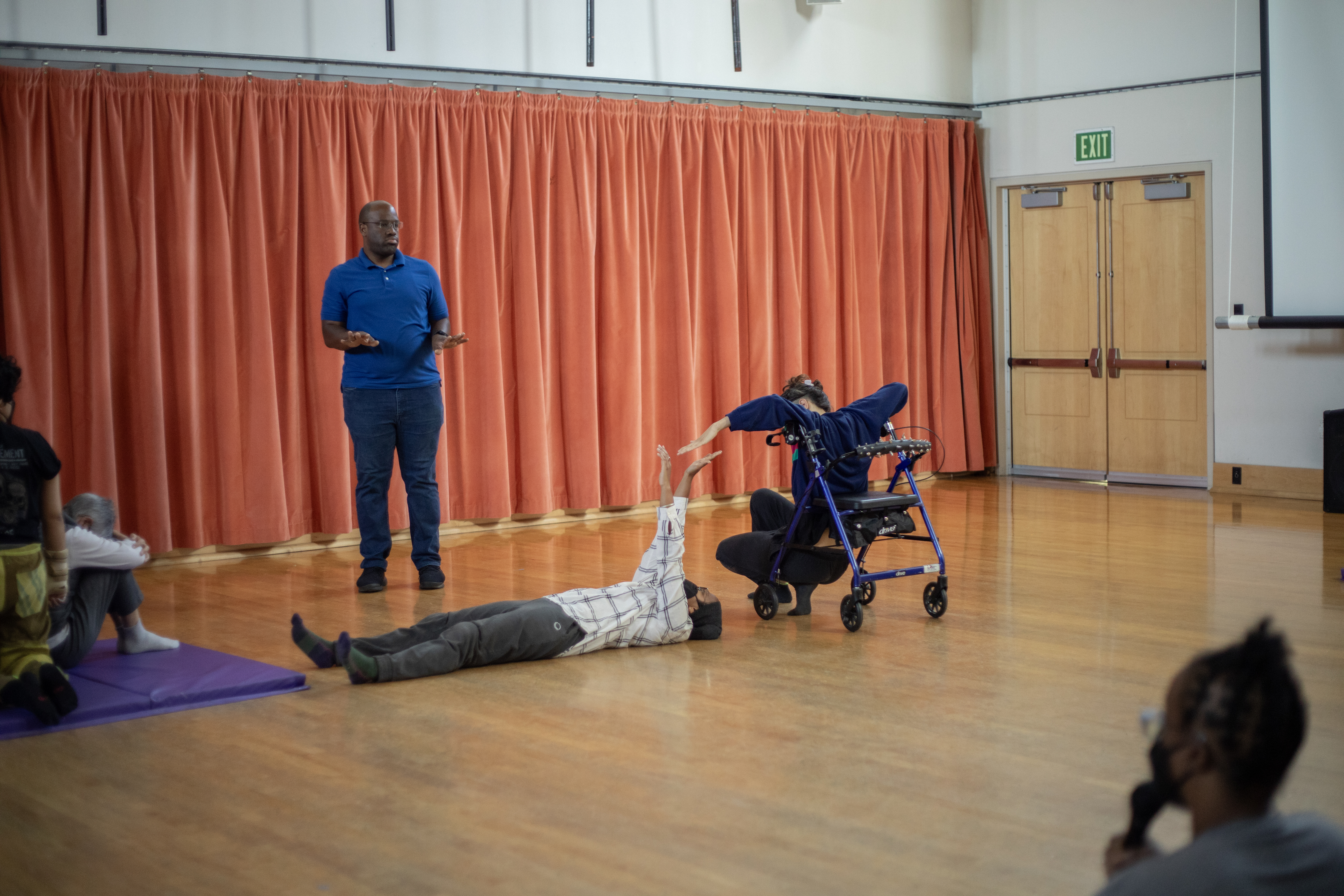
Shireen Hamza (they/them/theirs/she/her/hers)
“I came into dance through disability. I developed fibromyalgia, basically a chronic pain condition, in my early twenties. It took several years for a diagnosis, and the pain made me immobile. The thing with fibromyalgia is you need to be active. That helps manage the pain and helps you sleep, but it's hard to be active when you're in pain,” said Shireen Hamza, a historian and artist residing in Chicago, where she teaches with the Prison + Neighborhood Arts/Education Project (PNAP).
“A friend of mine introduced me to a dance that was accessible called contact improvisation. Dance spaces aren’t always accessible, but contact improvisation was something I could modulate for myself. Something I'm taking away from this week is that, even in a space where access is front and center, we are all modulating at all times in dance spaces. That's something all dancers do, whether they identify as disabled or not.
“This is my second disability dance community, and it has helped me grow as a dancer and a dance maker but also as someone interested in bringing movement into non-dance spaces and making it accessible for non-dancers. The Dancing Disability Lab is beautifully and intentionally a cross-impairment space. Everyone's coming in with different disabilities and needs, so I am learning about how the organizers and participants think about access in a way I would not have gotten to organically experience otherwise. That is a direct result of the care that has gone into the creation of this lab, and it manifests in every single aspect of the gathering. On one hand, it's a little intimidating, in a good way, because it means I have a lot to learn. On the other hand, everyone is patient and understands it will take us time to learn and grow together.”
Zahna Simon (she/her/hers)
“When I was younger, I was the only Deaf person in a hearing school,” said Zahna Simon, a professional dancer Deaf from birth, Deaf advocate, and the assistant director for Urban Jazz Dance Company and the Bay Area International Deaf Dance Festival.
When Zahna was in the fourth grade, she saw a ballet class after school. “I was immediately captivated because the teacher focused less on speaking and more on visual movements. I felt like this was an awesome place I could be a part of and not have to rely so much on trying to understand (or not understanding) what people were saying, but instead watch the visual movements and learn that way. After that first ballet exposure, I’ve been fascinated and into dance ever since.
“The Dancing Disability Lab is a place where people with various disabilities and access needs can come together, and I feel like it's a safe place. It's a safe space to express your feelings, listen to each other, and understand each other. Other conferences and events sometimes make you feel like you're the only one in the room that is like you. You feel like you have to advocate for your access needs, and you sometimes feel like it's a burden to other people. But in this space, no one feels or shouldn't feel like a burden because we're all willing to learn and accommodate. We're learning every single day. We never stop learning. We continue to learn in this space about various needs and lived experiences, various cultures, access needs, disabilities, and the like. It’s very inclusive here.”
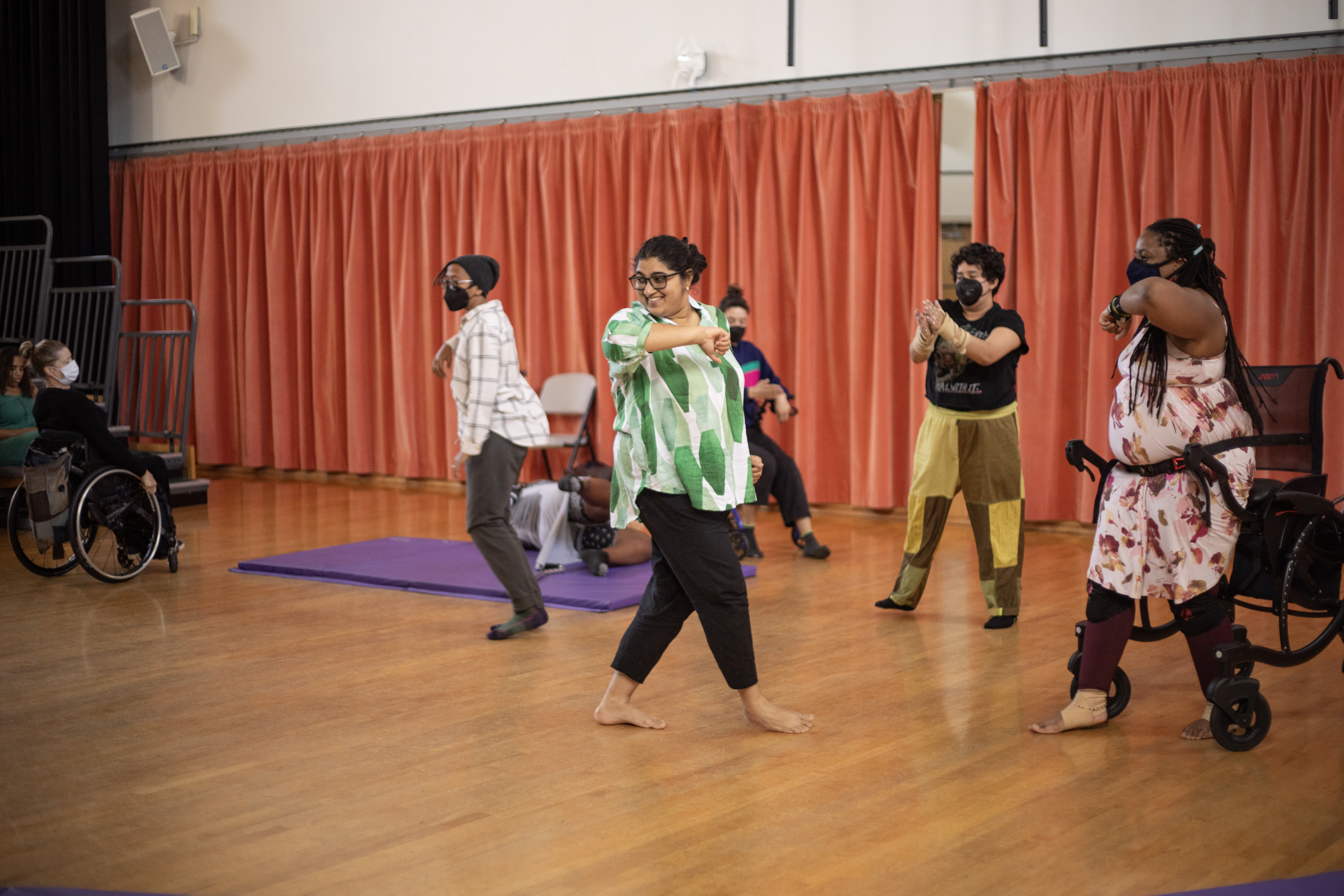
Akhila Vimal C. (she/her/hers)
“I’ve been dancing since I was five years old. My mother is a Bharatanatyam and Mohiniyattam dance teacher. These are classical dance forms of India. When I started dancing, I was not disabled. For me then, dance was rigorous and intense. Dance now means community and is a place where I can be vulnerable,” said Akhila Vimal C., a Fulbright-Nehru postdoctoral fellow at UCLA and a performance and disabilities studies scholar. She identifies as disabled, owing to partial and recurrent vision loss.
“All the dance moves I have ever ‘learned’ were about creating beauty, rigorous movement, and the perfect body. As dancers, we are very conscious of our bodies, space, and how we are represented. Disability justice in a dance space is knowing no one is judging.”
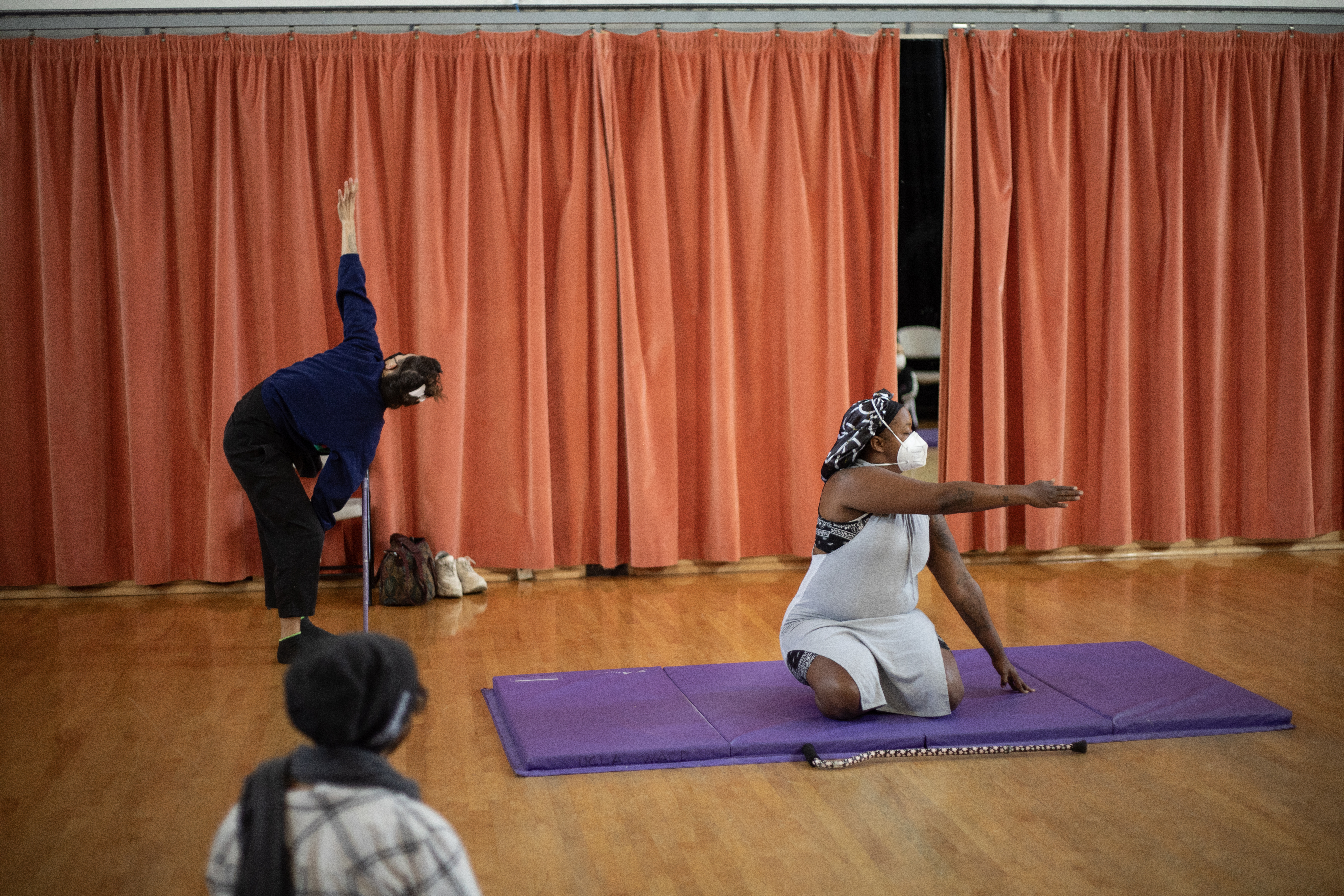
Saira Barbaric (they/them/theirs)
“Dance has been reopening all my other artistic lanes,” said Saira Barbaric, a Black, disabled, trans artist. “I do a lot of kinds of art: go-go dancing, drag, burlesque — all kinds of nightlife versions of dance.” Barbaric has self-produced performances, events, and short films since 2017, creating in mediums considered both high and low art to weaken the barriers between the two. “However, the disabled dance world is what has really embraced me as a dancer.
“Disability justice informs how I organize my work, how I do my artistic practice with other artists, and it is a lens and a permission to be on ‘crip time,’ which is to be focused on what our bodies need, what our minds need, and deprioritizing rigor, excellence, and perfectionism.
“This is my second year with the Dancing Disability Lab. I was here last year as well, and the lab is trying to focus on the needs of everyone who is here and to build a container for cross-disability solidarity. Disability is a huge container of experiences, so having Deaf dancers, dancers with mobility aids, and dancers with neurological differences all coming together to understand each other's craft and practice is the best part of cross-disability dance spaces. They're only a handful in the country.”
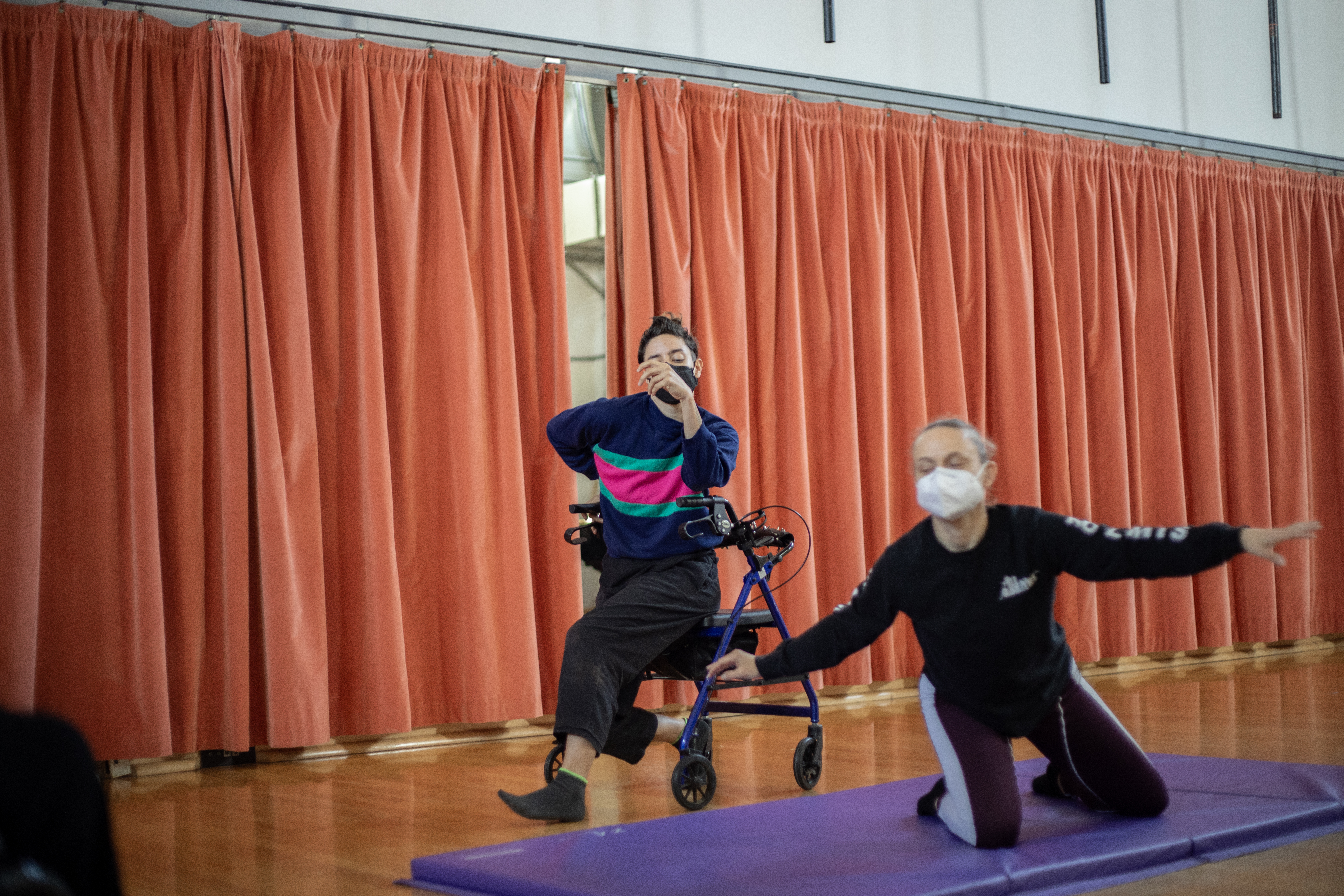
Alx Velozo (they/them/theirs)
“My relationship to dance is mostly object-based. I predominantly make sculptures and objects that I then use to score movement. I think a lot about the material of the sick body and how that is translated both through movement and through shapes and forms,” said Alx Velozo, a trans and disabled sculptress, educator, and performance artist.
“Disability permeates the way I experience everything. The material reality of moving in the world with a sick body feels underrepresented. Maybe that’s not always the central concept of my work, but it being a part of the work feels important. However, it’s important to not collapse an artist into only their disabled identity. Because the body is explicit in most conventional dance spaces, I've often been the only person using an access device. Being at the Dancing Disability Lab, where that conversation and that presence is central, is unique.”
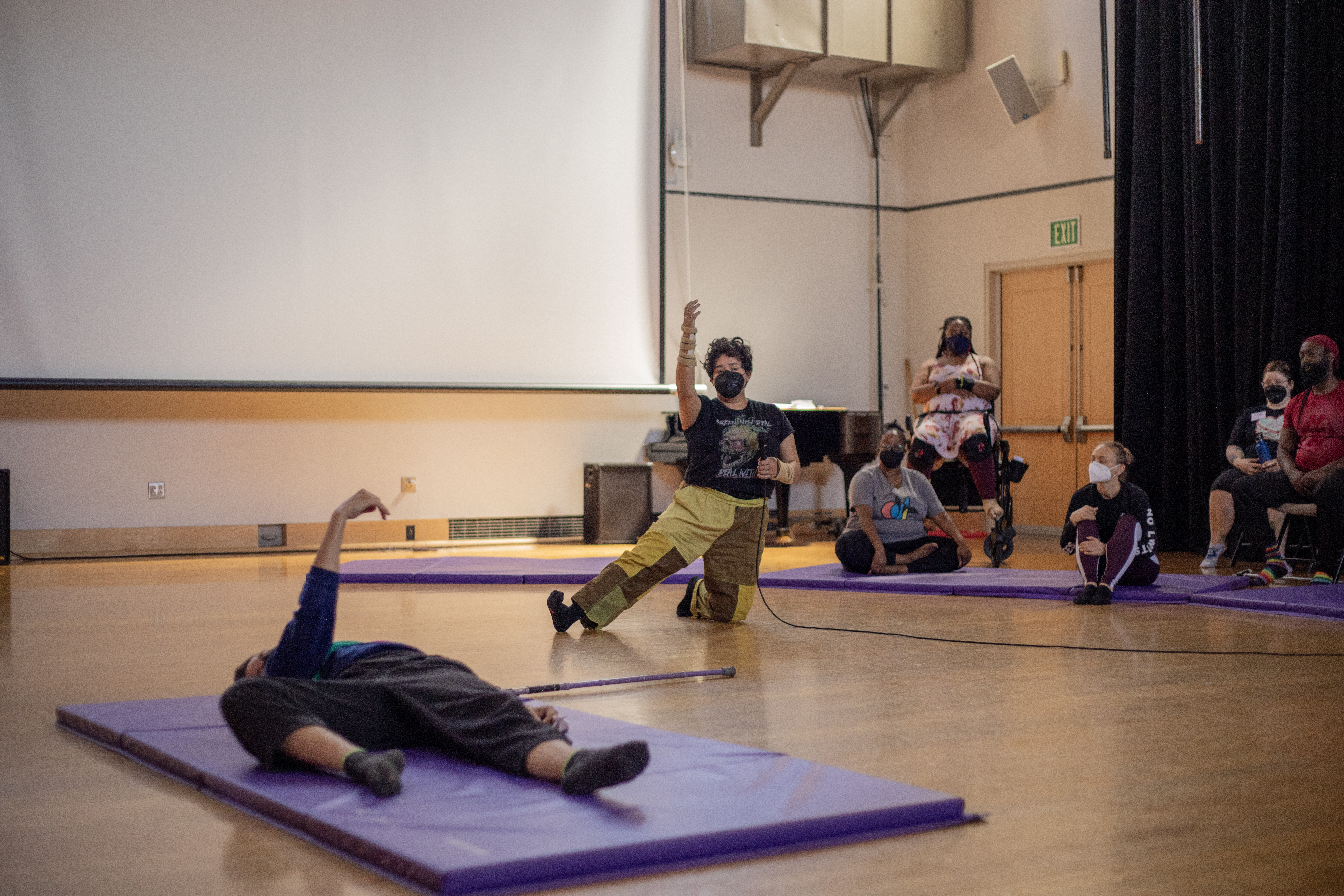
Maya Quetzali Gonzalez (she/her/hers)
“I don't consider myself a dancer anymore, but I started dancing when I was about seven years old,” said Maya Quetzali Gonzalez, a member of Women of Color in the Arts, an associate member of the Stage Directors and Choreographers Society, and an IndieSpace board member. “I'm a choreographer and a director primarily for theater. I think of the performing arts as a way to explore being together, with all our different bodies and our different thought processes.”
“To people outside of the disability community (and some even inside of it), it can be difficult to conceive what being disabled feels like. I can say I'm in pain, but I don't think that would get across what disability to me feels like. I think there's an emotional response to dance, art, and theater that transcends a medicalized approach to disability and gets more at the lived experience. I also think of my practice as a way to model — and this lab has done that wonderfully — different ways of being together and how you can prioritize wellness. What wellness means to me is very different from what wellness might mean to you. We prioritize care in a way that a lot of the world isn't quite on board with yet.
“There's something so special about being in a community with other disabled dance artists. There is a level of understanding and grace I don't find elsewhere. We're sharing not only our artistic practices but also our strategies — both mentally and physically — on how to get through the world as disabled artists and how we handle ableism from artistic institutions and the public in general — even internalized ableism. While these things might come up in other spaces, they aren't being attended to with such vigor and care as they are in the Dancing Disability Lab. I'm so grateful it exists.”
By Sean Arenas
Stay engaged. Use #UCLAarts to stay connected.


