UCLA School of the Arts and Architecture Inaugural Student Exhibition
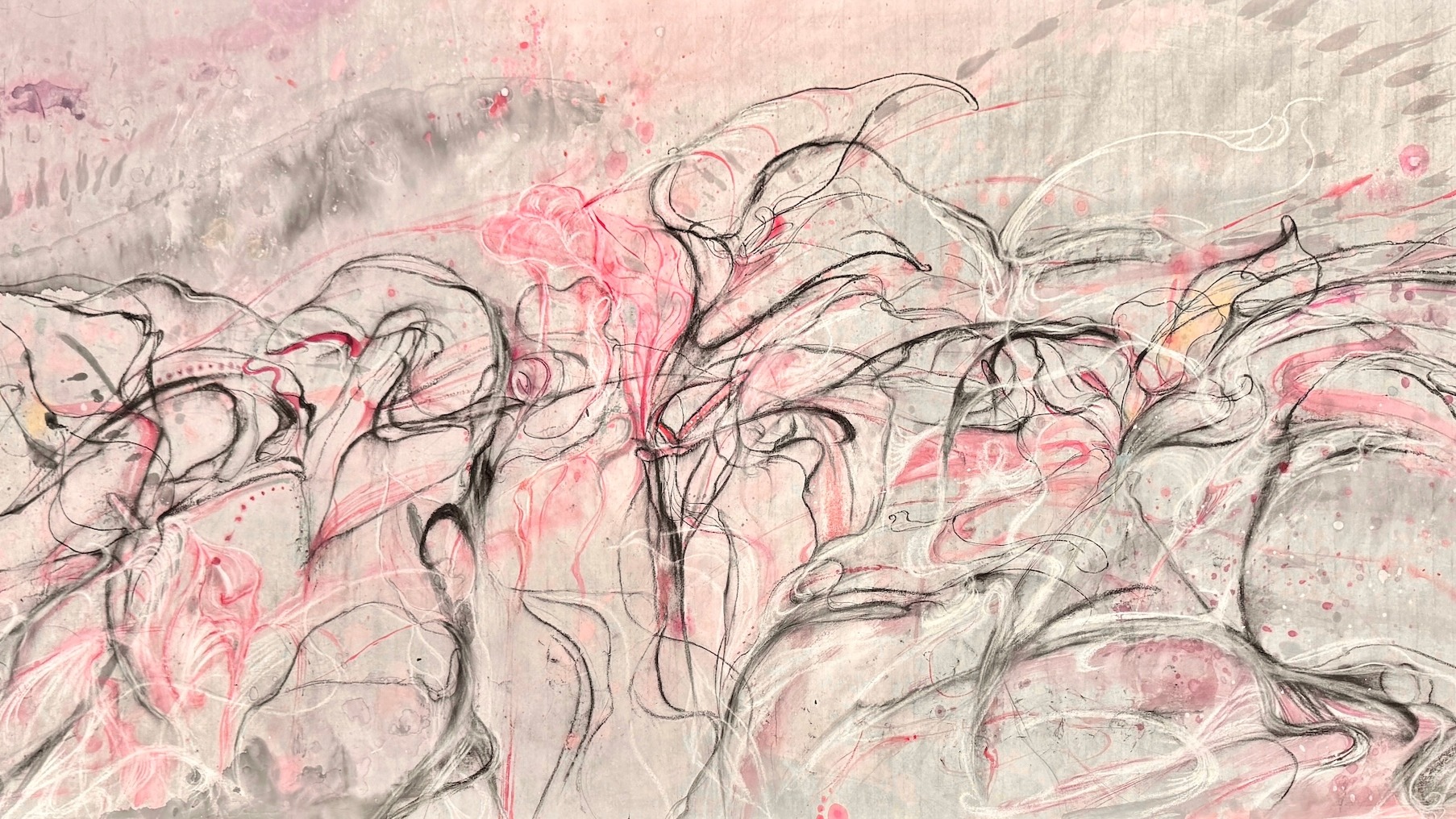
Last spring, the UCLA School of the Arts and Architecture invited all current students to submit work for the UCLA School of the Arts and Architecture Inaugural Student Exhibition. Representing diverse creative practices from across all four departments, selected works were installed over the summer and will remain on view throughout the 2025–26 academic year on the 8th floor of Broad Art Center.
"This exhibition is conceived not merely as a showcase of student work, but as an active site of learning, stewardship, and engagement. For participating students, it is an opportunity to present work beyond the classroom, studio, or gallery—in this case, installed on the 8th floor of Broad Art Center. As co-curators who have navigated both the experience of being student-artists and the realities of professional practice, we bring—and exchange—critical knowledge. In doing so, the exhibition affirms the values of academic and creative freedom.
"To become an artist or architect is to honor tradition while questioning it: to take the forms and genres handed down to us and test them against new urgencies, audiences, and ways of seeing. Here, each work becomes a site of inquiry—some ask us to look again and others to question assumptions.
"Ultimately, students are at the center of our purpose and pedagogy, and we honor the faculty’s commitment to their growth. In this sense, the UCLA School of the Art and Architecture Inaugural Student Exhibition is not only a celebration of emerging talent but also a living testament to the school’s ongoing commitment to research, community, global engagement, and the stewardship of creative possibility."
—Associate Dean and Executive Director Anya Booker and Sepia Collective
Vazken Armatuni
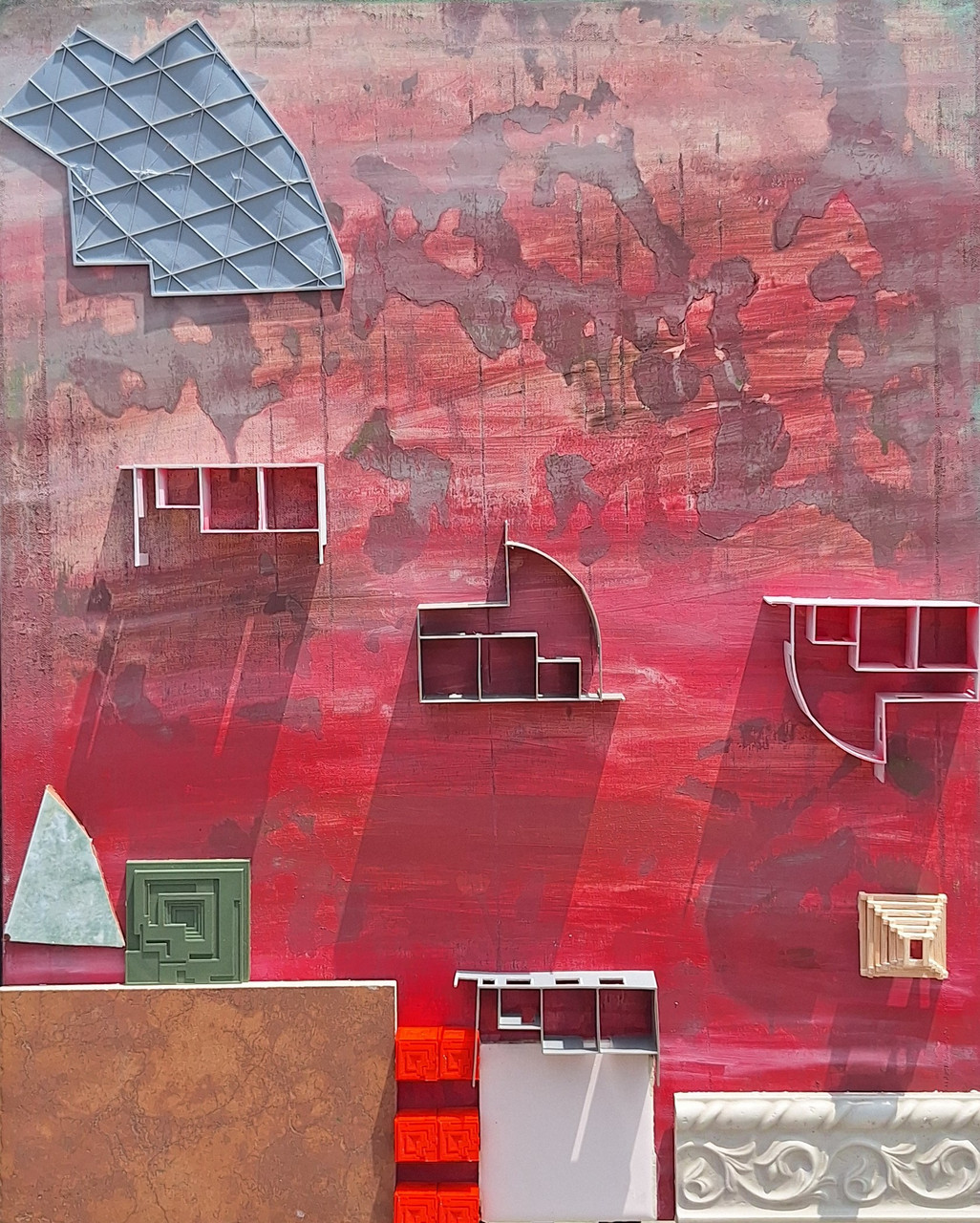
Spolia by Vazken Armatuni
Armatuni, born and raised in Los Angeles, is a candidate for the Master of Architecture program at the UCLA Department of Architecture and Urban Design (AUD). His experiences include working in the entertainment industry and Recreation and Parks services. In his free time, Vazken volunteers for Habitat for Humanity, and previously as a docent for the LA Department of Cultural Affairs, at the Hollyhock House in Barnsdall Art Park.
"I enjoy working with acrylic, spray paint, architectural models, and installations," said Armatuni. "Subject wise, I tend to lean toward abstract landscapes and the built environment. I am inspired by local murals and graffiti/street art. I believe art should empower individuals and society collectively, through the exchange of ideas. Art should ponder and move audiences to question the status quo. Art should be democratic and accessible by and for everyone."
Adam Brazil
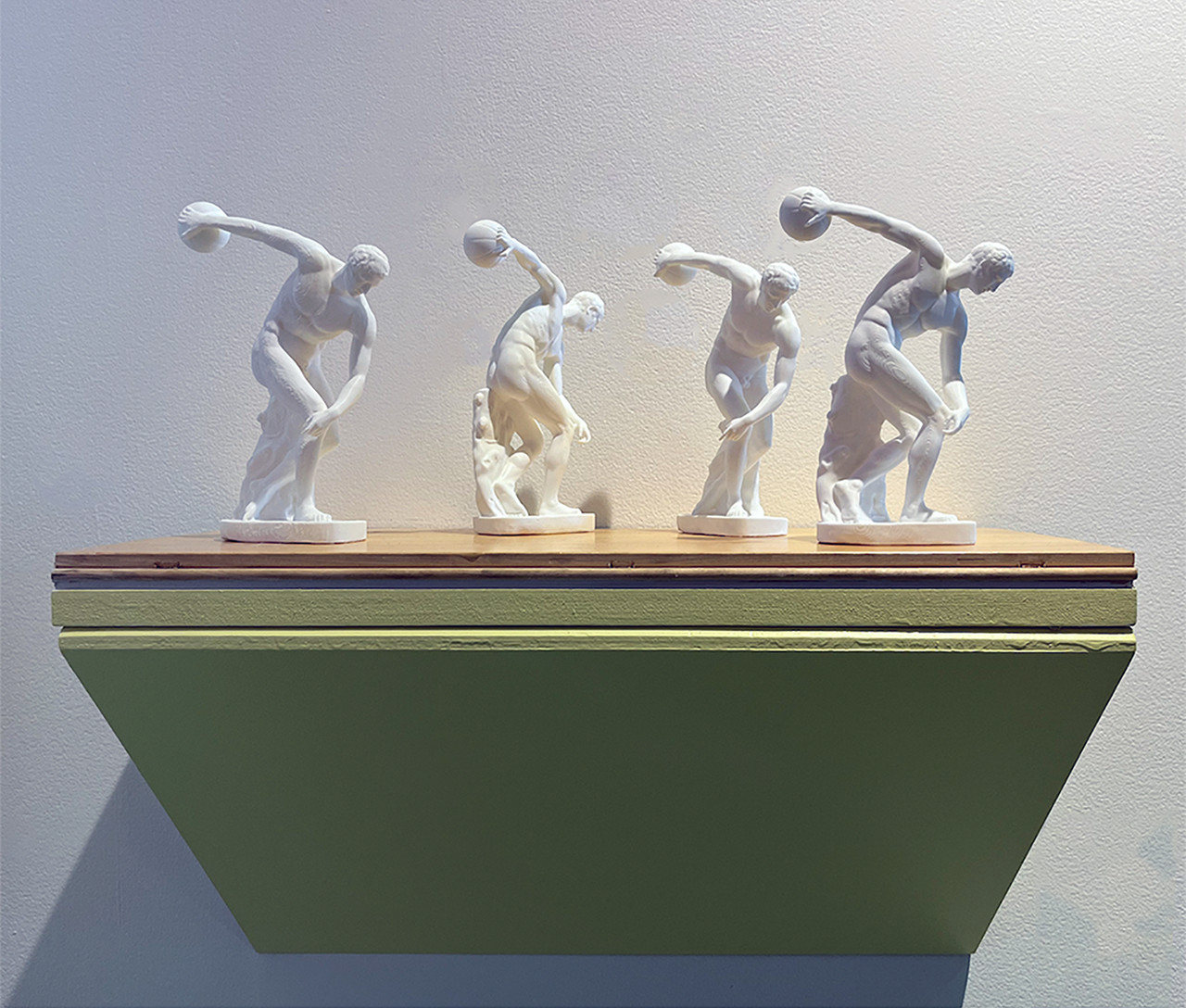
Magic Myron by Adam Brazil
Brazil is a multimedia, interdisciplinary sculptor primarily concerned with three dimensional objects. His research interests include craft epistemologies, the spatial effects of globalization, and cultural hybridity. His practice is not limited to one medium or outcome, preferring a collaborative approach with materials devoid of hierarchy between media, technique, or process. This approach allows for open narratives and welcomes serendipitous discoveries that may alter the trajectory of a work.
"I employ a variety of research techniques across disciplines toward the realization of a creative project," said Brazil. "I approach art making as a tool to investigate the tension between 'telos' (knowledge why) and 'techne' (knowledge how) while collaborating with materials. In order to reach a conclusion with the materials that satisfy my conceptual goals, I test various processes while making space for unforeseen and serendipitous findings to alter the trajectory of the work."
Pearson Haidar Brown
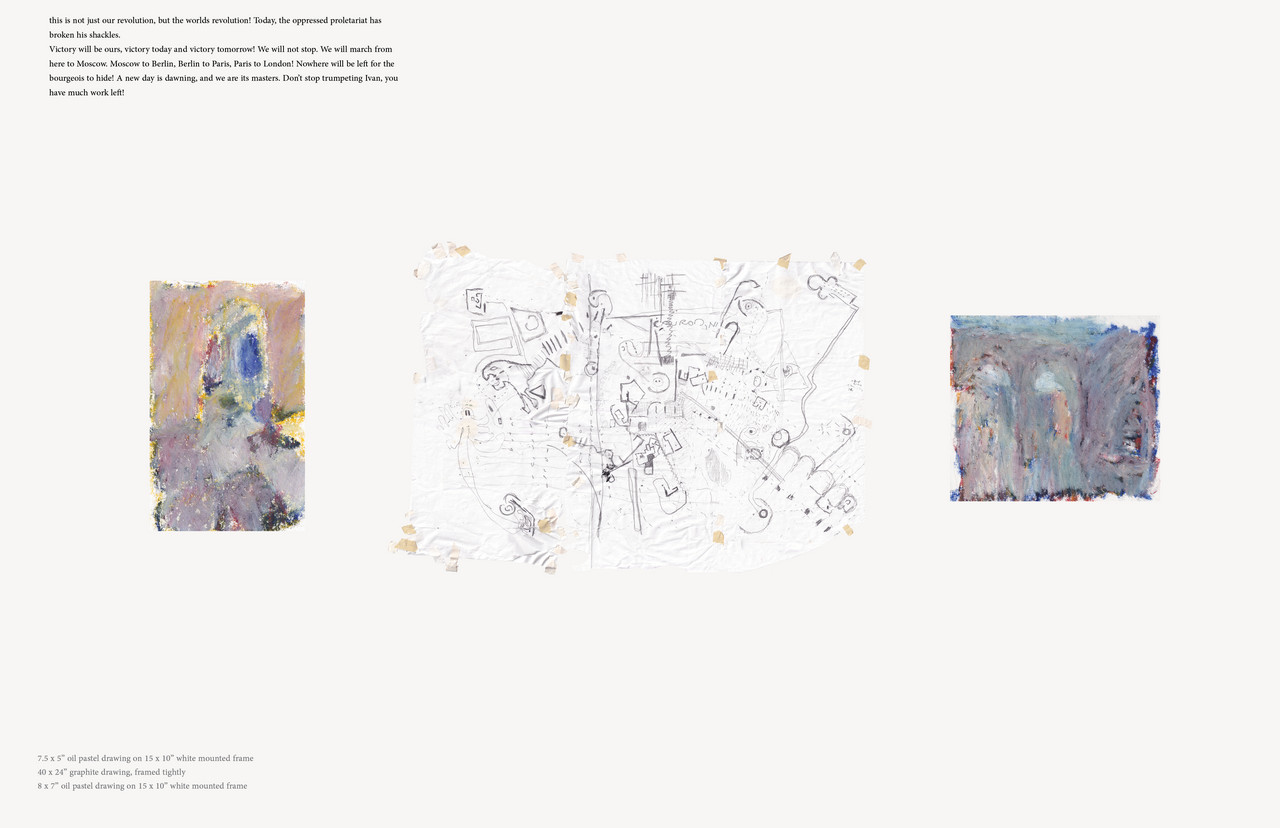
Pearson Haidar Brown I by Pearson Haidar Brown
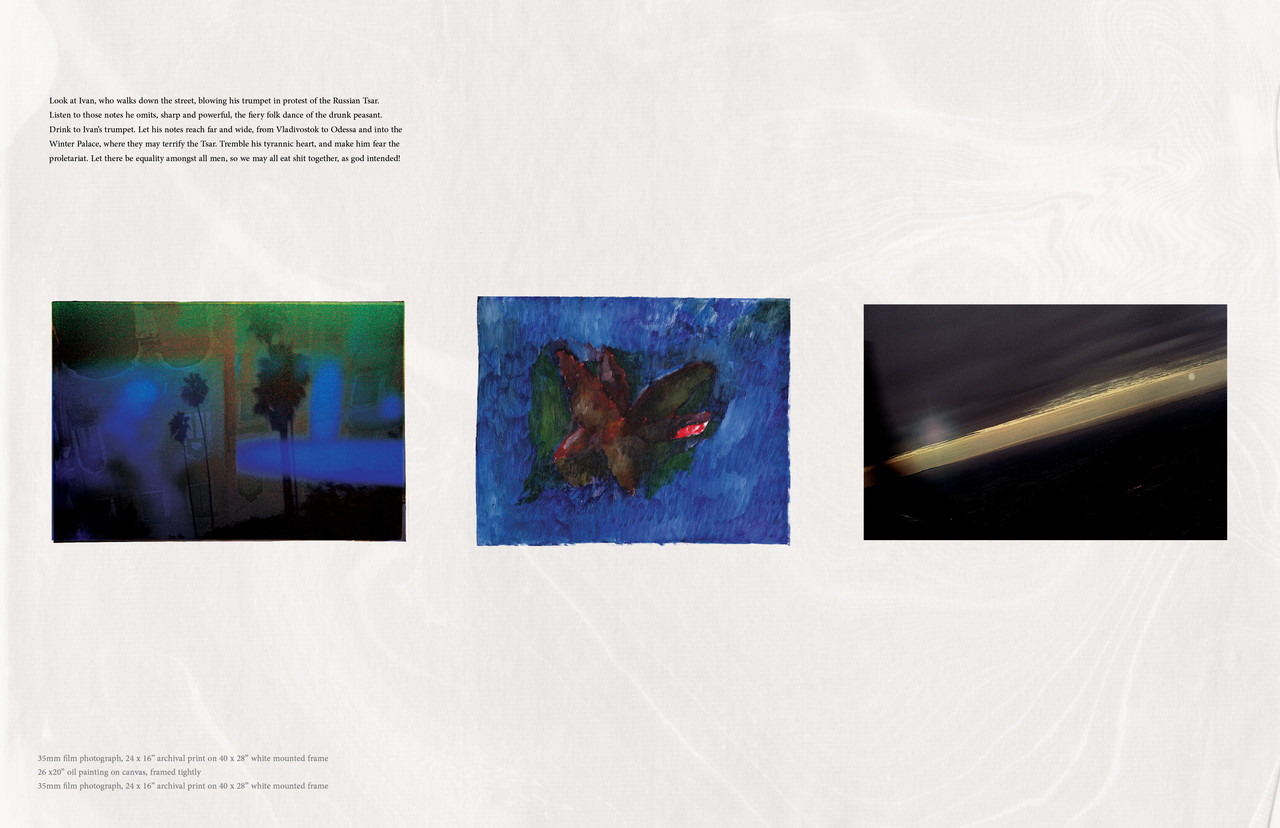
Pearson Haidar Brown II by Pearson Haidar Brown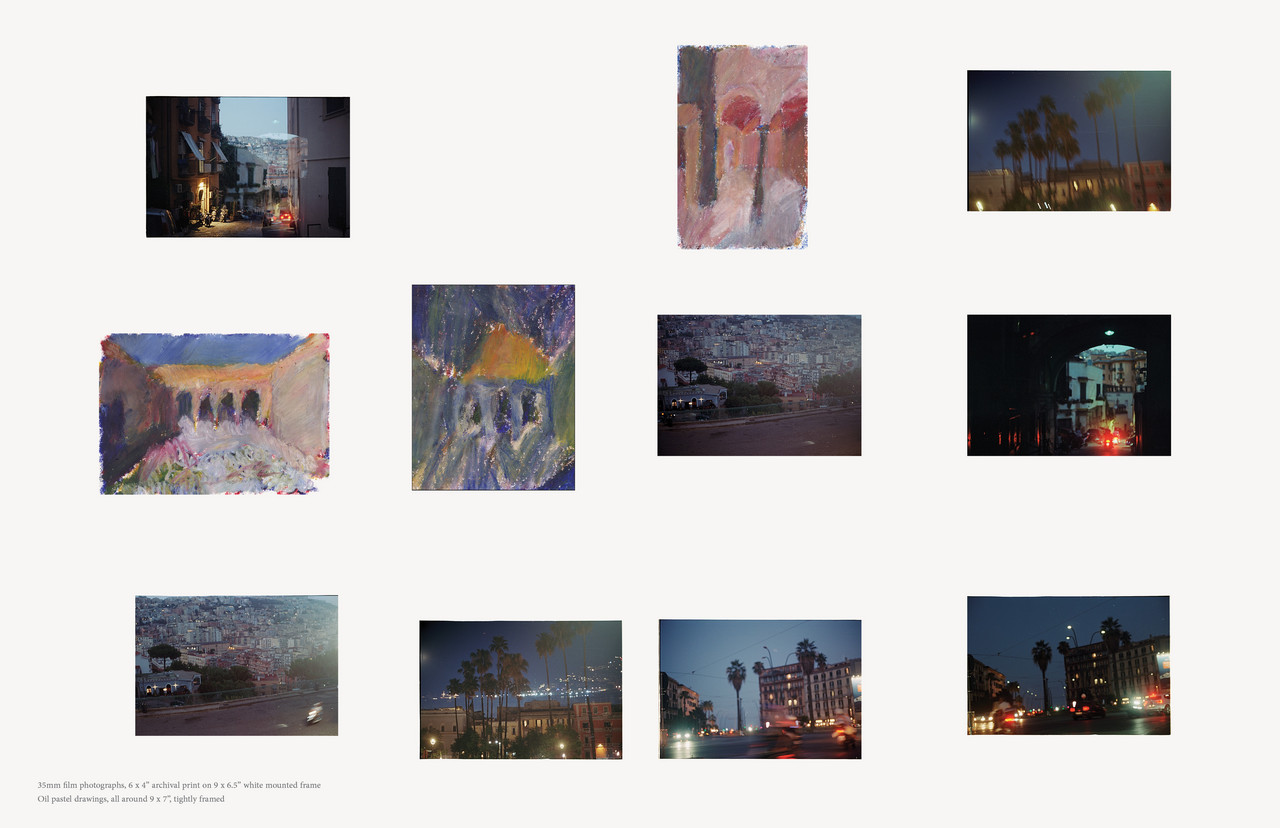
Pearson Haidar Brown III by Pearson Haidar Brown
After graduating high school in 2018 with the Art & Design award, Brown enrolled in the B.S. Architecture degree program at the University of Bath. In his freshman year, he was awarded the University’s only scholarship in the fine arts and became one of eighteen scholars over all media and degree programs. This role entailed writing articles, co-hosting a podcast, and curating exhibitions. Following graduation in 2022, Brown moved to London to work for renowned practices Foster + Partners and Dow Jones Architects on a wide range of architectural projects. After launching his debut artbook La Malcontenta ‘24 twelve months ago, Brown enrolled in the M.Arch. I ‘27 program at UCLA on a full academic scholarship.
"I am an architecture student from Britain, disenchanted with the world’s state," said Brown. "I am inspired to make change through the design of delightful spaces and objects. The following three images present a selection of works from my latest project, Saturday Morning at the Beverly Hills Plaza, a personal investigation developed in tandem with my M.Arch. I studio assignments. The project builds on the theme of representing transparency through layering, first explored in my debut artbook, La Malcontenta ‘24, which currently retails at galleries such as the Serpentine and the Photographers’ Gallery in London and New York. The presented images aim to critique the concept of phenomenology by highlighting circumstances in which perception is false or deconstructed, akin to states of schizophrenia."
Konani Chinn
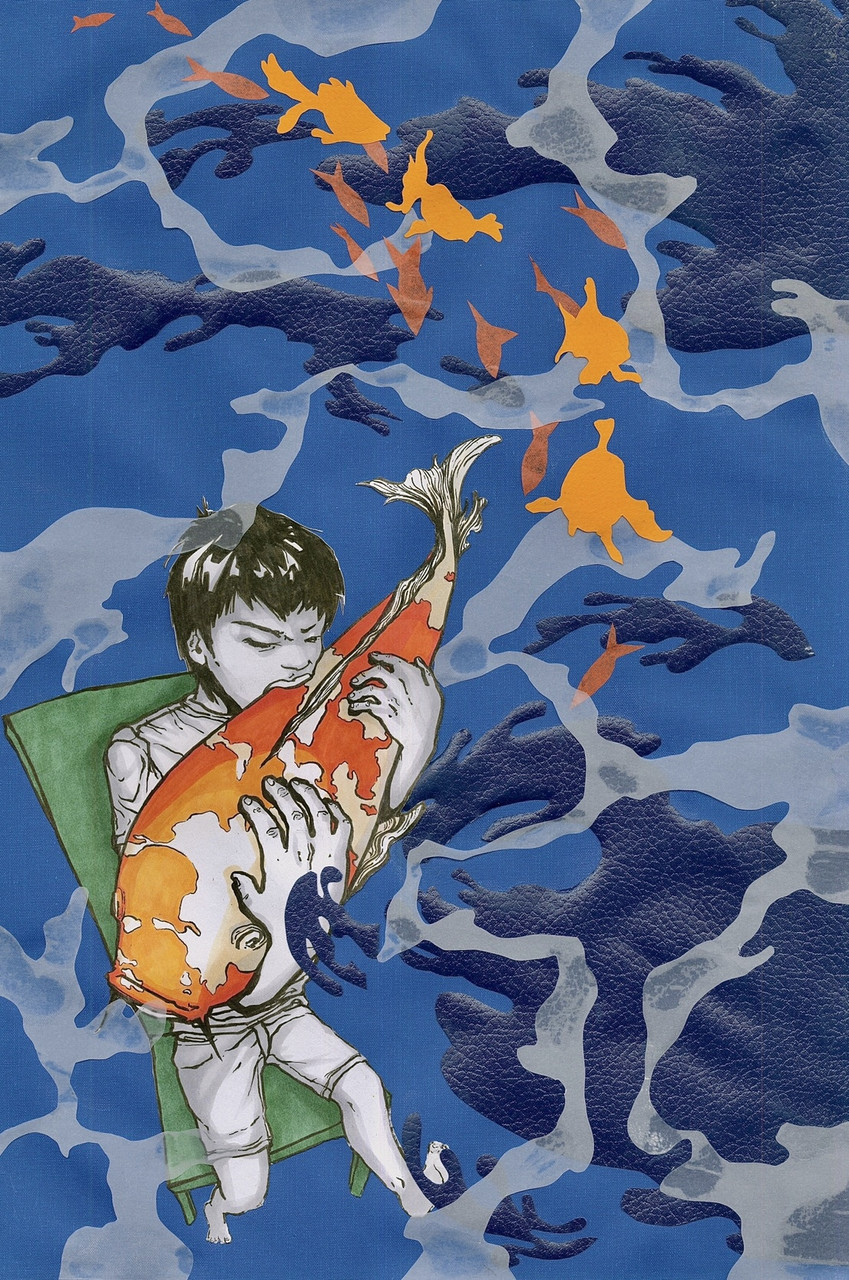
Big Bite by Konani Chinn
Chinn is a World Arts and Cultures major and multi-medium artist from Oakland, Calif. In their visual art, music, and writing, they cover themes of love, cultural identity, gender, activism, and more, giving an intimate and personal perspective of adolescence as a third generation, queer, Chinese-Filipino American creative.
"Big Bite, a multimedia work created using paper, leather, vellum, and more, is a celebration of my identity as a queer, mixed-ethnicity Asian American," said Chinn. "It features a drawing of my teenage self face to face with a koi fish to encapsulate a formative period of growth, defiance, and reclamation. In my adolescence, my androgynous demeanor and Brown features were met with cultural and subconscious pushes to perform femininity—particularly as seen presented by East Asian values. The piece centers the koi fish to represent the delicacy and docility encouraged in East Asian women.
"My adoption of this character rang inadequate and inauthentic, and I grew up feeling ashamed of my inability to conform to these intersectional gender and racial expectations. The koi fish and my character beside it are positioned underwater, embodying the weight felt during this discomfort. As a young adult, I began to allow myself freedom, leaning into a comfortable existence and eventually finding pride in being myself. My aggressive bite into the koi fish paired with my masculine and crude mannerisms illustrate my resistance to the societal norms of East Asian femininity and the adversity I experienced in the process of overcoming this pressure. I now feel power in flaunting my fluid gender expression and East Asian American roots both as integral and overlapping sides of myself. The symbolism highlighted in Big Bite reflects my journey into becoming secure in my identity—rejecting conventions unrepresentative of me and accepting my personal ontology as valid, potent, and beautiful."
Ash Ericson
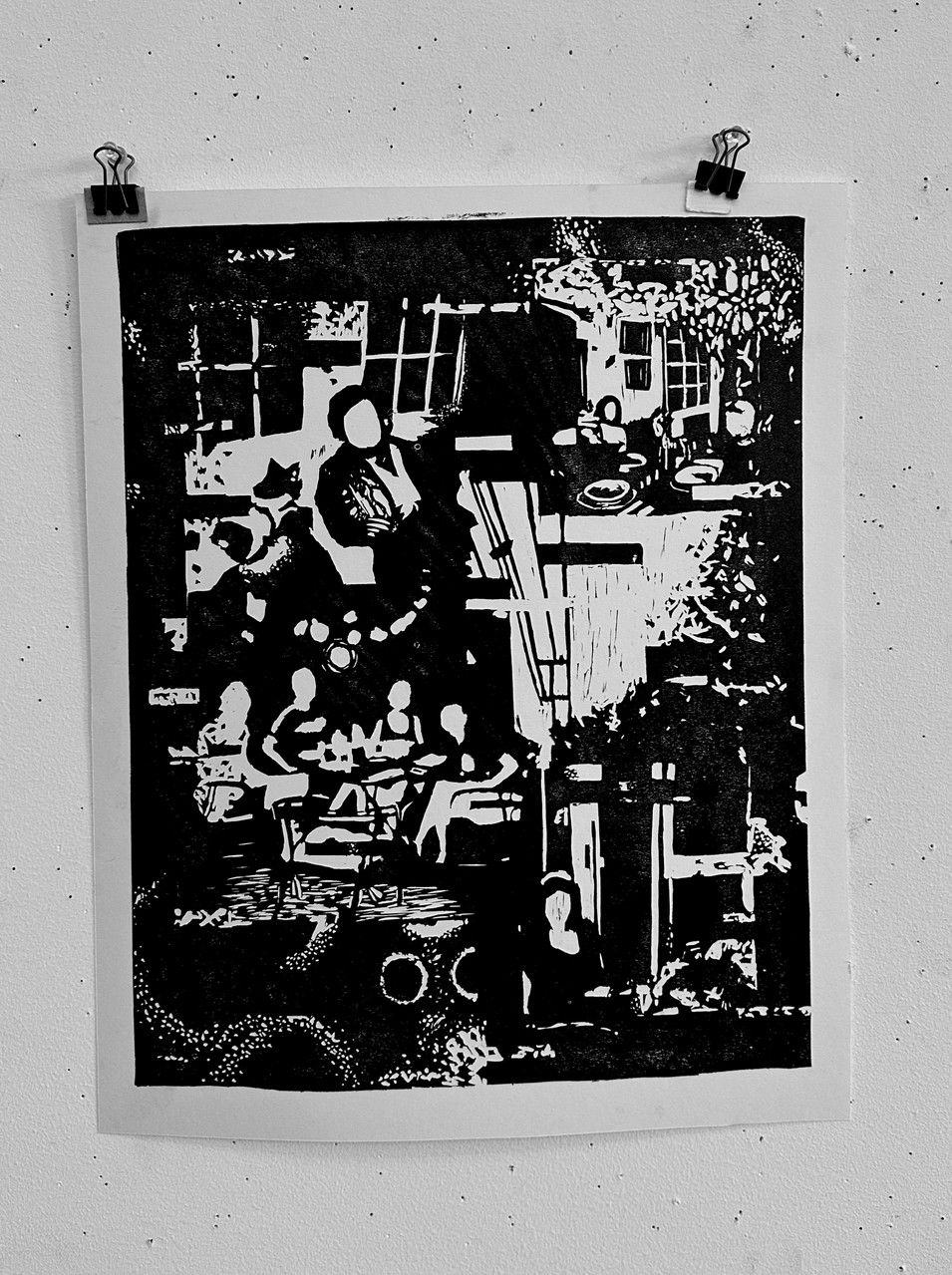
Decay by Ash Ericson
Ericson is a transgender artist who transferred to UCLA in the fall of 2024. As a Design Media Arts major, he specializes in digital illustration, printmaking, 3D modeling, and game design. He strongly incorporates his Bay Area roots and queer identity into his work, and often reflects on themes of childhood and coming of age. He has been focused on his art practice since 2014 and continues to expand his technical skills using digital and traditional media.
"Much of my current work references the process of growing up and reflecting back on childhood memories," said Ericson. "I focus on capturing moments in time and themes of identity through various art mediums and hope to transport the viewer into a layered reality that reflects the state of mind I was in while creating each piece. My printmaking work consists of meticulously carved relief prints, often based on photographs I’ve taken of family, friends, and the Bay Area."
Remy Fortin
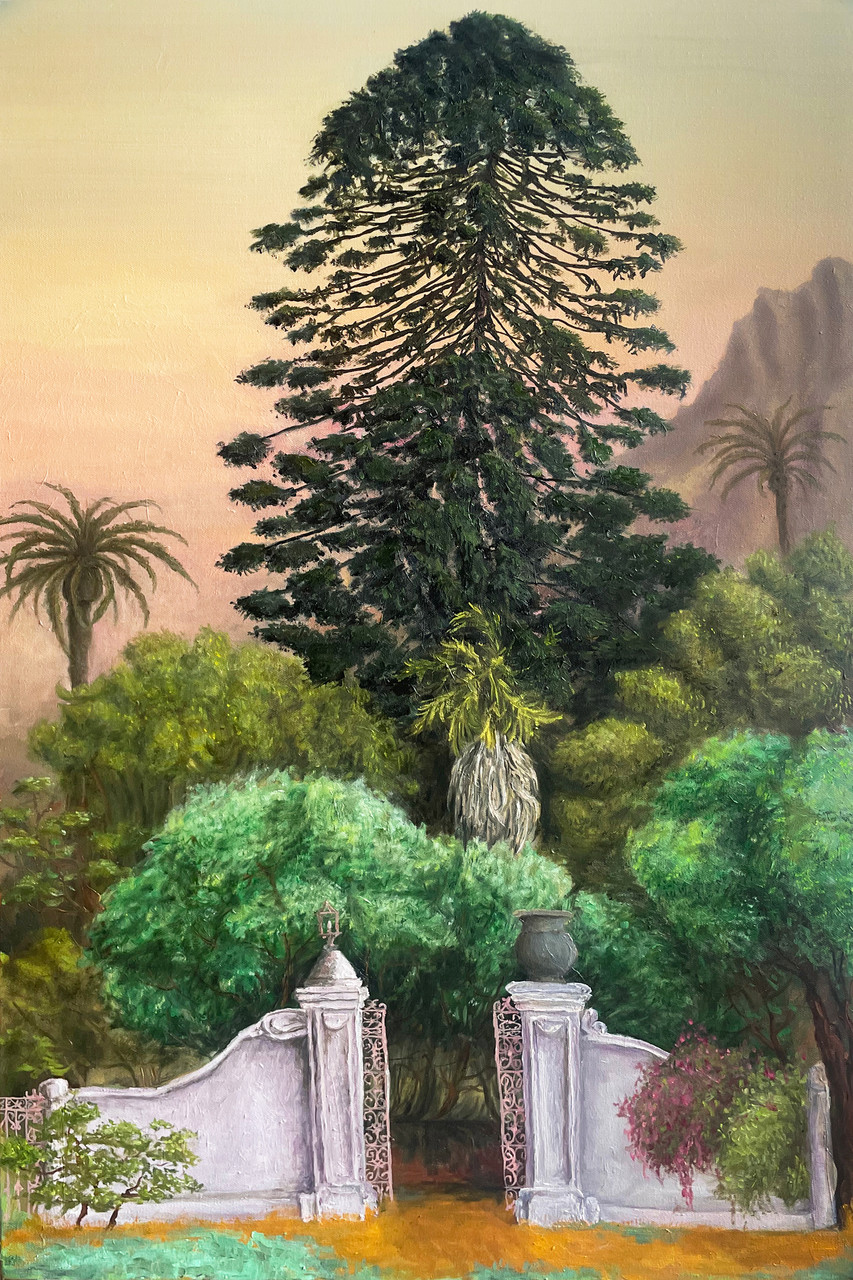
tree landscape2 by Remy Fortin
Fortin is a self-taught artist based in Montreal. With a focus on Nature and ecology, Fortin critiques anthropocentrism through his art, proposing a pluralistic conception of the environment. Fortin holds bachelor's and master's degrees in architecture from Université de Montréal and McGill University. He is currently completing a doctorate in architecture at UCLA. His work has been presented in a duo show at Tap Art Space in Montreal, Canada, in 2023. It was also featured in group shows at Livart Art Center (Montreal, Canada, 2022), Reford Gardens (Grand-Metis, Canada, 2012), and Art Souterrain (Montreal, Canada, 2017).
"My practice questions our relationship with Nature and challenges anthropocentrism—the human tendency to view ourselves as separate from the natural world," said Fortin. "This oil painting critiques how we frame and contain nonhuman worlds while exploring possibilities for more harmonious cohabitation. I spend long periods documenting landscapes, drawing, photographing, and mapping the botanical relationships I observe. This Bunya pine towers over the ornate fence below, its immense scale dwarfing human architectural attempts at containment. The ethereal colors and soft light create an atemporal quality—a moment frozen beyond human presence, existing outside our concerns about climate change.
"This painting also explores the analogous relationships between the act of painting (colors, gestures, techniques, composition) and the ecological complexity of the landscape it depicts. The Bunya pine, surrounded by palms and understory vegetation, demonstrates how different species coexist across different temporal scales. The fence suggests humanity's attempt to organize nature, yet the tree's enormous presence extends far beyond these limits, inhabiting its own temporal realm. At the same time, those relationships are not natural, but only appear through the paint pushed on the surface of the canvas. The landscape emerges from fragments of observation, reorganized to create a space that is both real and imaginary. This piece invites viewers to contemplate and reinterpret their surroundings, encouraging them to consider a more-than-human world that exists independently of their everyday lives."
Kyla Henderson
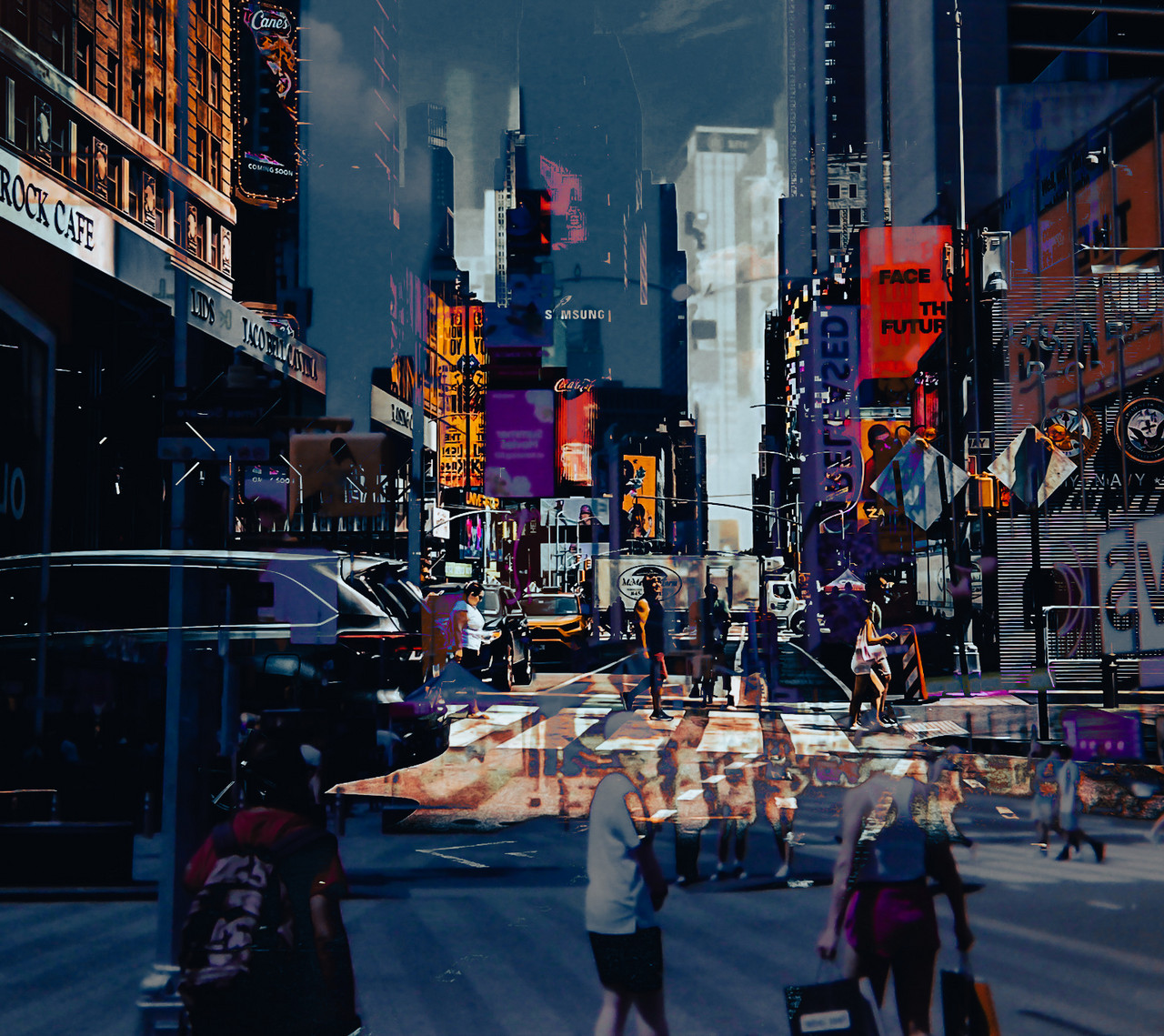
Cyber World by Kyla Henderson
Henderson is a photographer who works in landscape, nature, portrait, event, and street photography. She has be in numerous exhibitions including the Black Creativity Juried Art Exhibition. Henderson is a published author, who has won several awards from Scholastics Art and Writing Awards: two Golden Keys, Silver Key, and Honorable Mention.
"I’m not only a woman—I'm a black woman and a black woman of god that uses a lens of perspective to redefine my subject," said Henderson. "What inspires me and pushes me to keep doing photography is the happiness on other peoples faces and knowing that I have created something that people can relate to. I capture a moment in time that a person will never forget or be able to remake. These are the exciting parts about being a photographer. To me it’s more than just a camera because then everyone would be classified a photographer, but what makes me stand out is the ability to take something so simple and make a moving piece. The direction that I go in most of my work is the ability to tell a story and make it feel like photojournalism. Thinking about myself as an artist I would say I'm a diverse photographer. When I prepare to take pictures, some things that influence me are: leading lines, angles, and color. These elements are big within my work because when I see a place or an object these are the big things that stick out to me and instantly I know how I would like the photo to come out. I like to try different angles when I take pictures so capturing a shot at a birds eye view. My favorite editing style is black and white which takes the picture to the next level and gives it a totally different emotion."
Holly Ulicki and Anna Whittell
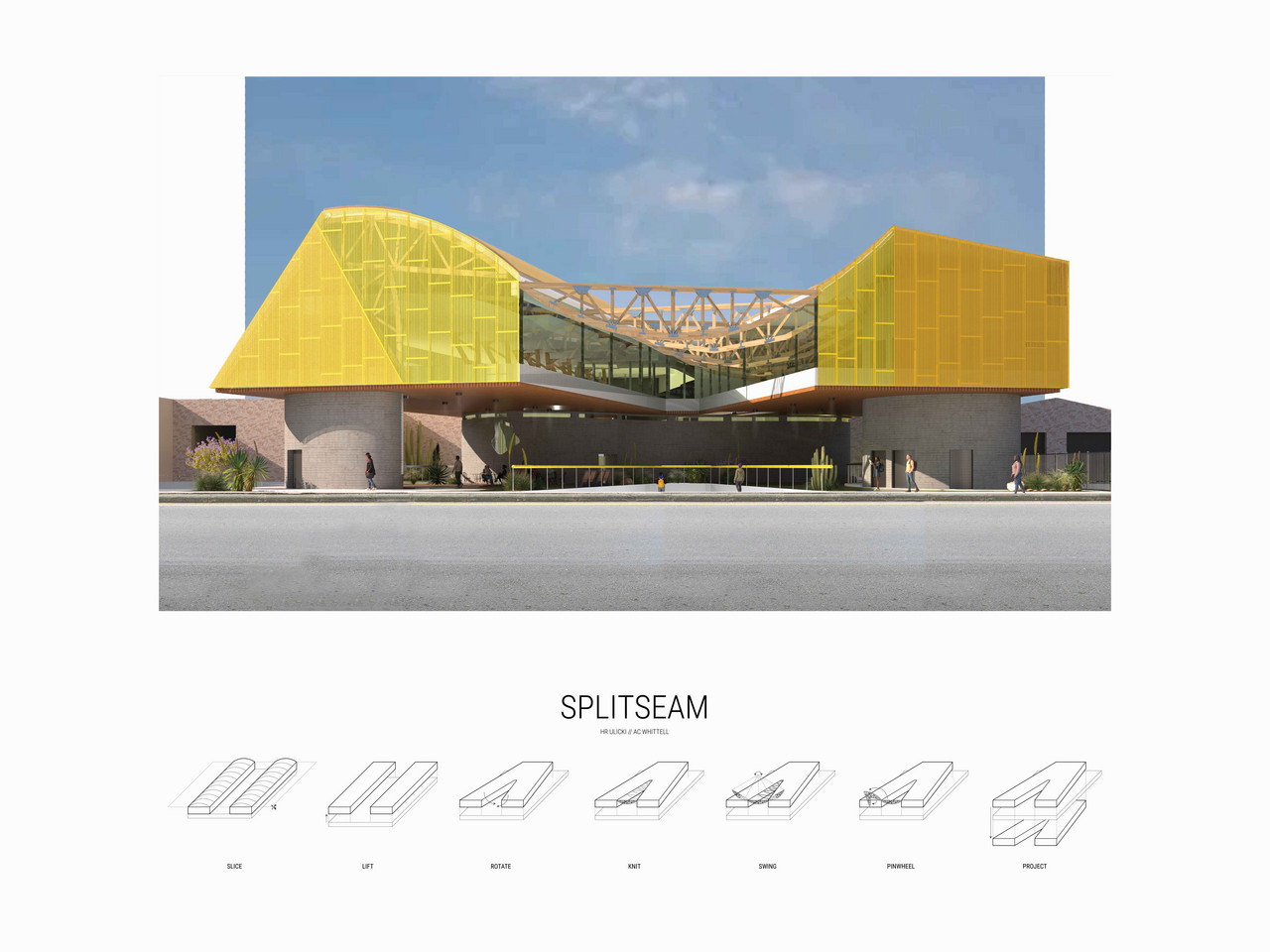
Elevation by Holly Ulicki and Anna Whittell
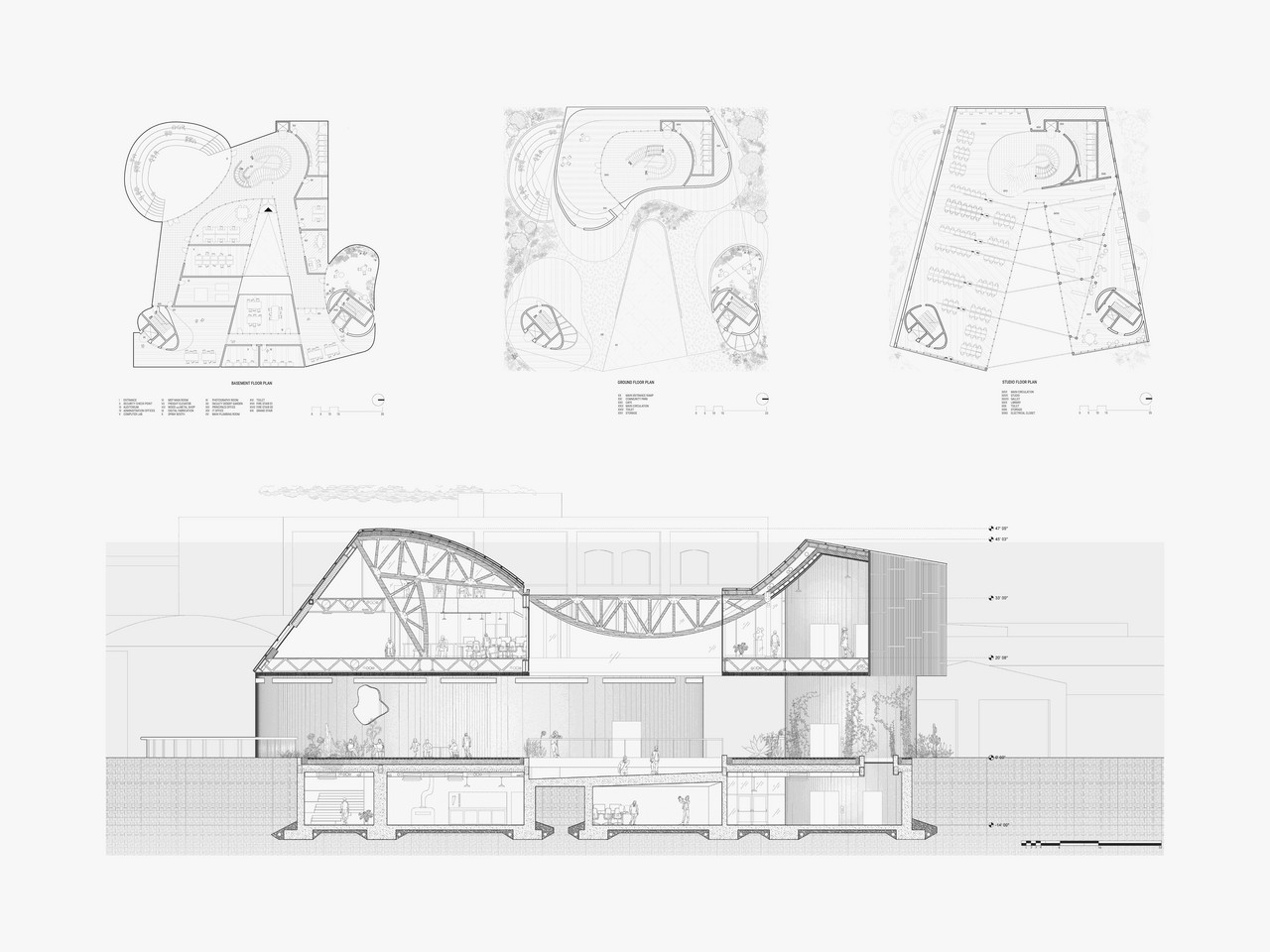
3 Floor Plans and Section by Holly Ulicki and Anna Whittell
Whittell and Ulicki are Masters of Architecture candidates for 2025. Both grew up in Southern California. Whittell holds a Bachelors of Science from Stanford in Engineering - Product Design (2019). Ulicki holds a Bachelors of Arts from Berkeley in History of Art (2020). Whittell and Ulicki met working for UCLA AUD’s Model Fabrication Shop. During their time at UCLA, they have been involved in adjacent co-curricular design initiatives and leadership positions. Whittell is a part of the Urban Humanities Certificate program and is currently the Managing Editor of POOL Magazine. They received the AUD Departmental and the Elaine Krown Klein Scholarships. Ulicki is the Co-Chair of SIT&SIGH, the Department's social events organization. She serves on the Dean’s Student Council as a graduate representative and was nominated for the Anderson NAIOP UCLA/USC Real Estate Competition as Team Architect.
"Splitseam is a speculative architectural design project for a specialized design high school building exploring adaptive reuse and urban renewal in Los Angeles," said Ulicki and Whittell. "The design slices the original bowstring trusses from the typical L.A. warehouse buildings and suspends the forms on amoeba-like cores to float above an new urban parkscape open to the public. This returns this infill lot in downtown L.A. to the community in the form of greenspace. The trusses originally on the site are repurposed and reconfigured to support a new roof structure and ornamentally stitch between the two main bars linking the discrete forms as they merge to become one towards the back of the site. A gentle sloping ramp opens the underground to the street embracing entrants and creating an outdoor lobby for students to congregate and socialize. Architectural forms are projected below, down to ground and below grade, to establish planometric and structural continuity. Splitseam explores the active use of scaleless-ness and blurring the boundaries between indoor and outdoor spaces which prioritizes community-first design and embodied experience in architecture while maintaining a sense of play. This project navigates and promotes the thoughtful integration and advocacy of reclaiming and creating greenspace within the city especially in areas vulnerable to the heat island effect."
Harry Lowy
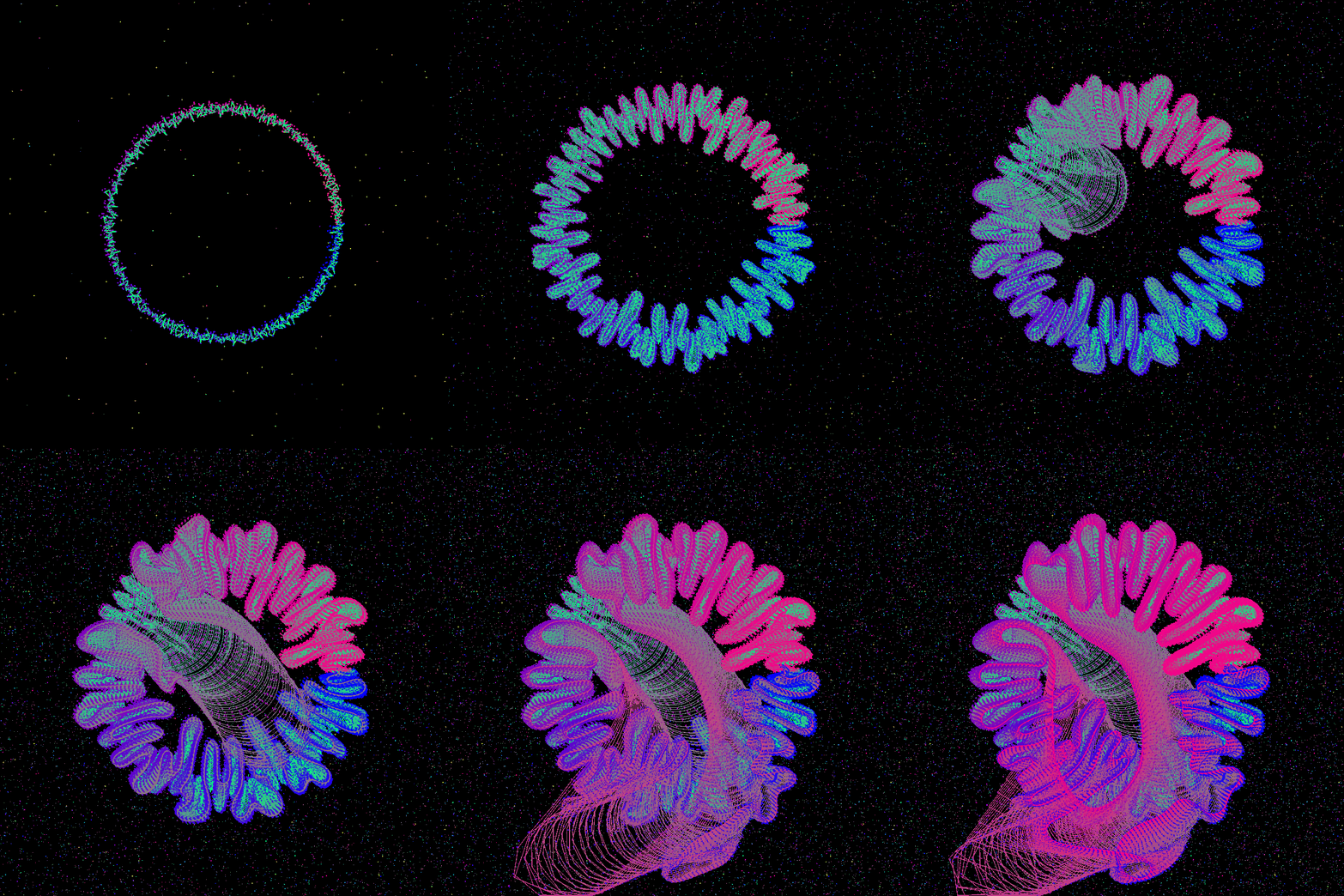
Brain Coral by Harry Lowy
Lowy is a Design Media Arts student at UCLA (Class of '27) from New York City. He is a multi-disciplinary artist and designer who works with algorithms, 3D printing, robotics, and cybernetics to examine modern-day societal issues ranging from mass-manufacturing to deforestation. Lowy has received a certificate in Industrial Design from the Rhode Island School of Design’s Pre-College program and currently designs assistive robotic devices for people with learning difficulties at RIX Inclusive Research at the University of East London.
"Brain Coral is an interactive web-based simulation of a group of interconnected nodes that mimic the organic growth of slime molds," said Lowy. "This piece is a combination of my love of generative algorithms and my despair towards our treatment of reef environments. The animation begins as a set of points on a circle, each one connecting to its closest neighbors. As it goes on, the points are drawn towards each other by some mysterious gravity, but they can never touch: The connections between them glow in vibrant neons that shift and reset over time. Each frame builds on the previous: Once a color shows up on screen, it can only be re-written by a new color. The piece is interactive. Wherever the viewer touches, all nodes are forced away from that point, creating a small dead zone. The user’s interaction disrupts the states of equilibrium the simulation reaches. It creates a sudden outburst of motion whenever a viewer disturbs the piece. It can never settle back in exactly the same way again. This is a metaphor for humanity’s destruction of ocean ecosystems. Besides the simulated nodes and their connections to each other, the piece’s background slowly fills up with colorful specks. These ‘microplastics’ create more visual interest and help the piece’s composition remain dynamic."
Luis Martinez
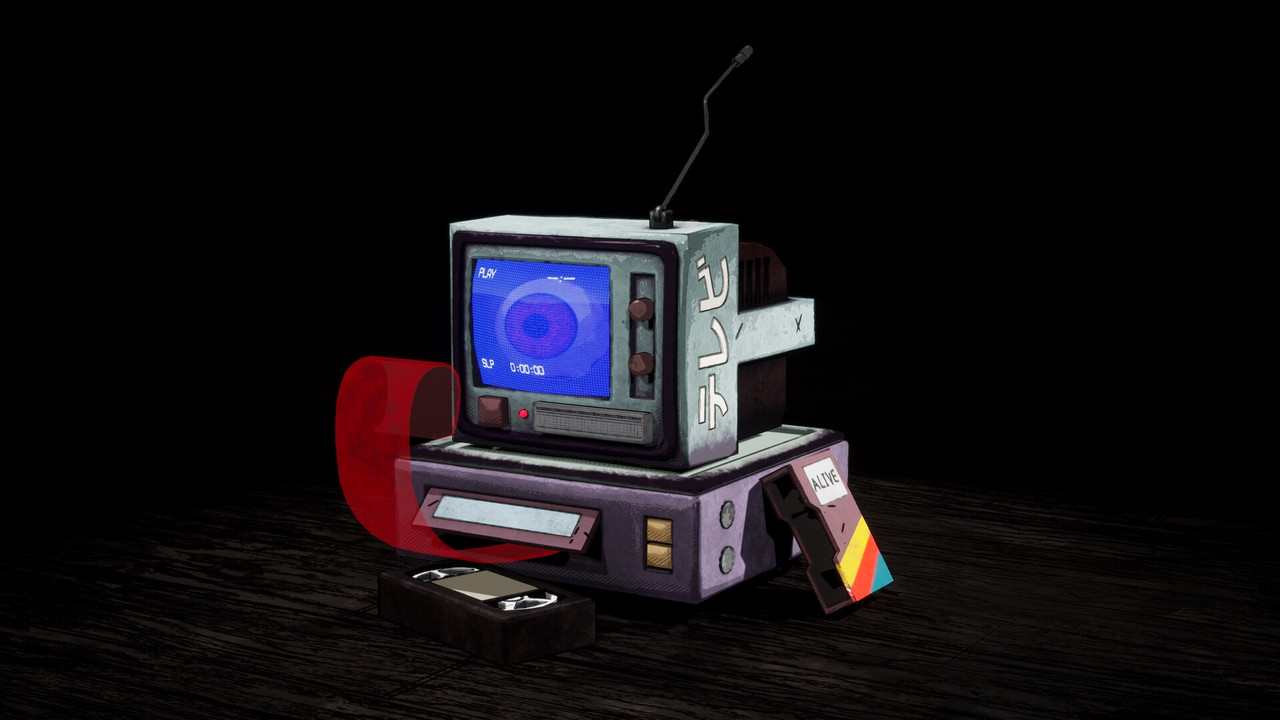
luis-martinez-asset by Luis Martinez
Martinez is a 3D artist in Los Angeles. He creates 3D artworks in collaboration with new digital tools used in both video game and animation industries. Martinez's drive for constant relevant technological updates in modern software has allowed him to discover and create new works. His work consists of stylized visuals where he hopes will convey to a wider audience. He hopes to demonstrate a connection between the Digital 3D world and the real world.
“'Do what your heart tells you' is a quote passed on by my professor, and it is a quote that reflects me as a person and artist," said Martinez. "My parents, being in a lower economic class, frequently feared how they were going to financially support my brother and me as we wanted to go to school. Seeing my parents struggle to give me a better life, I wanted to make them proud of me. They truly wanted to support me in any way they could and even slowly began supporting my dream. When I discovered 3D software, I fell in love with this digital world where I could take advantage of my imagination. I immersed myself in creating worlds and spaces that I was never privileged enough to be a part of. I was creating worlds and items that many people could relate to emotionally and connected with. The feeling of being able to help someone had an impact on me, I wanted my art to reflect the impact I had. As for my art, I want to create art that people can interact with, whether it is through games, media, or physical. I also strive to follow what my heart tells me, leading me to make things that will not only make my parents proud but to make sure that everyone who has helped me reach who I am today is proud."
Sabine Escuro and Gabo Blondel
Escuro (vocalist and lyricist, from Bogotá, Colombia) and Blondel (guitarist and music arranger, from La Paz, Bolivia) are a Los Angeles–based experimental Latin duo. Their music lives between worlds, blending flamenco, fado, bolero, and Latin ballads into a sound that’s intimate and atmospheric, while speaking to displacement, memory, protest, and existential longing. The duo met in Minnesota and initially formed a band called Mestifonía, alongside a cellist and percussionist. That project found early success performing with the Minnesota Orchestra, and touring throughout the Midwest. But as life became more complex—especially under the weight of immigrant struggles in the U.S.—the group fractured. After parting ways, Gabo and Sabine spent four years apart, each navigating personal challenges and artistic doubt. But music kept calling them back, and so did each other. Their reunion gave birth to Gabo & Sabine, a project rooted in the same commitment to experimentation but with a sharper voice and deeper emotional core. The lyrics meditate on themes like inner conflict, longing for a lost home, and the contradictions of love in a fractured world.
"Si Me Matan (If They Kill Me) was originally composed by the Mexican cancionera Silvana Estrada, who is aware of—and approves—the existence of this musical arrangement and video adapted to the needs of my context," said Escuro. "Estrada's version limits itself to describing the reality of Mexican women; my version represents the shout of courage that women—immigrant and non-immigrant—in the United States resist the intimidation of political and mediatic power with. This work of art not only considers the possibilities of what is born after a femicide but also the glimpses of bravery against all sorts of power systems among women's tired and tragic attempts to believe in themselves and their own perception of the world. A shout of strength that does not want to, but can also, be killed. The piece concludes with the consolation that, among all the things that have been taken away from women, they also took fear away.
"With the use of a projector in a subterranean room—resembling a hiding space—I was able to create a music film that uncovers the distinct dimensions of the existential woman who gets lost between the fragmented spaces of a solipsistic monad and the impetus of her confused participation in the world."
Brittany Min
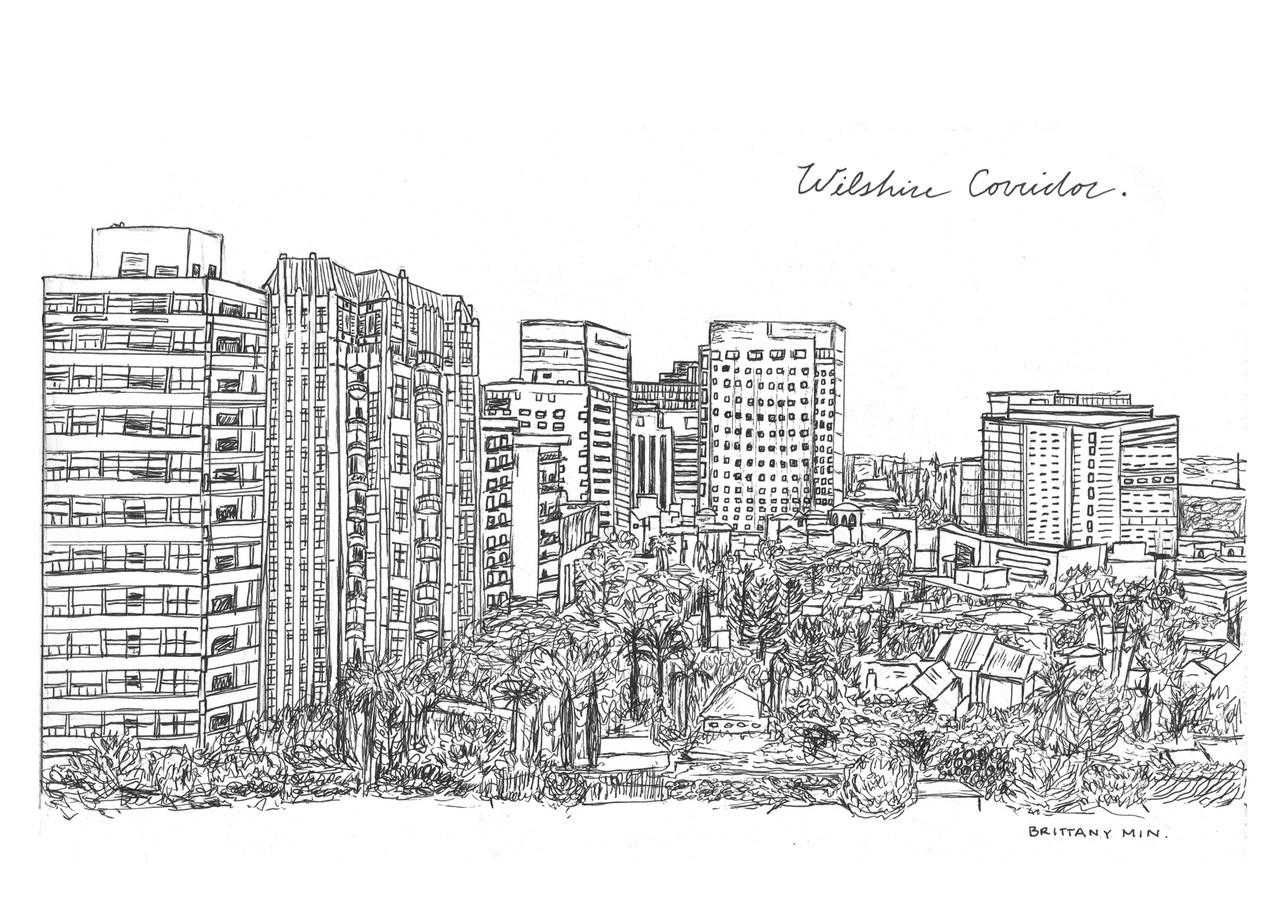
Wilshire Corridor by Brittany Min
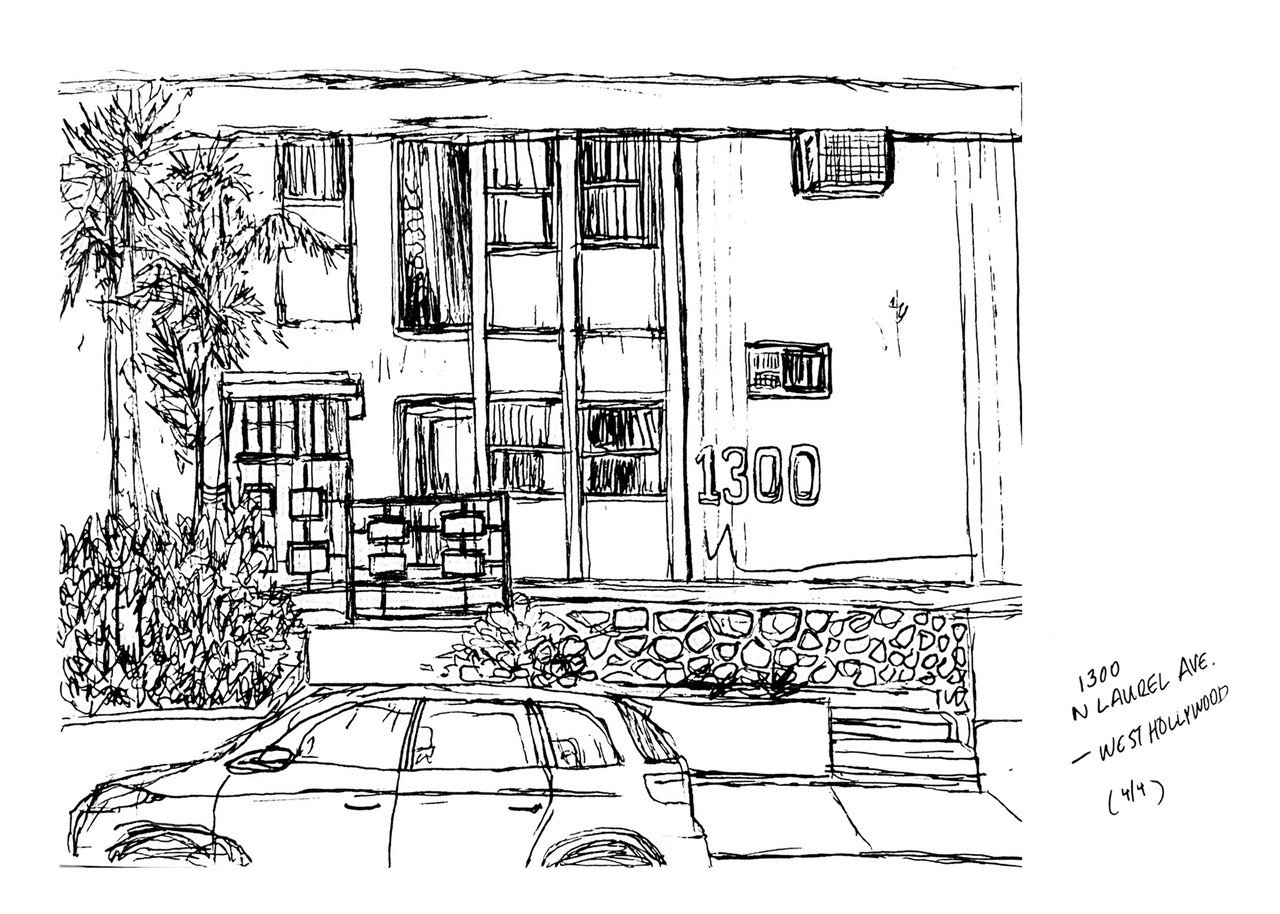
1300 N. Laurel Avenue by Brittany Min
Min is a Korean-American artist whose practice spans various mediums. Her art and designs bring people together as she captures a time, place, or feeling. She is currently based in Los Angeles and pursuing a Master of Architecture.
"I’m an artist and designer whose practice spans many mediums as they all help me capture something fleeting: a moment, a feeling, or memory," said Min. "I’m always searching for ways to hold onto emotions that feel deeply personal yet universally human. Traveling and meeting new people inspires me as the encounters remind me of how different our lives are but also how shared our emotional landscapes can be.
"I grew up playing music and it was through that lens I first began to understand the emotional power of the arts. Working in the music industry eventually led me to different forms of art I love like illustration and performance design. Now I am pursuing a Master of Architecture to push my understanding of how spatial experiences can have lasting effects on emotion. At the heart of everything I make, is the desire to help people feel comforted and understood. I want the work to feel like a quiet companion; to remind people life can be cherished and they are never alone."
Azucena Ortega
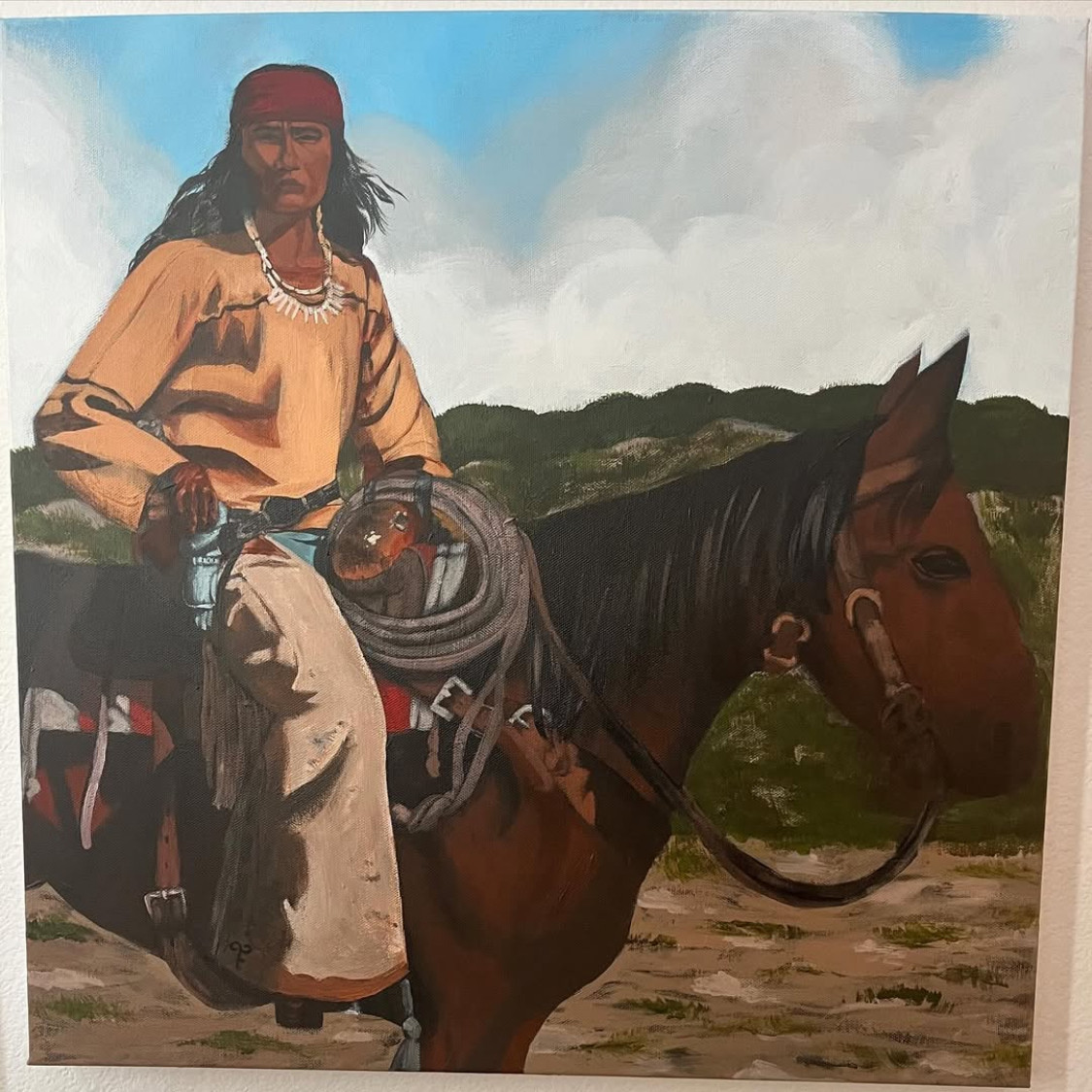
the first cowboys by Azucena Ortega
Ortega (any pronouns) is an art and psychology major and an artist based in Los Angeles, California, specifically Atwater Village. She is Mexican-American, as her family comes from Jalisco, Mexico. It is her goal to emphasize and uplift Mexican, Mexican-American, and Indigenous Mexican lives and voices through her art. She also enjoys creating more personal art, both as an outlet and to connect with others about the shared experiences.
"I created this piece because growing up, I never knew that the first cowboys were actually called 'vaqueros,' or cow herders, until recently in my life," said Ortega. "I took inspiration from a photo taken of Raphael Coyotl, a model, educator, and advocate for the rights of Indigenous people."
Lavande Kiki Ouyang
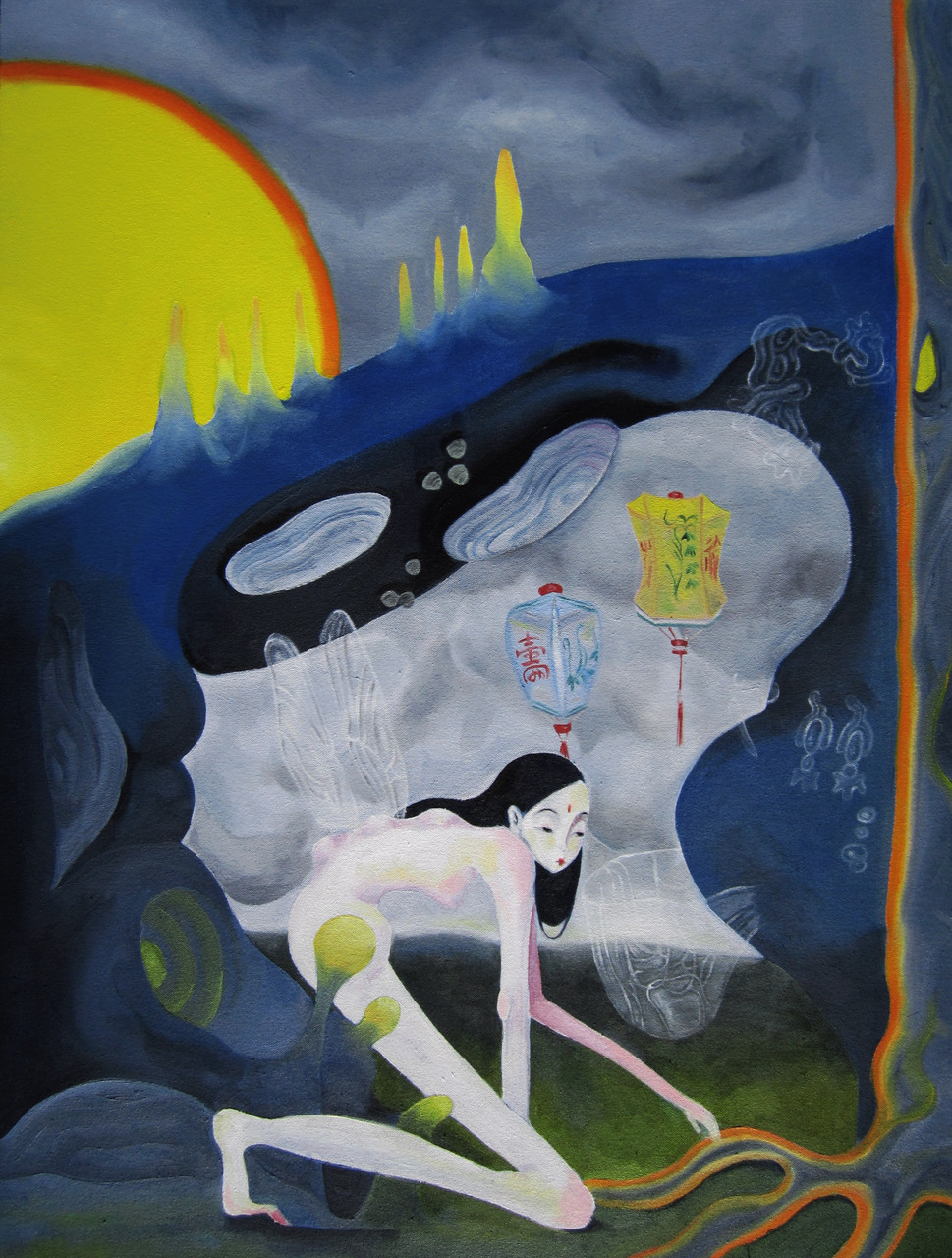
The Outcast Immortal by Lavande Kiki Ouyang
As an artist, Ouyang mainly works with painting and drawing, but is not limited to those.
“I like to experiment—trying out different materials, playing with techniques, and letting each piece guide me,” said Ouyang. “My process is pretty fluid, and it often changes as I explore new ways of expressing what I see and feel.
“A lot of my work comes from noticing the small, everyday things that people usually overlook. I’m drawn to quiet moments and ordinary objects—things like a crumpled receipt, a dusty windowsill, or the way light moves across a wall. By focusing on these little fragments, I try to uncover their quiet beauty and explore what they might mean on a deeper level. They often lead me to think about things like memory, identity, or the passing of time.
“For me, making art is both personal and reflective. It’s a way to slow down, observe, and connect.
“In The Tiny Bits Of Me, I explored the small yet frequently appearing objects in daily life. That they always maintain a relationship with people that is both familiar and distant. They exist silently in our everyday surroundings, seeming natural and unquestioned, yet when we truly observe them, they become unfamiliar and distant. In my work, I attempt to visually magnify these objects, allowing them to transcend their everyday functions and enter a state between reality and illusion. The enlarged details not only blur the boundaries of the objects but also detach them from their original meanings, transforming them into a new visual experience. As viewers engage with the work, they may recognize familiar elements, yet at the same time, they experience a sense of distance and uncertainty.
“The Outcast Immortal seeks to depict an immortal who, after undergoing transformation, embarks on a journey of self-rediscovery and reconstruction in the wilderness. This immortal serves as both a symbol of traditional cultural artifacts and a reflection of how modern society continuously deconstructs and reconstructs cultural symbols. Through this figure, I aim to explore how contemporary society reimagines tradition and question whether, in this process, we are truly understanding the original essence of these cultural symbols or merely creating new myths that align with present-day ideals.”
Luis Ramirez
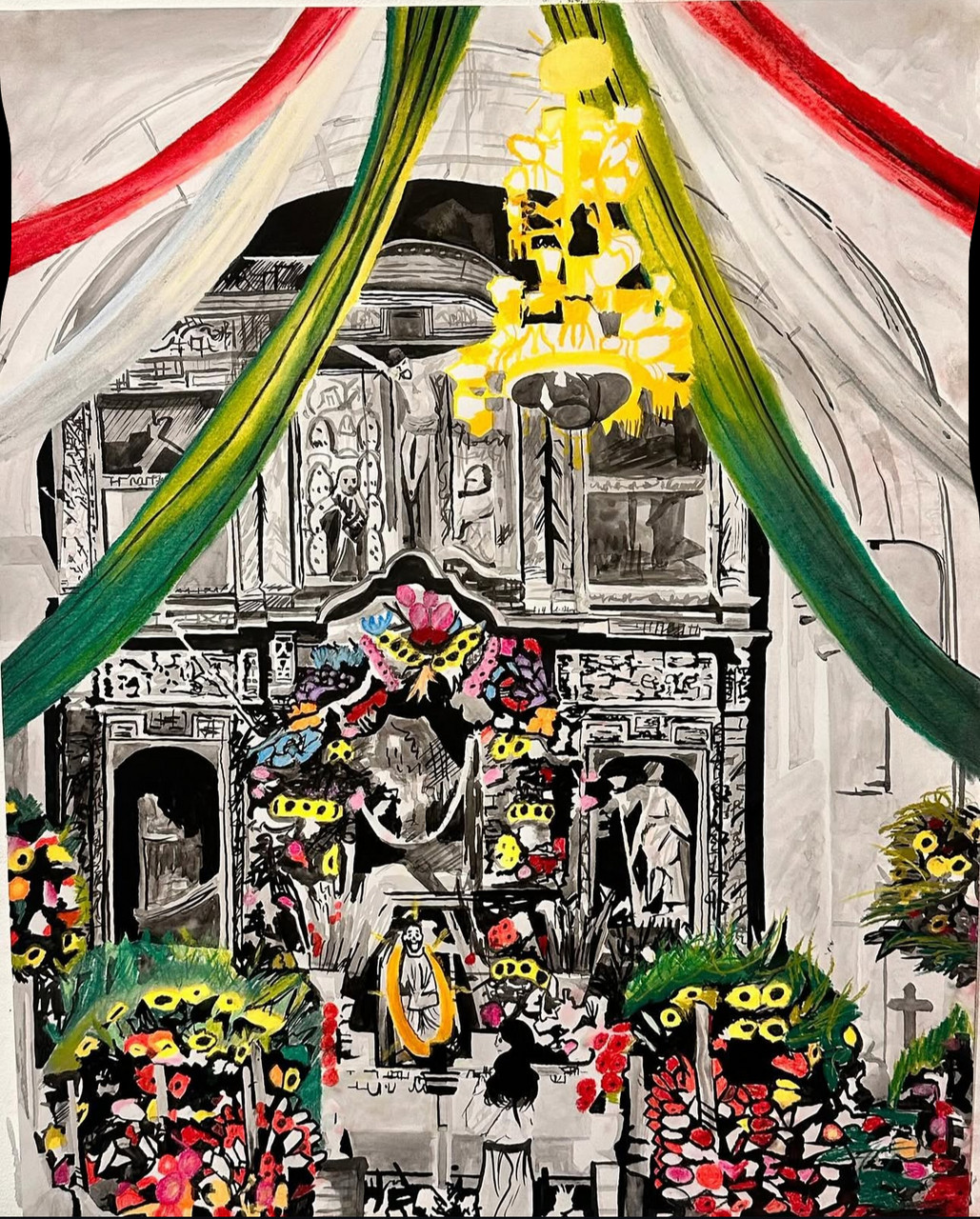
Ofrenda en Grises by Luis Ramirez
Ramirez is a first-generation Mexican-American artist from Inglewood, California, currently studying at UCLA. Working primarily in painting and drawing with oils, pastels, and watercolors, Ramirez explores cultural stories, identity, and community by looking at personal and collective histories. He combines Oaxacan heritage with the visual style of Los Angeles, using realism and symbolism. His artwork features a variety of subjects, including skeletal religious figures, vibrant altars, lowriders, landscapes, and spiritual fantasy. By capturing these traditions and contemporary life, Ramirez creates visual narratives that honor the past while engaging with present-day stories of strength and change. As an emerging artist, he wants to explore how art can help keep cultural memories alive and discuss his community's future.
"My work examines themes of memory, identity, and cultural hybridity through drawing and painting," said Ramirez. "As a first-generation Mexican-American artist from Inglewood, I create visual narratives that show my Oaxacan heritage, daily experiences in Los Angeles, and reflections on the strength of my community. Using a diverse collection of materials—including oil paint, pastel pencils, and watercolor—I aim to combine realism with symbolism through careful layering of color and texture. Many of my pieces focus on traditions and environments that carry deep emotional dynamics, such as a vibrant Oaxacan altar decorated with flowers and papel picado; a skeletal Virgen de Guadalupe that integrates Día de los Muertos motifs with Catholic faith; and portraits of lowriders in downtown Los Angeles, with custom paint shines with an almost holy meaning. These works serve as both personal narratives and collective representations of my community. I am mainly drawn to the stories embedded in often-overlooked details, including graffiti, roadside altars, and the ethereal glow of smog over the city. Through my art, I aim to highlight these visual languages and meaningful conversations across borders and generations. Each piece honors the past while making room for the start of new histories."
Hugh Remar
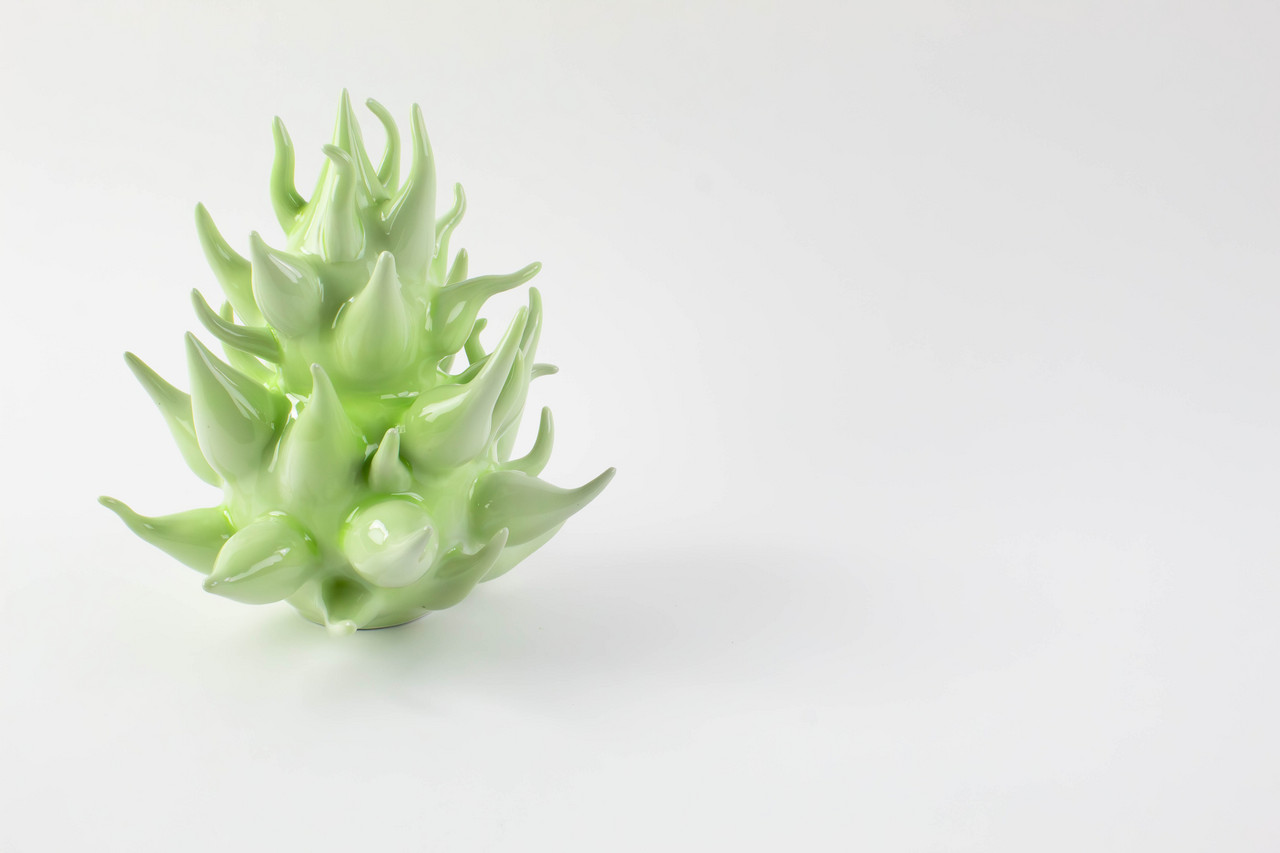
Strange Person Strange Place by Hugh Remar
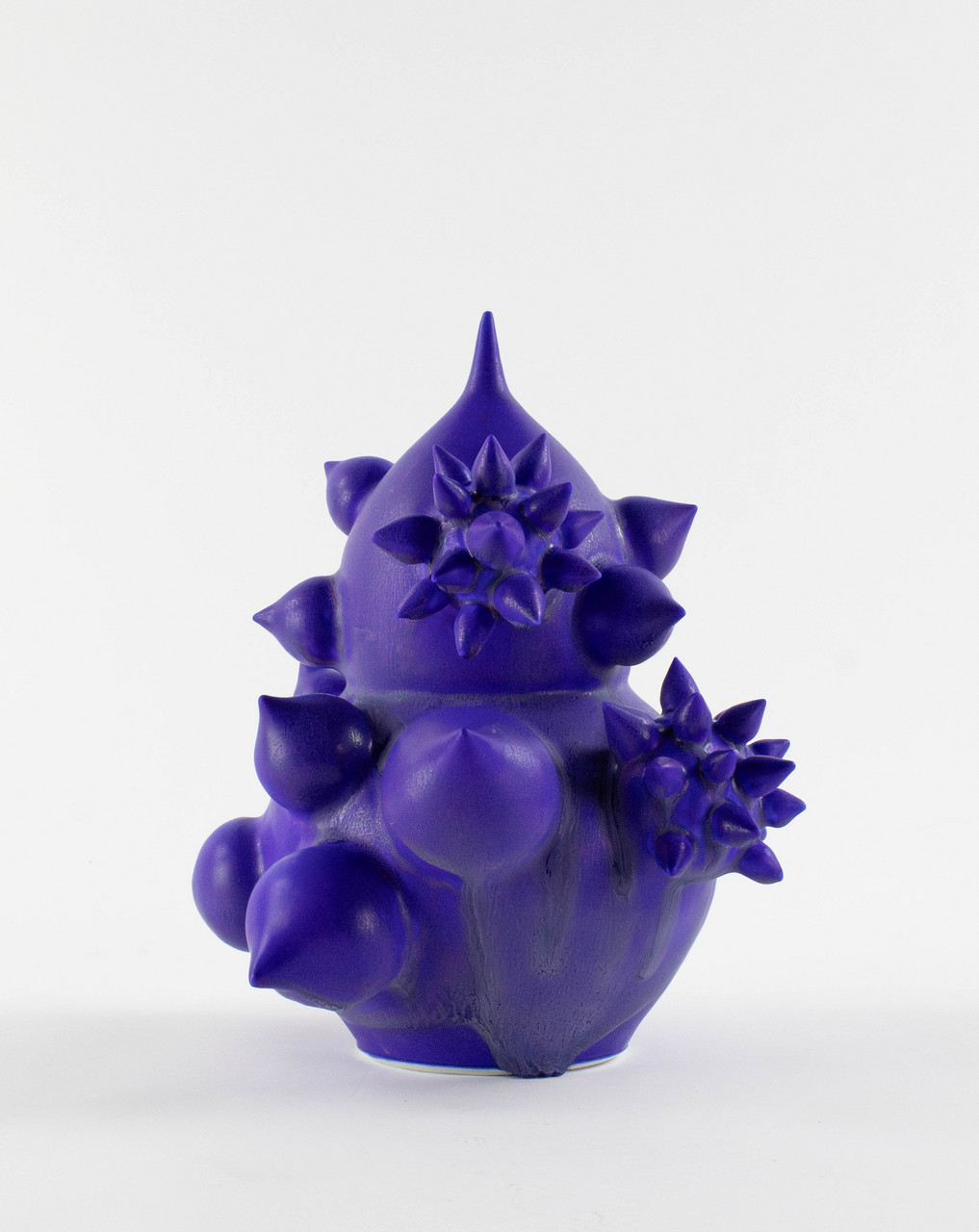
Strange Person Strange Place (II) by Hugh Remar
Remar is an artist, sometimes bartender and, apparently, an architecture student at UCLA. A New Yorker who loves and now lives in California, he makes functional and sculptural ceramics. Remar is currently the only known living person in the United States who has turned 27 multiple years in a row. He's trying to hold his title and beat his current record this year. Wish him luck.
"I've always had this awful urge to touch things in museums," said Remar. "Which, as a kid, could be brushed off as an age-related compulsion, but when you get scolded by a docent as an adult man for blowing on an Alexander Calder mobile or, you know, poking the Greek marble, it's just really mortifying for your friends or boyfriend or whoever has agreed to look at visual culture with you. Sure, I'm a visual person, but I'm far more tactile, which I guess is why I'm so interested in making pottery and ceramics in general. It's not just my tendency to touch the art, but I want, so very desperately, for whomever sees with my work to touch it too. I'm also terribly prone to boredom from monotony. It's a really bad quality for anyone who wishes to, say, have a job that requires sitting or answering emails. But shockingly this doesn't apply to the deeply repetitive act of making vessels. No two are alike. And, no matter how much painstaking effort you put into achieving some manufactured sense of proportion and perfection, the kiln or god or the universe has the final say. Keeps you on your toes. My work is also not stationary. I mean, sure, it doesn't have legs, but I'd like for it to be used. I'm a vessel and so are you, and so are the objects I make. We hold different things at different times, and we all change with use. The work is always changing. As an artist, I'm trying to bridge the gap between making work that is fundamental and beautiful and specific and uncomplicated, and also very rich with meaning. That's life for ya. Go on and touch the work. Just try not to break it."
Sanjeev Varma
Varma is a multidisciplinary artist and storyteller studying World Arts and Cultures at UCLA. His work explores themes of memory, displacement, and generational identity, often through film, poetry, scriptwriting, and community-centered projects. His recent projects blend ethnographic research with personal narrative, reflecting a deep curiosity about cultural continuity, loss, and reinterpretation. Sanjeev experiments with non-linear storytelling and nuanced experiences of exile. With a background in student leadership and organizing, he is committed to creating inclusive creative spaces where stories of migration, spirituality, and selfhood can be shared and reimagined. Across his works, he hopes to make space for reflection, connection, and new ways of seeing.
"In many ways, my grandfather’s passing felt representative of a larger drift away from my culture," said Varma. "On both sides of my family, my parents were migrants: my mom a Gujarati refugee from Uganda escaping the 'Asian Exile' under President Idi Amin, and my father an immigrant from Jamshedpur, Bihar, in search of a better life. While my parents are migrants, my grandparents were the ones to initiate my family’s move to the United States. Although my sisters and I have been surrounded by our culture through food, artifacts, religion, and exposure to language, losing the people that carry a tangible connection to our homeland is something that scares me. Slowly we are detaching from the people that brought us here; we are detaching from the culture that grounds us. This project is something I wanted to do with no particular expectations or answers in mind. Curiosity is what began this, I’ve also found it to be the conclusion. The project aims to represent the diversity of people, generations of immigrants, refugees, and kinds of students at UCLA. The project began just two weeks before the end of the Fall 2024 quarter, and its limited scope is something I’m still grappling with. Ethnography was inspired by the ethnographic works of Reassemblage and Lutu Chuktiwa by Trinh T. Minh-ha and Dr. David Shorter respectively."
Eric Villa
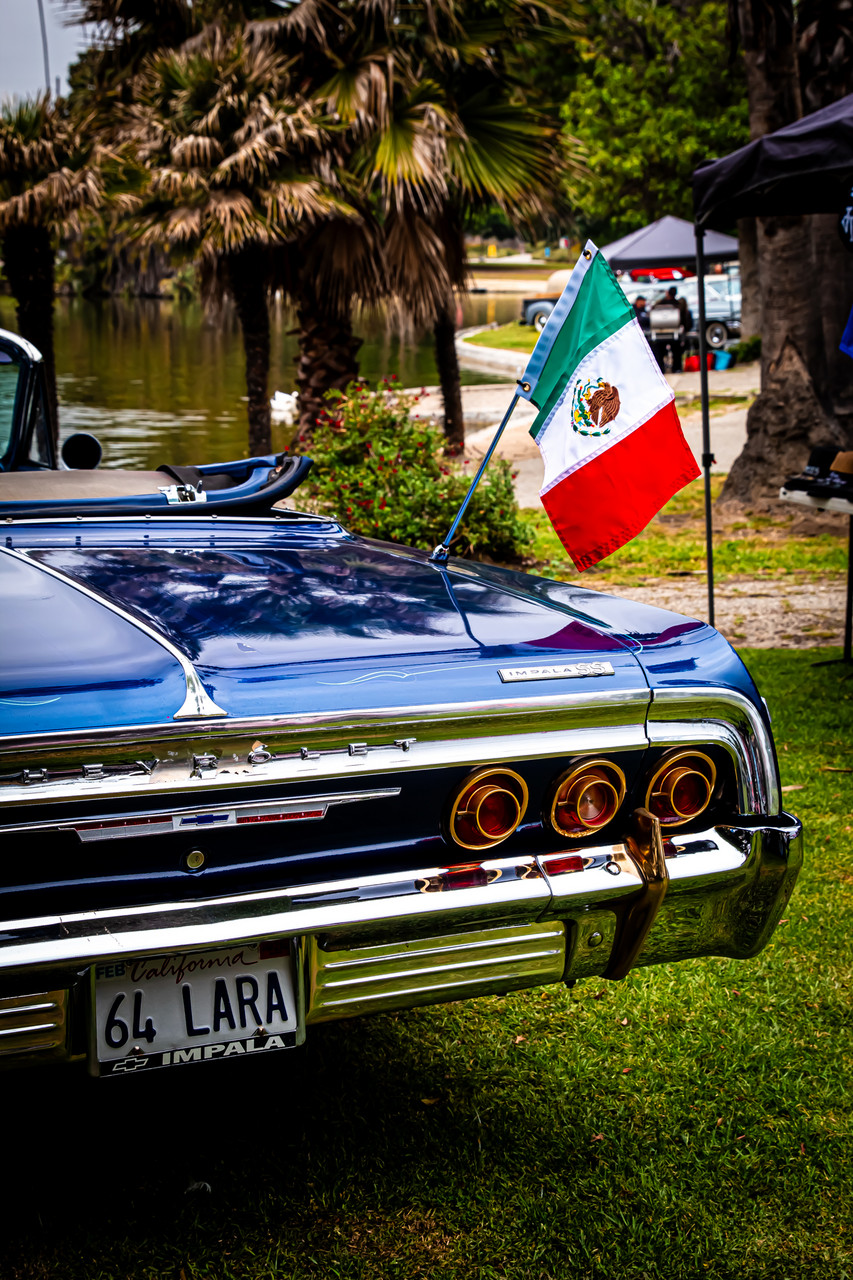
Mexico rides with us by Eric Villa
Villa, born and raised in South Central, is a photographer who captures the essence of Chicano culture, lowrider events, and embraces working families dynamics. Inspired by their parent’s heritage, Michoacán and Santa Cruz, Mexico, photography has allowed them to capture the pride, identity and commitment of love and recognition that marginalized communities face. They're proud of who they are, what their photography represents in their community, and loves to embrace where they come from through their lens.
"My photography is a vibrant interdisciplinary collection of lowrider culture and documentary storytelling, captured through color digital photos," said Villa. "I document my curiosity in these spaces, the intricate designs of the lowriders, the moments that unfold at gatherings, and the people who live their day to day lives in this community. My lens gravitates not only toward the lowriders themselves but also toward the faces, history, and spirit of those who carry on these cultural traditions.
Rooted in both the streets of L.A. and the landscapes of Mexico where my family came from, my work is deeply personal. I find meaning in photographing traditional Mexican landscapes and everyday details that speak to heritage and identity, moments that reflect where I come from and what I carry with me. Each frame tells a story of pride, resilience, and belonging. I pursue this form of photography to affirm our presence, to remind people here in L.A. that we exist, and that our culture is rich, layered, and deserving of recognition."
Victoria Viveiros
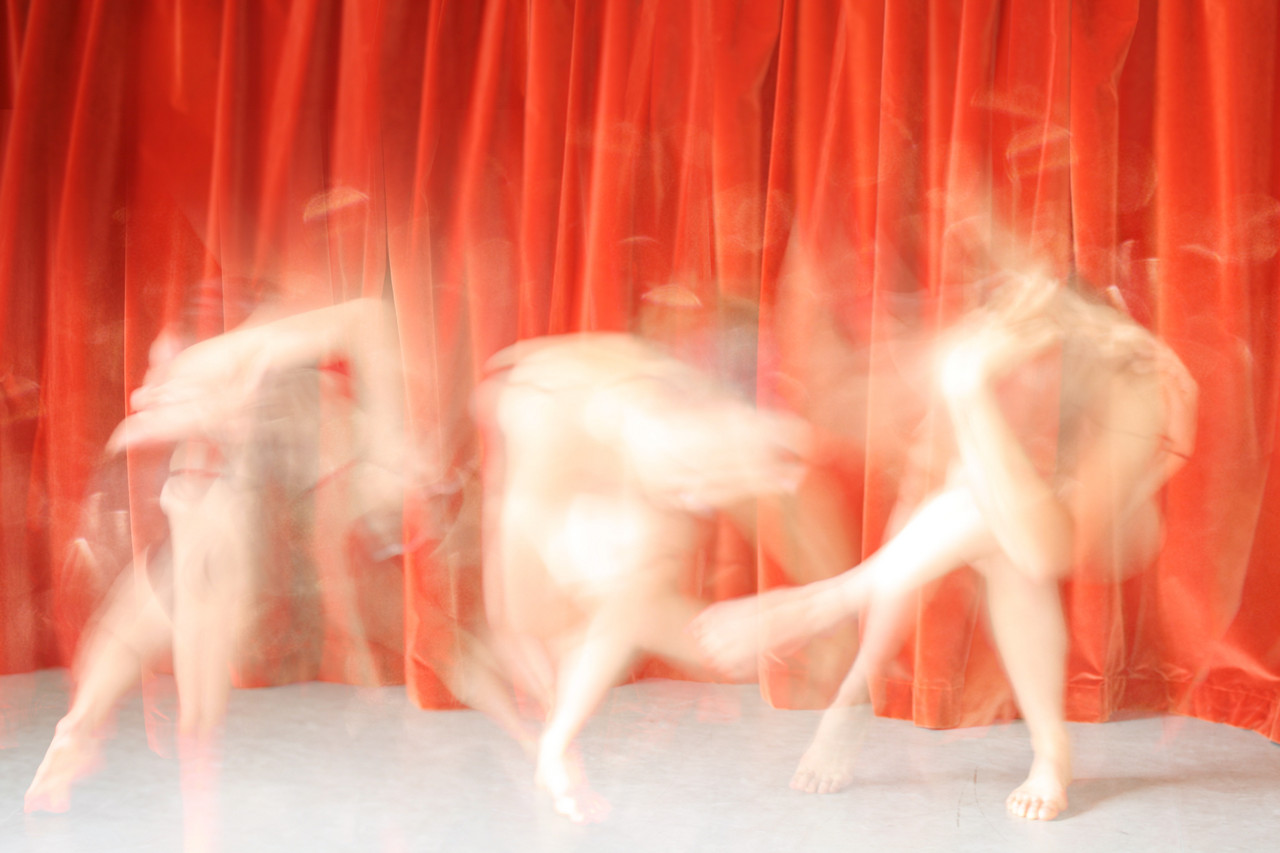
Tactility of Movement II by Victoria Viveiros
Viveiros is a multidisciplinary artist with a focus on dance, driven by her belief in the arts' limitless potential for storytelling. Through her training as a dancer and her education at UCLA, she has developed an academic background in the arts, cultural studies, and life sciences. Victoria strives to diversify and expand her pool of knowledge because she finds that through the intersection of different fields, unique stories of people, places, and ideas come to light. She is continuously curious about the capacity for storytelling and the influence it holds in shaping individual and community identities.
"I believe the ability to create is at the heart of every person," said Viveiros. "In my work, whether through performance or artistic creation, I focus not only on what a piece evokes in me, but also on ways to evoke a similar experience within an observing party. Community is central to my practice, both now and in the future, and I aim to create work that strengthens that bond. I draw continuous inspiration from the people around me and those who I work with. I strive to ensure that my work, and the projects I’m involved in, help strengthen this sense of community."
Faye Yan (Yifei) Wu
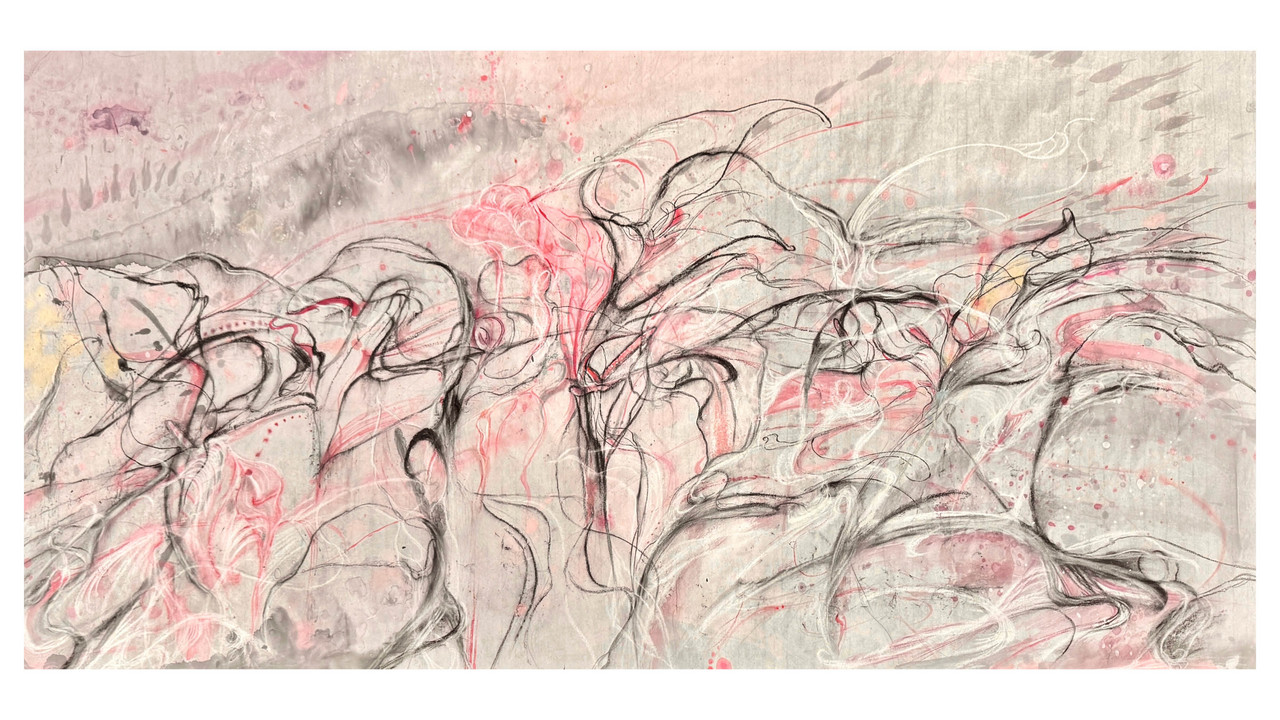
The Calla Lily by Faye Yan (Yifei) Wu
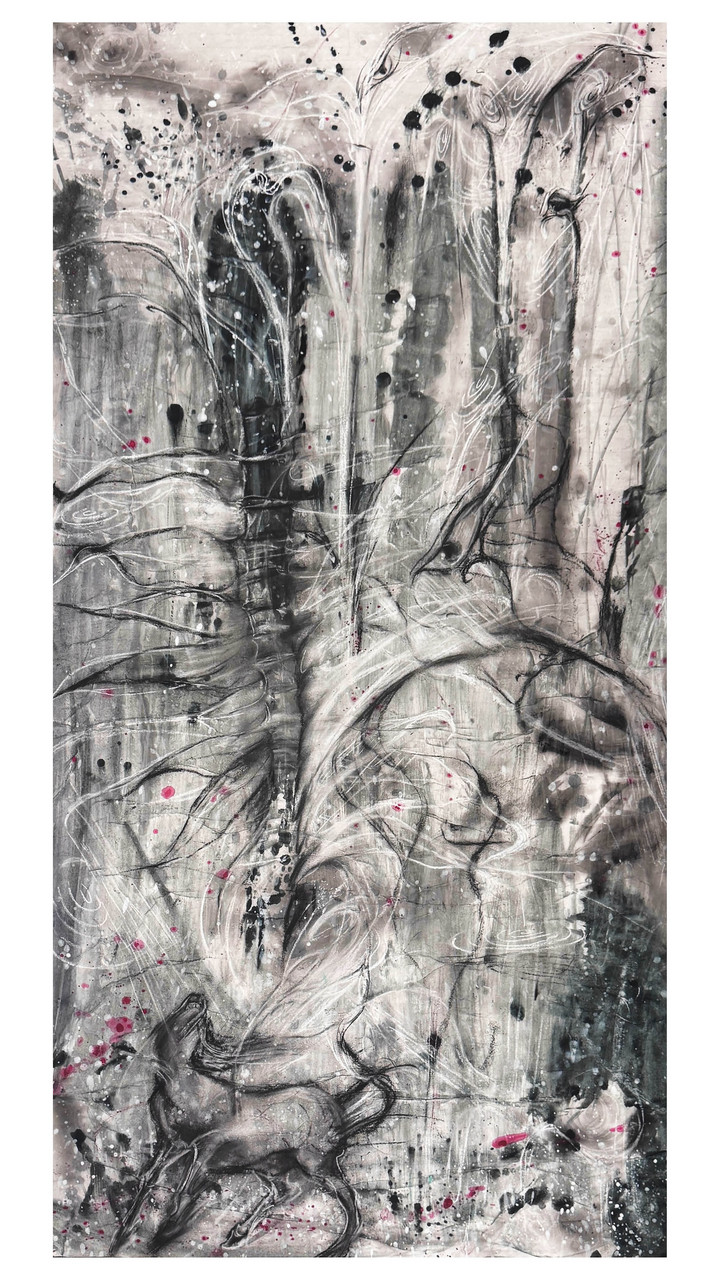
The Banished Immortal by Faye Yan (Yifei) Wu
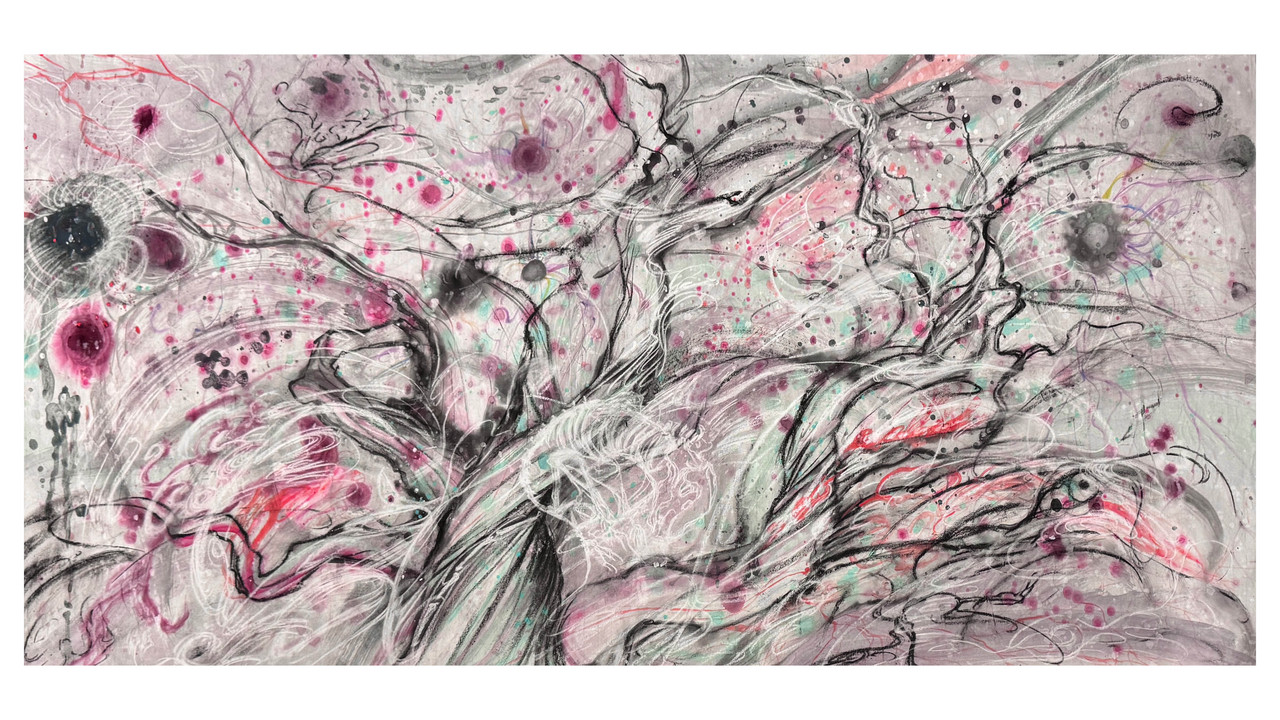
Genesis by Faye Yan (Yifei) Wu
Faye Yan (Yifei) Wu is a multidisciplinary artist currently based in Los Angeles. She is pursuing a B.A. in Fine Art at UCLA, with a minor in Digital Humanities. Her practice spans painting, installation, and moving image, centering on her feminist perspective and identity as a Chinese individual navigating the global context. Traversing the cultural and geographic currents between East and West, she seeks grounding and selfhood amid movement. The tension between fluidity and stillness flows through her work like an undercurrent. It is at once a lucid gaze upon the power structures woven into culture and history, and a personal reverberation that breathes between entanglement and release.
"My art is shaped by my lived experience as a Chinese individual in a global context," said Wu. "I work across drawing, painting, experimental film, and installation, each serving as a material vessel for transcendental emotion and contemplation. These works arise from a continuous and fluid dialogue between my inner self and the external environment. Both motion and emotion are ceaseless, and so is art. I view each piece not as a discrete, finished product, but as part of an evolving process—an act of 'arting.' A sense of movement, lightness, and intuitive, unrestrained spirit runs through my art.
"Navigating a contemporary art field largely shaped by Western ideologies, my practice seeks to question dominant narratives and contribute to a broader shift toward decolonizing artistic and curatorial paradigms. By revitalizing oriental aesthetics and embracing cultural hybridity, I critically engage with my heritage while exploring the complexities of diaspora, femininity, collective memory, and trauma.
"Inspired by Eastern philosophy, which posits that the universe reveals itself in the smallest of things, my work evokes organic, living entities that blur the boundary between microcosm and macrocosm, creating tension without aggression. I make with a conscious sense of breathing space, allowing stillness to become a form of resistance. This calm, meditative aesthetic challenges the assimilative pressures of gender, material, and scale hierarchies that have long defined the contemporary canon. I seek power in nonviolent forms of softness to confront authority and dissolve extremes."
Fengqian Xing
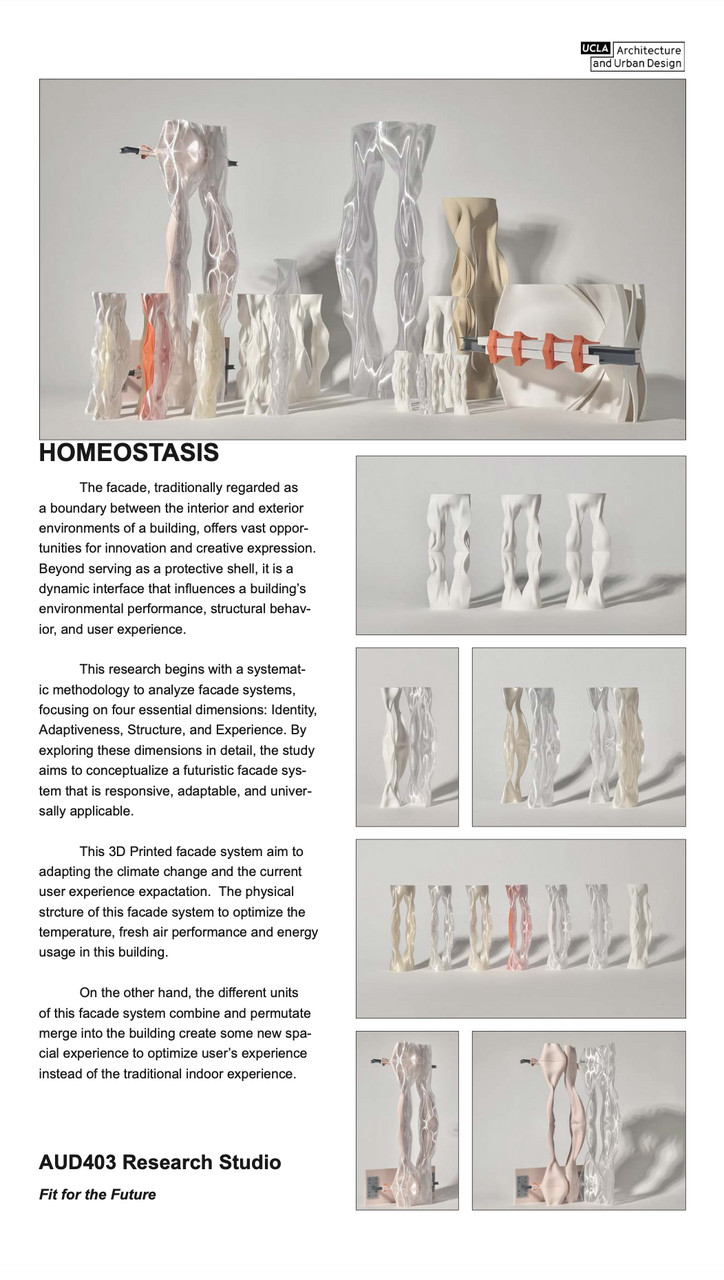
Homeostasis 3D printed facade system prototype unit study models by Fengqian Xing
"During my time in Davis, we engaged in numerous discussions regarding the nature of original design," said Xing. "A prevailing conclusion from these conversations was that true originality in design no longer exists in a traditional sense. As a designer, I have come to accept that my role is not to create something entirely new, but rather to reinterpret, combine, and remix existing elements from the world around us. This perspective is underpinned by the belief that every design inherently contains a traceable thread—a connection that links the present with the future.
"The facade, traditionally regarded as a boundary between the interior and exterior environments of a building, offers vast opportunities for innovation and creative expression. Beyond serving as a protective shell, it is a dynamic interface that influences a building’s environmental performance, structural behavior, and user experience. My research begins with a systematic methodology to analyze facade systems, focusing on four essential dimensions: Identity, Adaptiveness, Structure, and Experience. By exploring these dimensions in detail, the study aims to conceptualize a futuristic facade system that is responsive, adaptable, and universally applicable."
Arianna Zhou
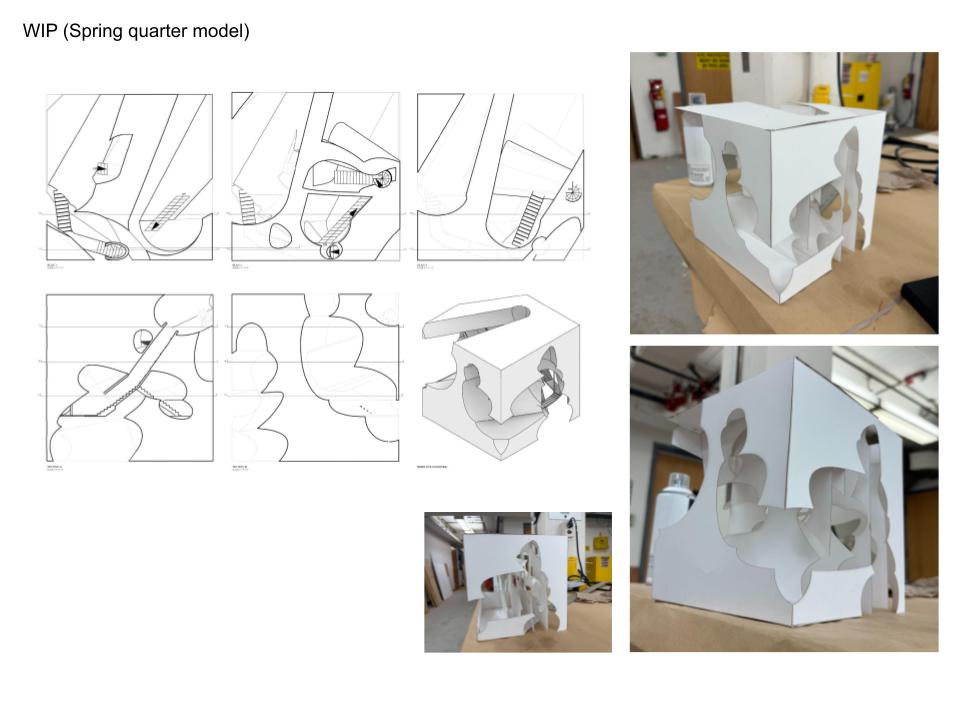
Tunneling Cube by Arianna Zhou
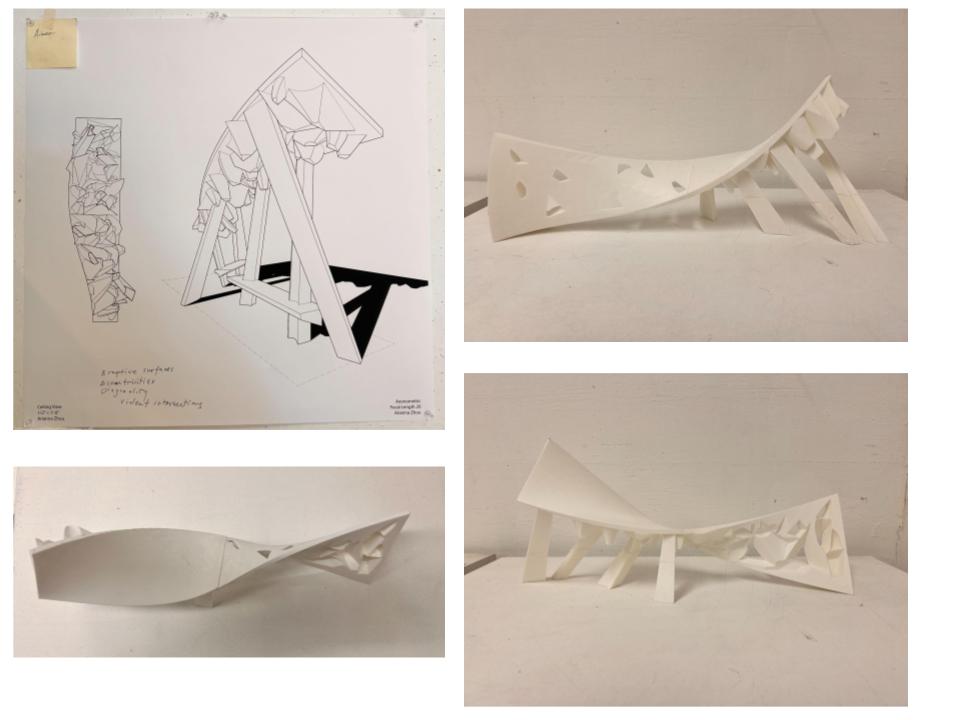
Double-Sided Bench by Arianna Zhou
Zhou is a senior at UCLA double majoring in Architectural Studies and Cognitive Science. She'd always been interested in architecture, but it wasn't until her freshman year summer, when she participated in AUD's JumpStart program, that she discovered a deep appreciation of design. After undergrad, she plans to attend graduate school in the field of medicine and to continue being creative.
"I am a Architectural Studies and Cognitive Science student at UCLA," said Zhou. "My double major allows me to pursue a career in science while embracing my passion for art and design. I love how design-focused the undergraduate architecture major is, and I have learned a lot about how to translate wild ideas into concept models. The programs I use most often to make this possible are Rhino, Adobe Illustrator, and Blender. I am inspired and supported by my teachers, peers, classes, and friends and family to continue creating."
Stay engaged. Use #UCLAarts to stay connected.


