UCLA professor and pioneer of media archaeology reflects on sharing work abroad
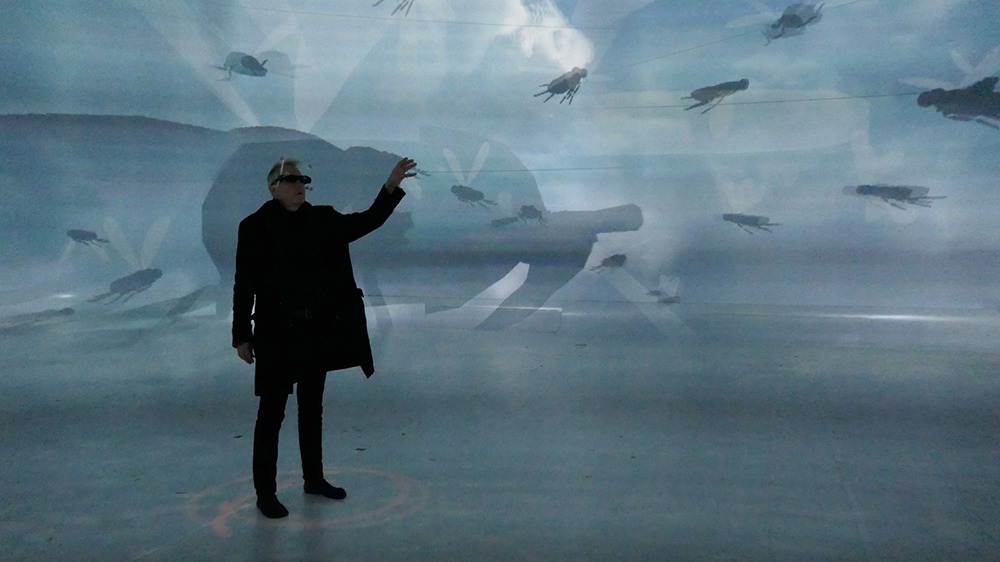
Professor Erkki Huhtamo holds a PhD in Cultural History from the University of Turku, Finland. He is a media archaeologist, author, and exhibition curator. He is internationally known as a pioneer of an emerging approach to media studies called media archaeology. It excavates forgotten, neglected and suppressed media-cultural phenomena, helping us to penetrate beyond canonized "grand narratives" of media culture.
"A manually driven car may be as antiquated as a landline telephone in the future, Erkki Huhtamo said.
Erkki Huhtamo, a professor at UCLA's department of design media arts, gave a series of lectures throughout Japan entitled "Media, Transportations, and the Challenges of Posthuman Culture." (Courtesy of University of Tsukuba) Huhtamo is a professor at UCLA’s department of design media arts and a founder of the field of media archaeology, the discipline that seeks to understand new and emerging media through examination of the past. He has curated a number of art and design exhibitions, and was once an adviser on an episode of the television show “Storage Wars.” He recently gave a series of lectures at several universities in Japan titled, “Media, Transportations, and the Challenges of Posthuman Culture.” Huhtamo recently spoke with the Daily Bruin about the nature of evolving methods of transportation, and how technology both to serves and distracts the modern human.
Daily Bruin: What inspired you to do a lecture tour in Japan? What did you discuss?
Erkki Huhtamo: One of the reasons for this kind of lecture tour is the fact that in 2015, I published a monograph – a book about media archaeology – that I wrote for Japanese readers. It was obviously translated, as I’m not able to write in Japanese myself. The title of the book in English is “Media Archaeology: Dialogues between the Past, Present and Future.” This book has been adapted quite widely at the universities in Japan as a textbook, and since I’ve been active in Japan in various media roles for quite a long time, it’s created a demand for these kinds of lectures.
But I did not simply want to speak about what I already wrote in this book. I talked about my current research, my new interest in which I was looking at relationships between systems of transportation, media culture and the idea of the posthuman, which is a hot topic today among media scholars.
DB: What examples of media culture relations might residents of Los Angeles or UCLA students be familiar with?
EH: Think about a simple media machine like a film projector, a video camera or even a smartphone. These devices have certain ways of sensing and recording the world, often sending out information. Self-driving cars actually need to be media machines to function. This means that it is provided with all kinds of sensors including LIDAR – which is a kind of panoramic sensing system – radars and other devices that at any moment create an idea or mapping of the surroundings around the car. But the self-driving car also sends out that information to computer databanks at any moment, which put on various layers of mapping from the immediate surroundings all the way to a kind of global mapping of where that car is situated.
And the important point here is the mobilities, the idea of things in motion and media culture are merging with each other. Of course, mobilities also have to do with smartphone users walking on UCLA’s campus while texting or riding a Bird scooter and doing the same thing, so it exists on many different levels. But these were the kinds of things that I was talking about in my Japanese lectures."— Jordan Wilson, Jan. 15, 2019


This post is an excerpt. Read the full article on the Daily Bruin website.
Stay engaged. Use #UCLAarts to stay connected.


