Twenty years of Dance Camera West
WACD professors Lionel Popkin and David Roussève preview the dance film festival
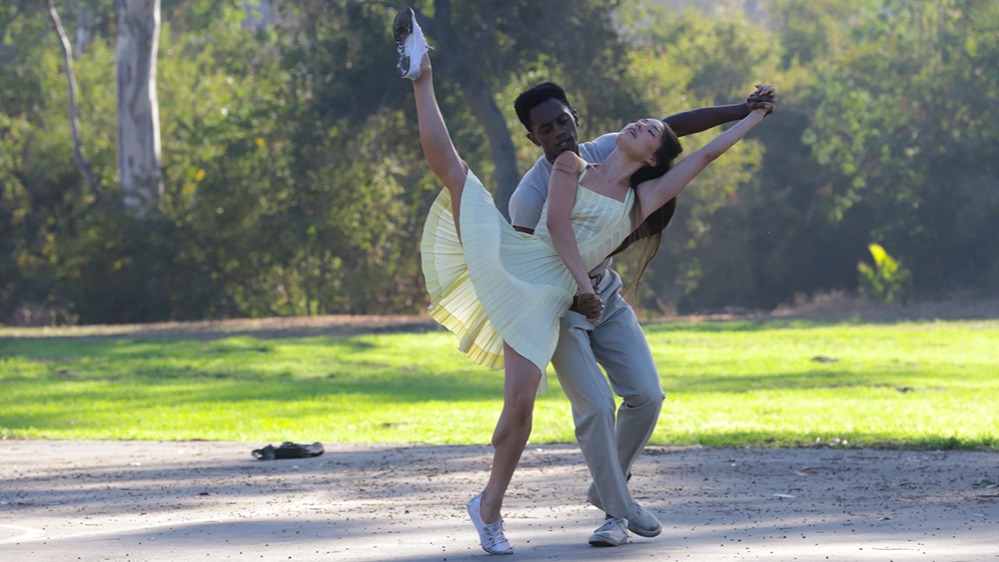
An annual celebration of dance on film is returning to Los Angeles for its 20th anniversary. The world-renowned festival Dance Camera West (DCW) will run March 24 - April 2.
UCLA Arts professors of choreography David Roussève and Lionel Popkin are DCW board members and have shown their films in the festival.
DCW’s festival was originally scheduled for January but was postponed because of the Covid-19 surge. The screenings, which include 75 films, will be held at Théâtre Raymond Kabbaz and the newly founded 2220 Arts & Archives (formerly The Bootleg Theater).
Popkin, Roussève, and the festival's executive and artistic director Kelly Hargraves joined the UCLA Arts podcast Works In Progress for a conversation about the festival and the evolution of dance on film:
"There's a record number [of submissions] from America. Usually it's mostly foreign submissions, because the infrastructure to make dance for camera is much broader in other parts of the world. But in the pandemic, for better or for worse, a lot of people became makers of dance for camera,” Popkin said, “because we were all in quarantine and on Zoom.”
“Oh my gosh, everyone and their mother's making a dance film now,” Hargraves said. “We had 400 submissions, which is at least a hundred more than usual.”
The festival opens on Thursday, Mar. 24 with the premiere of the documentary Ink & Linda, chronicling the friendship and artistic collaboration between an LA street artist in his 20s, Inksap, and a dancer/choreographer in her 70s, Linda Lack.
On Friday, Mar. 25, the festival will screen Undanced Dances Through Prison Walls During a Pandemic, featuring six dances written inside Norco Prison during the Covid lockdown.
The closing night of the festival includes six films that DCW helped produce, made by the recipients of the DCW Finishing Fund for Underrepresented Filmmakers.
"The whole point of this year and everything we do is widening the lens, widening the gaze,” Hargraves said.
DCWFF22 FULL TRAILER Mar 24 - Apr 2, 2022 from Dance Camera West on Vimeo.
Roussève has been making dance films since 1992 as a way to capture aspects of dance that don’t translate as well to the stage.
“The reason that I wanted to first branch out into film was... my work for the stage was sometimes frustrating in the sense that I wanted to create very intimate gestural work, and then really loud movement, more in your face. And so, on the theater stage, I was constantly trying to move from close up to wide shot," Roussève said.
But while film offers more control over angles, close-ups, and shifts in time and space, it lacks the same energy and spontaneity, Roussève said.
"I don’t see myself ever replacing the immediacy of a live body in front of you," he said, “and it's also very difficult for me personally to make a kinetic movement as exciting on film as it is live.”
The way audiences consume dance on film has changed along with advancements in visual and digital technologies. From Busby Berkeley’s kaleidoscopic choreography and Maya Deren’s experimental films to high-energy Broadway-style musical numbers, and from four-minute music videos to 15-second TikToks, the length and format of dance on camera continues to evolve.
"It's still people trying to figure out how their bodies move within this frame," Popkin said.
Story by Avishay Artsy
HEADER IMAGE: A still from The Farewell, directed by Kitty McNamee, featuring dancers Raymond Ejiofor and Stephanie Kim. Photo by Martin Chalifour.
Stay engaged. Use #UCLAarts to stay connected.


