Turning Discarded Items Into Art About Race in America
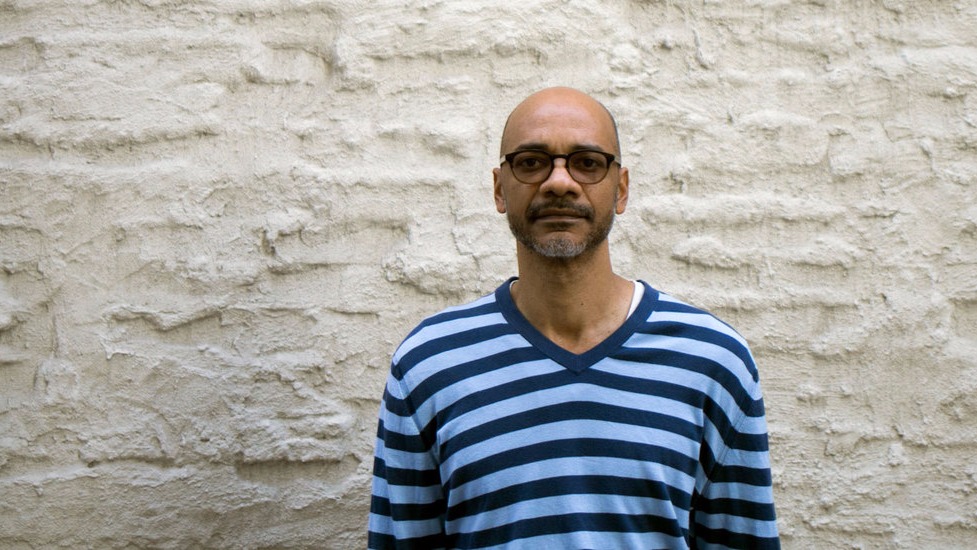
Rodney McMillian, associate professor of sculpture in the UCLA Department of Art, employsa wide range of media and techniques in his artistic practice. An overarching concern in his work is the relationship between language, aesthetics and content.
The Los Angeles artist Rodney McMillian has an ambivalent relationship with mass-produced home furnishings. On the one hand, he has rescued several examples from oblivion, like the time-ravaged lounge chair he wrestled into his car on a corner of Sunset Boulevard and later declared an artwork — untouched, stuffing spewing forth. It’s the kind of ready-made that Duchamp might have chosen if he had grown up in a working-class African-American family in Columbia, S.C., as Mr. McMillian did.
But Mr. McMillian, 47, has also subjected seemingly blameless appliances and other pieces of furniture to some pretty serious violence. “Couch,” from 2012, is what its title describes, but the artist has chopped it in half with aSawzall reciprocating saw and sutured it back together with a gob of rough concrete, making it whole again in a disturbingly dysfunctional way.
The couch is front and center in “Rodney McMillian: Views of Main Street,”an exhibition that opens on Thursday at the Studio Museum in Harlem, one of three East Coast shows of his work that will run concurrently, introducing many viewers to the full sweep of a 15-year career that has delved deeply, and often with haunting beauty, into questions of class, race and American belonging. — Randy Kennedy, Mar. 23

Read the full article at the New York Times website.