Three Questions with Jade Charon Robertson
World Arts & Cultures/Dance student Jade Charon Robertson says UCLA helped her become an artist
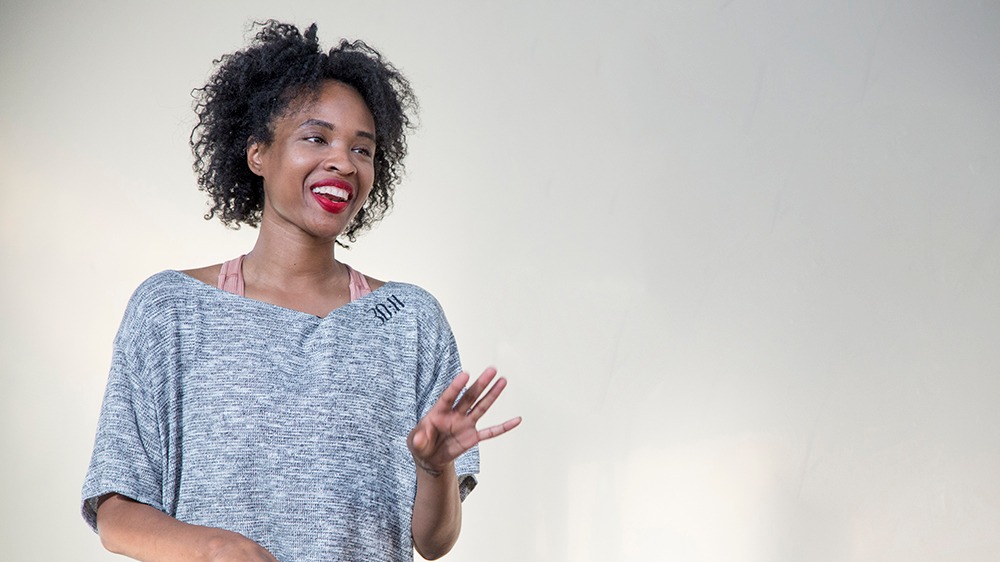
When Jade Charon Robertson was preparing to move to Los Angeles to study in the M.F.A program in the UCLA Department of World Arts and Cultures/Dance (WACD), prominent examples of police brutality including the deaths of Trayvon Martin, Sandra Bland, and others came under close public scrutiny. As she began her studies at UCLA, she was inspired to create work that brought awareness to social issues. Inspired by the Black Arts Movement, Jade believes that as an artist in our current climate, her work must be functional in order to be beautiful. For the past three years, she has been creating choreographic studies around Black Lives Matter and black social issues, including her thesis project, which she will present at UCLA on April 13 and 14.
In addition to developing her research and artistic practice at UCLA, Jade has founded a mentorship program for young girls of color, produced a dance festival for women of color to showcase their artistic projects, and created an inclusive and affordable line of dance clothing. she also worked with students in the Watts-Willowbrook Boys and Girls Club in a variety of contexts, including a dance film that garnered attention from the New York Times.
An artist, choreographer, dancer, mentor, scholar, and entrepreneur, Jade’s experience at UCLA has been one of transformation and growth. This spring, before a rehearsal for her thesis presentation, she spoke with UCLA Arts about her experiences over the past three years.
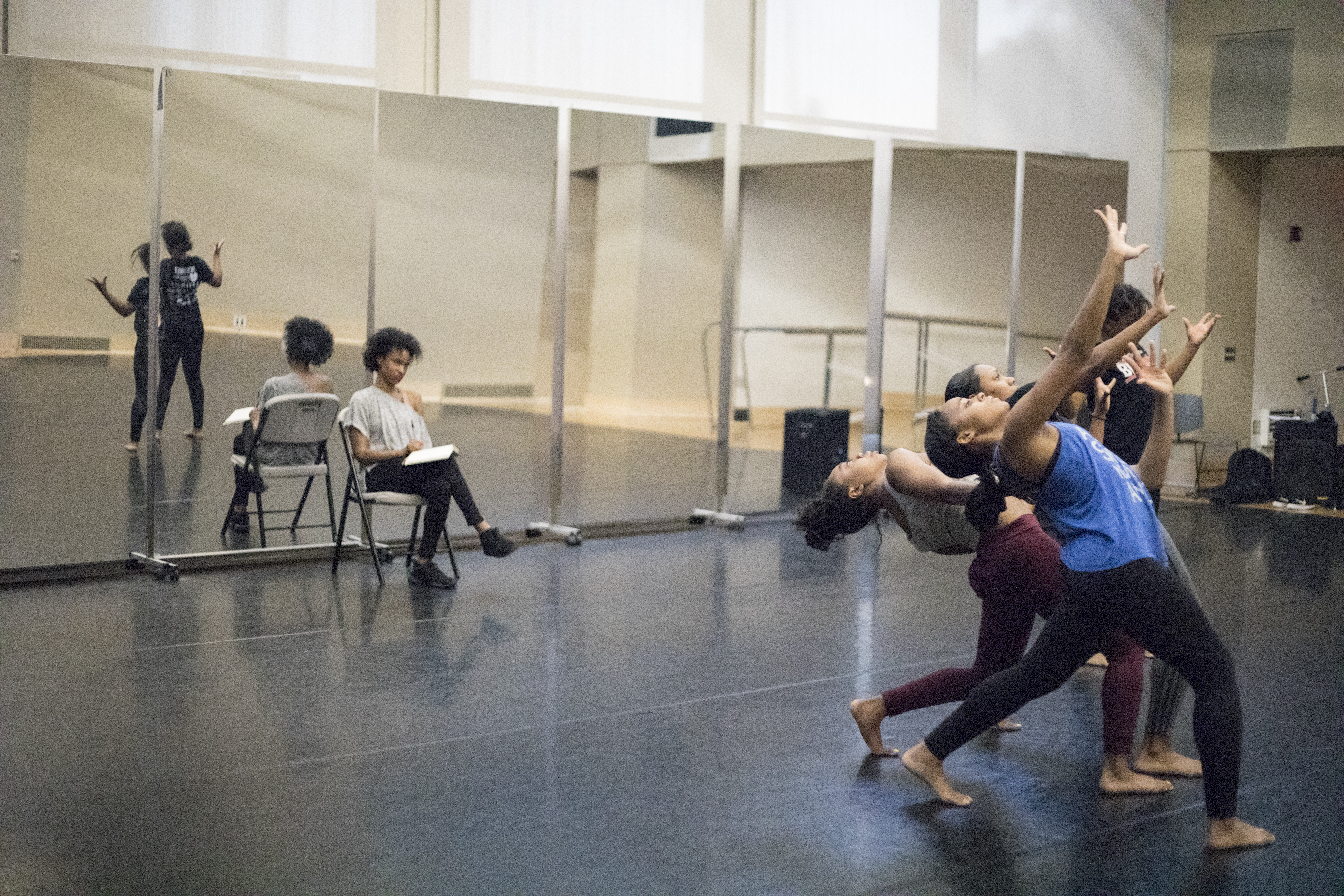
What is it like studying dance within a large public research university?
One of the things I love about this program, is that we can design our own experience. When I first came to UCLA, Lionel Popkin was my advisor, and one of the first questions he asked me was, "Well, what do you want to research?" He told me that the university was mine and that I could go to the African American studies department, to the theater department, anywhere on campus, and take classes. So I did that, and I was able to meet a lot of people outside of WACD and build relationships.
In my first quarter, I took a Toni Morrison writing class with Professor Carol Streeter. It was so hard because I was in a class with writers, and as a dancer I had a very different focus. But it really helped my writing skills because the other students weren't looking at the emotional content, they were looking at the writing, and in the end, I got an "A". I also took a poetry class that focused on innovative writers in the post-civil rights movement. These classes also helped me develop my choreography through studying composition in writing, and bringing the composition into the choreography class. For example, Toni Morrison always starts from the end at the beginning. So I played with ways to use that in my own work, creating the end in the beginning.
I come from a conservatory background. So there are things in which I was just very disciplined as a undergraduate—things that undergraduates here might not be privy to because they aren't in that conservatory situation. But, I didn't learn to be an artist, until I got to UCLA. I was dancing, but I was mimicking what my choreographer or teacher wanted. But both graduate and undergraduate students in this department have the tools to create. They're learning how to really create and how to advocate for themselves, because you don't have to go through this track of three ballet classes, three modern class, etc. We can really just take the classes we want to take, and that is empowering in itself.
What do you wish you would have known when you first started your career at UCLA?
My thesis project has come with a lot of tears. After one showing I was crying and talking to [Studio Professor] Kyle Abraham because it didn't go the way I thought it should have, and he said "Jade, I'm going to push you but I'm not going to let you fail." And no one had ever said anything like that to me before. From that point I really trusted him. During the summertime, he came and sat in the studio with me, and watched me develop my work. That's when I had an aha-moment. I thought, "Wow, he's really looking at my work. He’s a MacArthur Fellow, and has so much going on, but he's sitting in the studio with me, and he won't let me fail.”
I wish I would have known that it's okay to fail. That it's safe to fail, and not in the sense where you don't work hard, but in the sense that you can play; that you can really take risks; and trust that the professors here are really on your side. Because you can't isolate yourself. I know now that as a choreographer, it’s okay to be pushed, and it’s a good thing for people to see your process in the beginning stages, when it's not completed. They're not judging, but they're really here to help you.
How has your time at UCLA changed you?
During the first year of the M.F.A. program, the faculty show you all these different techniques or different styles to create dances that are different from what you bring to the table. They really research you; they know your strengths; they remember your application and your audition process, so they know what you're about, and they just totally throw new stuff at you. And it throws you off a little bit. They push you out of your comfort zone. So the first year was very uncomfortable. But the second year, when we came back to who we are as choreographers, and we had experienced all those challenges the first year, it really strengthened who we are as artists.
I came in as a young, emotional, vulnerable, but passionate dancer and student. I'm leaving as a bold, confident, still passionate, artist. I can't believe I'm here. UCLA really has changed my life, and I'm not even a generic, cliché person. It really has.
READ MORE STORIES ABOUT UCLA ARTS STUDENTS
From campus news to activities around the globe the UCLA Arts website is updated daily to aggregate the best news and stories about and written by the School of the Arts and Architecture community.
JOIN THE CONVERSATION
Stay engaged. Follow us on Facebook, Twitter and Instagram. Use #UCLAarts to stay connected.
Subscribe to our monthly mailing list to receive stories like this directly to you inbox.
Stay engaged. Use #UCLAarts to stay connected.


