Three Questions with Gozie Ojini
Department of Art Student Gozie Ojini talks about what drew him to UCLA
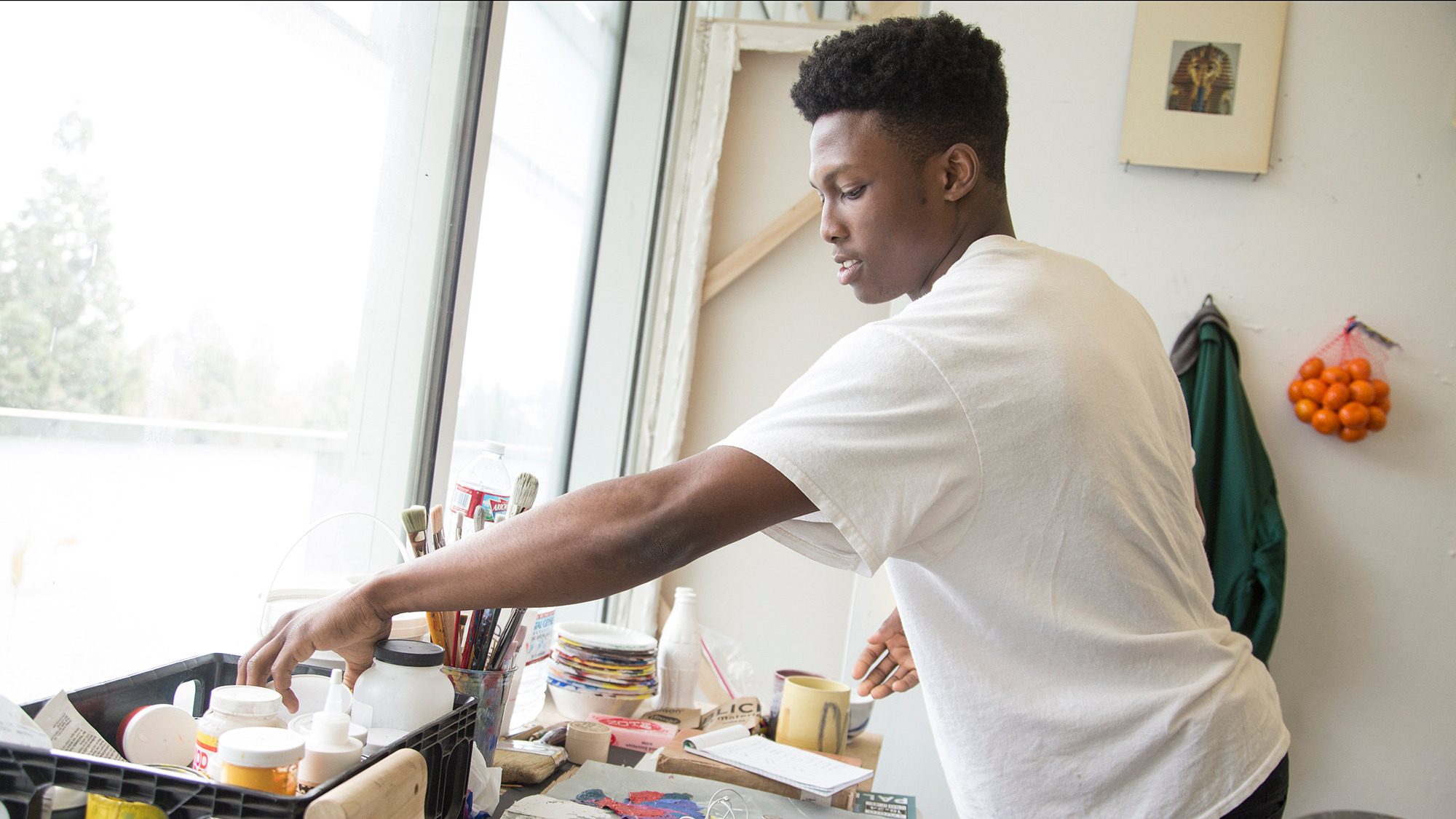
Gozie Ojini has been studying art since he was a child, but always felt like he had to have a plan B. “A lot of times artist or art students, especially people of color, have to defend art to people in their lives who may not understand the choice to study in this field. I've spent a lot of time trying to compromise with either family members or myself,” he says. When he graduated high school he planned to study chemistry, and then went to architecture, then graphic design, and then finally settled on art, and transferred to the UCLA Department of Art in the fall of 2017. While each of these fields of study have influenced his art practice, he is now confident in calling himself an artist. At the beginning of spring quarter, Gozie spoke with UCLA Arts in his painting studio for Distinguished Professor Lari Pittman’s advanced painting course about what drew him to the department, and how liberating it is to assert his desire to become a working artist.
Why did you choose the UCLA Department of Art to pursue your undergraduate degree?
There's this expectation when you go to art school that you’ll be changed and your perspective will shift. For me, it's always been about the whom I want to be working with and the environment I want to be working in. I knew I wanted to stay in Los Angeles. Rodney McMillian, Lari Pittman, Cathy Opie, Adrian Saxe are all incredible artists and I knew I wanted to learn from them.
Working with these professors has been awesome. In a five-minute conversation with Rodney, he recommended six books that would help me with my work. And the way they're able to break down or unpack the work critically…it's like boom, boom, boom, boom. It's super quick and spot on. I definitely have times where I'm even stuck on how to interpret a work that I've made myself. And having professors who have been witness to a lot of art and creation respond to your work is really important and something that my fellow art students and I benefit from.
At UCLA, there are a lot of opportunities to reach out and engage with the city. The department and graduate students are really connected to what’s going on in Los Angeles, and are constantly sharing information about residencies or talks. There's always something going on. I think when you feel cooped up in school all the time, it’s important to you to be able to get out see other artists’ work and experience what’s going on in the world around you. I feel like I've been able to become part of the Los Angeles arts community.
How do you feel about studying in a large, public, research university?
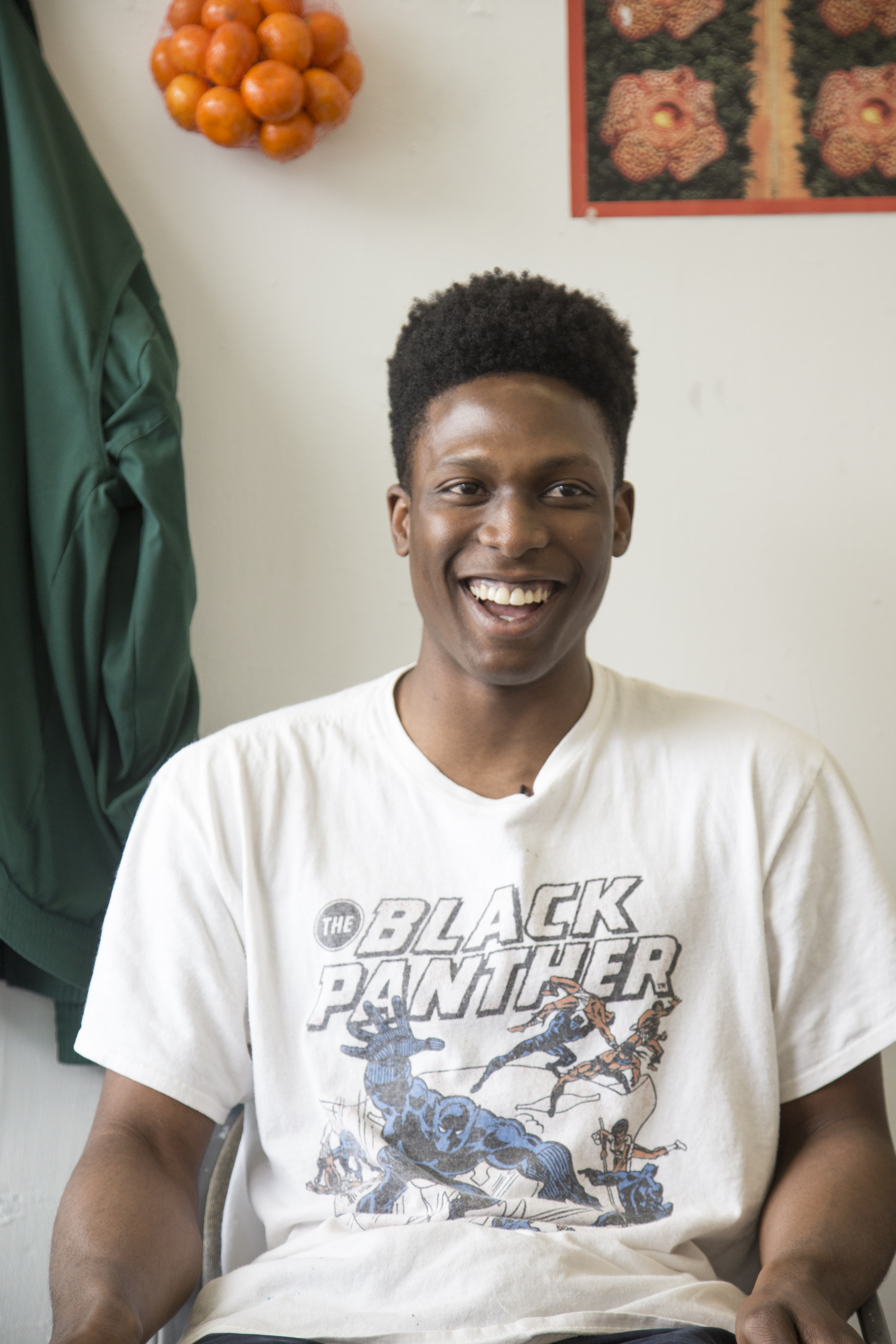
Being at a research institution allows me to broaden my focus. It's not necessarily just about painting and getting my own subjectivity onto the canvas. There's the world to consider. So far I’ve taken mostly studio classes, but I look forward to reach out to other departments on campus and figuring out how I can work with other students outside the art department. Having studied in other disciplines in community college, I also understand how seemingly unrelated fields can inform and enrich each other. Studying chemistry allowed me to have more of an analytical approach to what I'm doing, what materials I'm using, and the associations with the materials, or thinking about art holistically rather than just specifically with the context of fine art.
As an artist, you’re always a student—you're always learning. You never master anything. I think it's always about constant evolution. Yeah, as times change and your environment changes, you're forced to relearn every day.
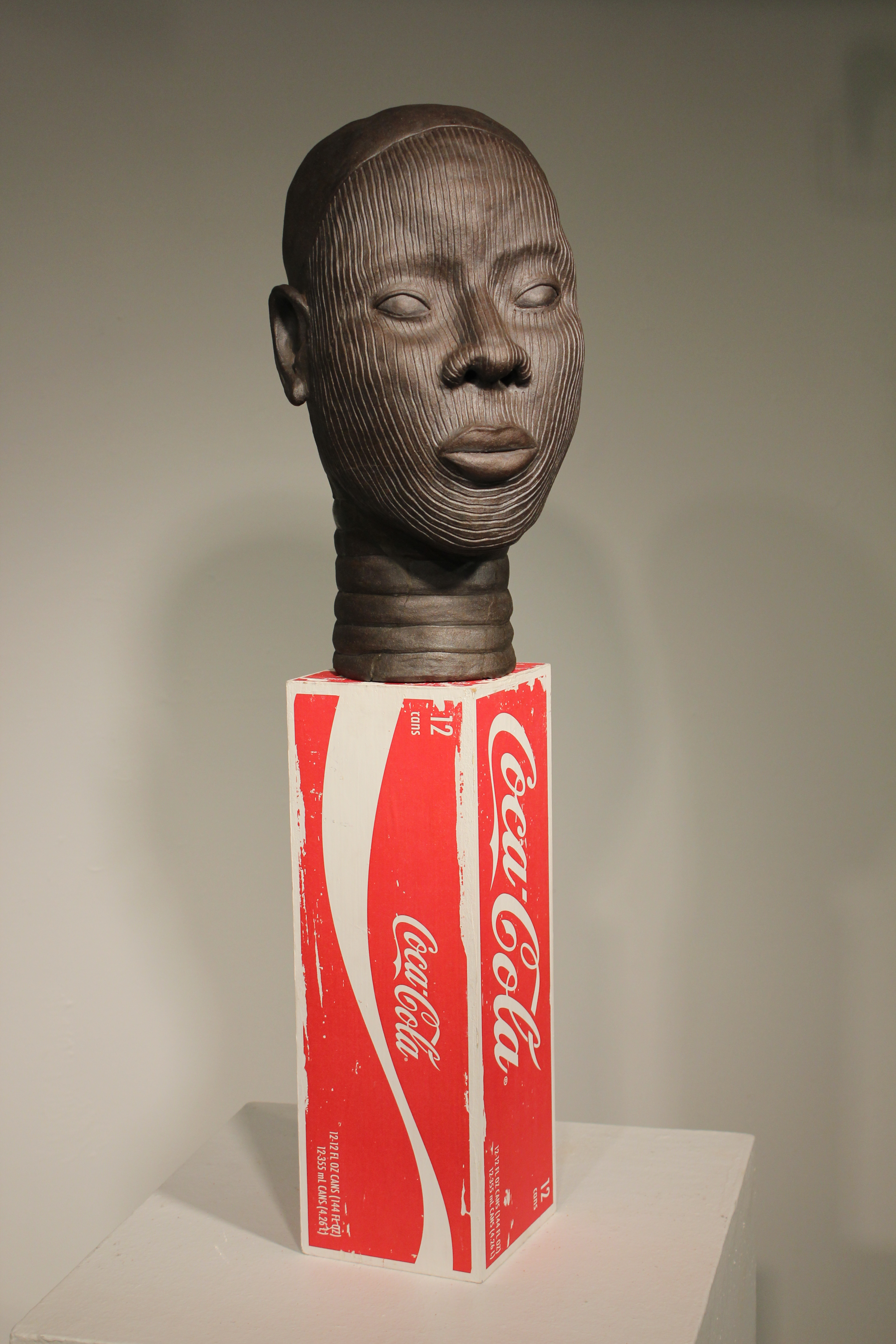
Gozie Ojini, Displacment II, Terracotta, image transfer in wooden box
What is a moment that stands out in your first few quarters at UCLA?
I’ve been thinking about what it means to have a personal catharsis and what does that mean for the rest of the world? Why does it matter that I am working out my problems on canvas or through ceramics or sculpture? I’ve realized if I'm having a problem, other people might be having that same problem, and showing your catharsis allows other people to explore their own.
The first time I showed my work at UCLA, my dad came through; and when he saw the work, he started crying. And I wasn't really expecting to touch anybody. I was trying to think about the issues around multiculturalism or how I'm dealing with these things, being from a Nigerian heritage and being from a black American heritage, but also feeling like I exist in another space, like in a contemporary space or something that's in-between. I think that even in trying to figure those things out, I was able to touch my dad and also a lot of other black and Nigerian students on campus, as well as other brown people, white people, and seeing how this has effected them and allowed them to make a change or think about how they exist in the world in a multicultural context. I’ve realized that subjectivity isn’t always personal. Subjectivity can be universal.
READ MORE STORIES ABOUT UCLA ARTS STUDENTS
From campus news to activities around the globe the UCLA Arts website is updated daily to aggregate the best news and stories about and written by the School of the Arts and Architecture community.
JOIN THE CONVERSATION
Stay engaged. Follow us on Facebook, Twitter and Instagram. Use #UCLAarts to stay connected.
Subscribe to our monthly mailing list to receive stories like this directly to you inbox.
Stay engaged. Use #UCLAarts to stay connected.


