This Year’s Made in L.A. Biennial Highlighted Art That Was Actually Made in a Lot of Other Places
– and That’s a Good Thing
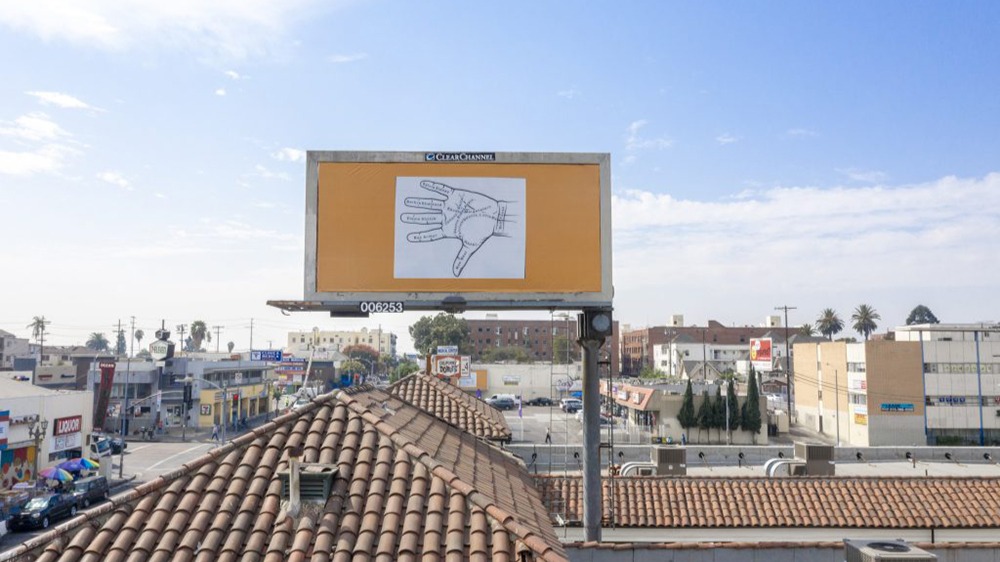
Made in LA 2020: A Version focuses less on artists' residence in Los Angeles and more on how and where the art is placed, and who it is for.
"Purple velvety body suits hang limply from the walls and ceiling, like regal, deflated aliens. You can see them through a human-sized hole cut into one of the four walls of the late artist Nicola L.’s La Chambre en fourrure (The Fur Room) (1969/2020). On the outside are arm and leg holes, so that, in a previous time, people could put their limbs through, activating these furry body suits and even reaching out to caress those who wandered inside.
Made in L.A. 2020: a version. Installation view at The Huntington Library, Art Museum, and Botanical Gardens, San Marino. Photo: Joshua White / JWPictures.com. “I wanted to oblige people to participate,” Nicola L. said of this body of work, which she called her pénétrables, back in the 1980s. Today, however, will not be obliged, or even allowed, to participate while it is installed at the Hammer Museum, as part of the Made in L.A. Biennial. Instead, we’ll have to imagine the kind of intimacy the installation was meant to invite, thanks to a global pandemic that has left it seeming more radically sensual than it possibly ever did.
The biennial, titled “a version” and installed across two museums, was supposed to open in June 2020, but instead privately debuted in November to just a smattering of press and VIPs. The institutions and the show’s curators, Lauren Mackler, Myriam Ben Salah, and Ikechukwu Casmir Onyewuenyi, opted to place only a few programs online and, now that it has opened to the public, that seems like a wise decision.
Rather than try to adjust and normalize what wasn’t normal, the show’s organizers left it largely unseen until viewers could experience it as it was meant to be. And there are, thankfully, more interesting aspects to dwell on than the pandemic’s effect, including the newly flexible connection some of the artist have to Los Angeles. The event has been plagued by boosterish, L.A.-centric language since its inception, in 2012, even as a biennial made just for L.A. began to seem needlessly provincial.
The artist Nicola L. moved to Los Angeles 18 months before her death, in 2019, and built her Fur Room while based between Paris and Ibiza. Other works in the show were made by artists not currently in L.A., like Ser Serpas, who is from Los Angeles but lives in Zurich. Unable to travel for the installation, Serpas instructed others in Los Angeles to scavenge the city for the curbside detritus that comprises two installations, one elegantly scrappy in the Hammer’s antiseptic first-floor gallery, and the other a symphony of discarded printers and domestic objects (dresser drawers, an upside-down ironing board) in a yard across the county at the Huntington.
Some artists are relatively new arrivals to the city; others are based here and elsewhere. (Even if previous editions also included artists with roots outside the city, the link to the local has tended to feel more blatant, such as through the 2014 focus on the L.A.’s alternative spaces). This loose relationship to residential status is welcome, given how much Los Angeles has changed as an art scene in the past decade. The increasingly international gallery scene has made other cities feel like worthier contenders for its formerly romanticized underdog status, and the skyrocketing cost of living has prompted artists who once chose the city for affordability to look elsewhere."— Catherine Wagley, May 20, 2021



This post is an excerpt. Read the full article on the artnet website.
Stay engaged. Use #UCLAarts to stay connected.


