The Map and the Territory
The Fowler Highlights a Century of Collecting at UCLA
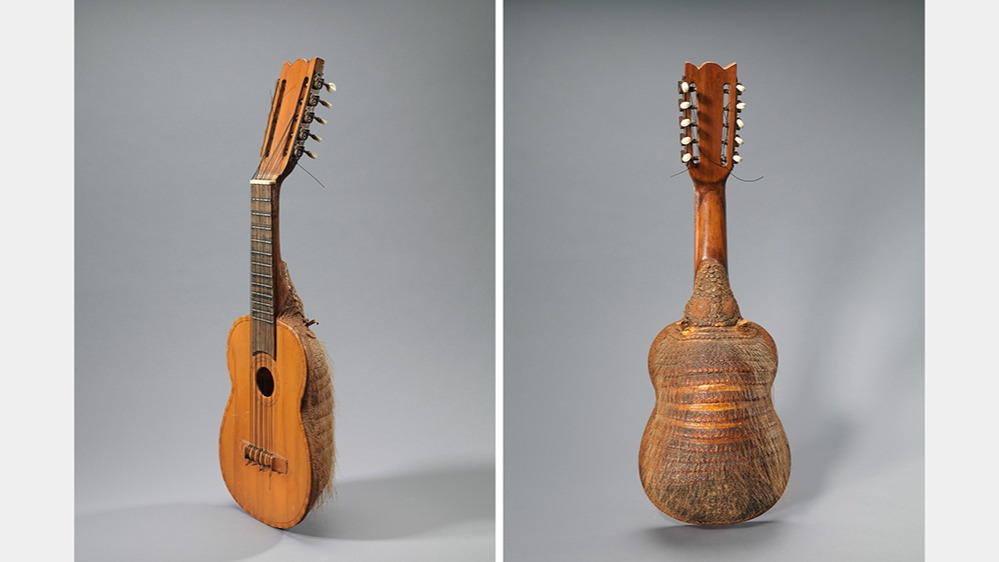
The Fowler Museum at UCLA has brought together approximately 200 objects from thirteen collections across campus for an exhibition called “The Map and the Territory: 100 Years of Collecting at UCLA.” The show was set to open last spring to coincide with UCLA’s Centennial, and will now open in July.
Thematically linked and geographically diverse, the objects – such as a guitar made from an armadillo, a meteorite, a Star Trek manuscript, and the bodies of Arctic terns – tell stories of migration, home, and the unknown.
Through their juxtapositions, the objects included in the exhibition make new meanings in exciting and unexpected ways, and also tell a larger story about UCLA’s pursuit of knowledge in our global society through its collections.
In this episode of the UCLA Arts podcast Works In Progress, we hear from several curators about the special collections at UCLA, and the stories that these remarkable objects tell:
- Marla Berns, the Shirley & Ralph Shapiro Director of the Fowler Museum
- Matthew Robb, chief curator of the Fowler Museum
- Supeena Insee Adler, curator of the UCLA World Music Instrument collection, director of the Music of Thailand Ensemble, and musician who plays traditional Thai string instruments
- Helen Reese, director of the UCLA World Music Center, an expert on Chinese music, and musician who plays the recorder and Chinese flute
- Alan Rubin, a research geochemist in the UCLA Institute of Geophysics and Planetary Physics, and co-curator of the UCLA Meteorite Gallery
- Blaire Van Valkenburgh, distinguished professor in ecology and evolutionary biology, and curator of the Donald R. Dickey Bird and Mammal Collection
- Heather Briston, University Archivist and Head of Curators and Collections at UCLA Library Special Collections
In early March of 2020, just days before COVID-19 forced UCLA to cease in-person activities, I took a tour of several special collections across UCLA’s campus. “The Map and the Territory” was due to open in April of 2020, and curators were in the process of transferring objects to the Fowler to be displayed.
Now, 15 months later, the show is finally being installed. Approximately 200 objects from collections all over campus will be displayed according to three main themes: "Borders and Boundaries," "Homes and the Built Environment," and "The Beyond." A fourth section, about global visual communications, will open in the fall.
Marla Berns, the Shirley & Ralph Shapiro Director of the Fowler Museum, gave me a tour as they were initially installing the show.
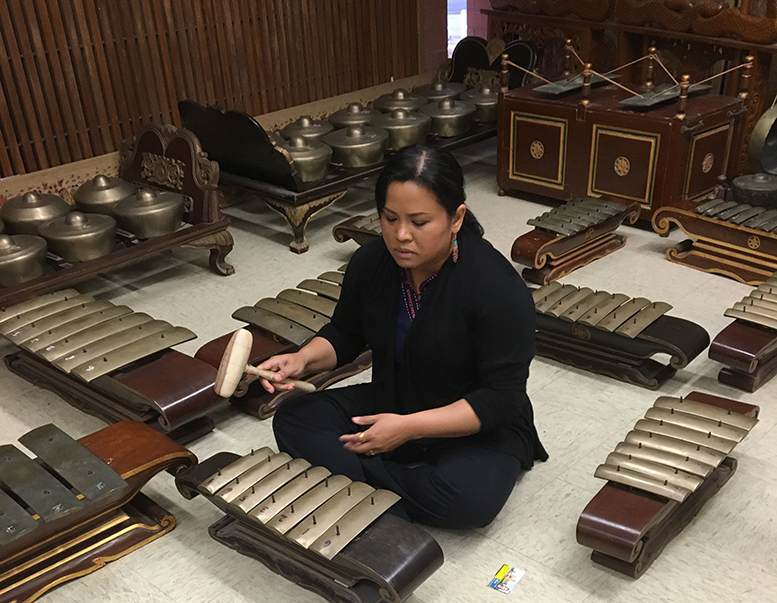
Supeena Insee Adler, curator of the UCLA World Music Instrument collection, demonstrates a gamelan instrument from Thailand. Photo by Avishay Artsy.
As visitors enter the exhibition, they will see historic aerial photographs of the UCLA campus and the land which it now occupies to show what Westwood looked like before the campus began construction in the early 1900s, and to recognize the Tongva people, the original owners and caretakers of the land.
The exhibition begins with an installation by the artist Mercedes Dorame, a native Tongva. Her work reanimates the history of her people through installations and photographs documenting her interventions into the landscape, reframing the narrative around her ancestors. Her installation will be based partly on objects owned by the Hammer Museum and objects that are part of the Fowler’s archeological collections.
The other participating artist, River Garza, is Tongva and Mexican and is also working with the Fowler's archeology collections for his project, which is about the space of the archive, the way the museum collects and houses objects, and how those objects represent the history of the campus.
Director of Exhibitions Sebastian Clough and architect Benjamin Weisgall created this video by digitally 3D-modeling each object and rendering the exhibition space frame by frame to convey the experience visitors will enjoy once the Fowler reopens. For now, take a look at the video to immerse yourself virtually into the gallery and the range of displayed objects, including ancient ceramics, contemporary art installations, maps, architectural models, and even meteorites, all assembled from UCLA’s diverse collections.
In 2005, the Fowler mounted an exhibition entitled, “UCLA Collects! Bodies of Knowledge,” which brought together disparate objects from five UCLA collections on the subject of the human body. Inspired and informed, in part, by that exhibition, “The Map and the Territory” draws from 13 collections across campus, and juxtaposes objects from different eras, geographic regions, and disciplines to raise interesting and unexpected questions about how humans move and make discoveries.
“We wanted to make sure that people understood that things are never just things. They are things that tell us about people, about places, about histories, about legacies, about events,” Berns said.
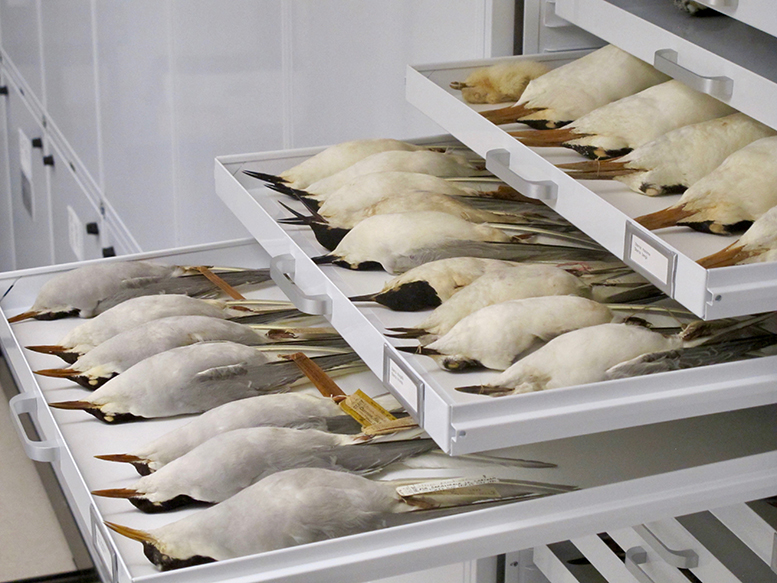
Arctic Tern (Sterna paradisaea). Courtesy of the UCLA Donald R. Dickey Collection of Birds and Mammals
The first section, "Borders and Boundaries," includes maps, such as a 17th century map of the world; and objects that have do with migration, such as the Arctic terns, which migrate further than any other bird.
Objects from the World Music Instrument Collection at the UCLA Herb Alpert School of Music include the charango, a guitar-like stringed instrument made with a real armadillo shell; a Tibetan telescopic trumpet; a rubab, a lute-like musical instrument originating from Afghanistan and made of ivory; and a large, decorated gong.
"Each of them is quite visually spectacular in its own different way," said Reese.
The exhibition also includes a photo album from a professional organization of aviatrices – female pilots – from the 1920s and the 1930s, part of UCLA Library Special Collections. Amelia Earhart was an early member of the national organization.
The second section, "Homes and the Built Environment," deals with the fundamental human need for shelter. It includes drawings and models of buildings, both built and unbuilt; architectural elements from houses in Indonesia, whimsical landscape designs from Disneyland, and more.
The third section is called "The Beyond," and considers “the way that the human imagination has always considered what lies beyond our sight, what lies in the universe beyond what we can see,” Berns said.
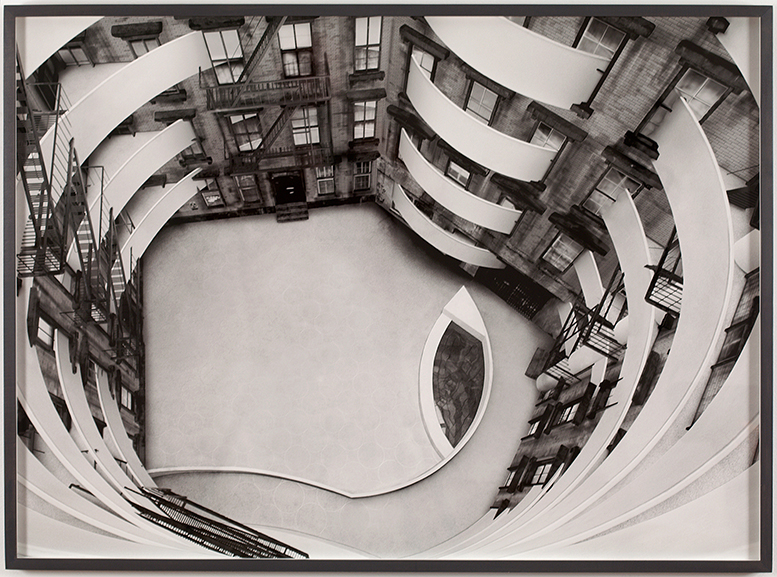
Doris Salcedo (b. 1958, Bogotá, Colombia). For Hans Haacke and Edward Fry, 2009. Archival pigment inkjet print on paper. UCLA Grunwald Center for the Graphic Arts, Hammer Museum. Purchased with funds provided by the Helga K. and Walter Oppenheimer Acquisition Fund
That section includes objects from the Fowler collection that are made as receptacles for spirits, “whether it's a mask being worn that embodies a spirit presence, or based on some of my own research, ceramic vessels that were made to draw spirits to heal diseases, and how the visual aspects of those objects are all about the symptoms of disease," Berns said.
Also included are early drafts of the monologue from the opening scene of Star Trek.
A fourth theme is about writing systems and graphic systems of communication. It includes an extremely rare Armenian gospel, Sufi paintings made in Senegal, and books that use all kinds of written and illustrated forms of communication. That section will open in the fall.
Story by Avishay Artsy
"The Map and the Territory: 100 Years of Collecting at UCLA" will be on view from July 1-Oct. 24, 2021. Find more information here.
HEADER IMAGE: Artist unknown (Quechua or Aymara peoples, Peru, Bolivia, Chile, Colombia, or Ecuador). Charango, early to mid-20th century. Armadillo shell, wood, metal, organic materials. World Music Instrument Collection, UCLA Herb Alpert School of Music
Stay engaged. Use #UCLAarts to stay connected.


