The Current celebrates the art of now
Catherine Opie’s climate change photos at former Helen Day Art Center
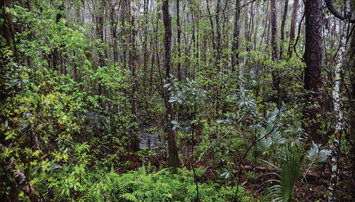
Stunning details of individual leaves with their variations in shape and color, tendrils of Spanish moss, a thicket of vertical lines of slender trunks, the watery ground — Catherine Opie’s images in her “Swamp Series” draw you into their depths. The large format invites immersion into these unpeopled places, with their layers of life and forces of nature, grandeur and vulnerability.
This exhibition of large format photographs by internationally acclaimed fine art photographer Catherine Opie opens Jan. 13 at The Current in Stowe. This body of Opie’s work focuses on climate change and includes compelling photographs of swamps, national parks, abstracted landscapes.
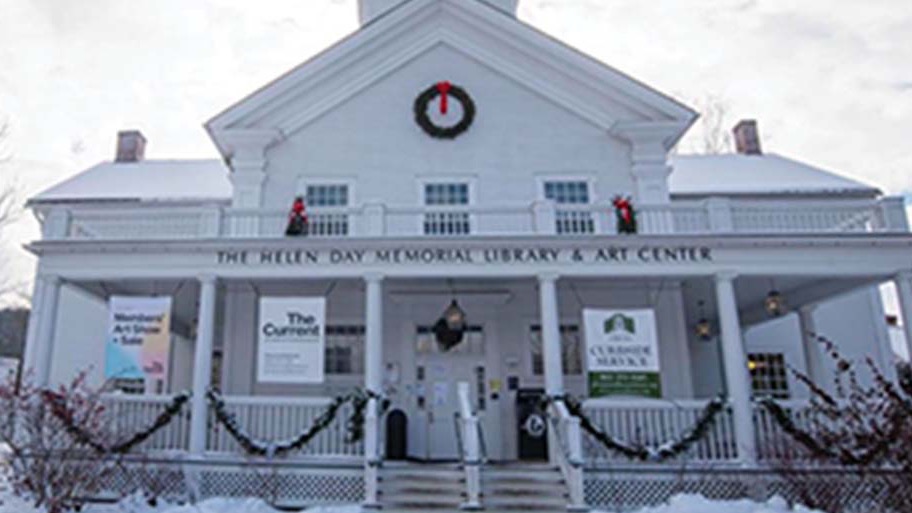
The Current, formerly Helen Day Art Center, turns 40 this year. Energetically and intentionally moving ahead, The Current is presenting powerful and diverse exhibitions of contemporary art, expanding educational opportunities, and acting as a catalyst for conversation, inspiration and civic engagement.
Large scale photographs by international artist and UCLA Professor of Art Catherine Opie will be exhibited Jan. 13-Apr. 19 at The Current in Stowe.
From months of thoughtful rebranding and planning processes, the Current transitioned to its new name, added studios and gallery improvements, and adopted its new strategic plan in 2021.
“We wanted a name that reflected who we are and what we do,” explained Rachel Moore, executive director and director of exhibitions at The Current.
“The Current reflects our values. We are a center for contemporary art — art now,” Moore said. “We are full of energy and movement in our education and public programs, we work with current topics in our exhibitions and education themes. The word current, in all of its connotations, fits perfectly.”
The Current’s original name had recognized the donor of a 1955 bequest, Helen Day Montanari, who left a trust to the town of Stowe for a library and arts center. Those funds, years later, went toward the historic preservation of the Greek Revival former high school building on Pond Street in downtown Stowe. The library moved in downstairs; the art center was founded in 1981 and opened upstairs.
Originally from Massachusetts, Montanari and her partner Dr. Marguerite Lichtenthaeler owned a Stowe inn, the Attic & Barn, in the 1940s and early 1950s. The inn was among Stowe businesses to advertise for many years as a “restricted” — meaning no Jewish guests allowed.
Commitment to fostering an inclusive, diverse, and respectful culture is among The Current’s core values. The renaming is a step in reckoning with Stowe’s past and also affirms that The Current strives to be proactive in welcoming and engaging everyone.
Along with the name change, a lot has been happening at The Current.
In the bricks and mortar realm, new state of the art lighting has been installed in the main gallery, improving visitors’ viewing experience. The East Gallery has transitioned to an “Art Lounge” with comfortable furniture, WiFi, and arts resources — including materials focused on artists and exhibitions in the main gallery. A coffee and tea bar is planned.
Educational programs at The Current serve children, youth and adults with over 50 classes and workshops each year — digital animation to life drawing to textile art. Offerings have just expanded with the addition of a new ceramic studio, a printmaking press, and flat glass studio.
The Current presents exhibitions of contemporary art year-round in the main gallery and a summer exhibit, “Exposed” with outdoor sculpture displayed around Stowe.
Moore, as exhibitions director, has been bringing a remarkable array of powerful thought provoking exhibitions to the center — last year including “Meleko Mokgosi: Scripto-visual” and “Dona Ann McAdams: Performative Acts.” Shows are accompanied by events and programs including panel discussions on the artists and their subjects.
“The first goal of our strategic plan” notes Moore, “is to serve as a platform and catalyst for conversation, inspiration, and civic engagement through contemporary art. This includes presenting exhibits that amplify dialogue around critical global issues and their impact.”
In Opie’s swamps and unexpected perspectives on places in United States national parks, a sense of what is being lost with climate change is almost visceral.
She photographed her “Swamp Series” in the Okefenokee of northern Florida. With fine details and depth, they invite the viewer to quietly take time to look in to them — their diversity of life, interplay of water and land, even occasional creatures. Without ever seeing the human hand of climate change, their fragility evokes a sense of their peril.
Opie, born in Sandusky, Ohio, in 1961, has been the recipient of numerous awards and honors, and has shown work in solo exhibitions at the Institute for Contemporary Art in Boston, the Los Angeles County Museum of Art, and the Guggenheim Museum. In her groundbreaking portrait series in the early 1990s, she photographed individuals of a variety of identities. She explores themes of identity and community and considers parallels between natural and political landscapes. Opie lives in Los Angeles and is also a professor of photography at University of California at Los Angeles. — Mary Gow, Jan. 8, 2022


This post is an excerpt. Read the full article on the Times Argus website.
Read more about Catherine Opie.
Stay engaged. Use #UCLAarts to stay connected.


