The Candid Musings of a Seasoned Observer: A review of Craig Hodgetts' 'Swimming to Suburbia'
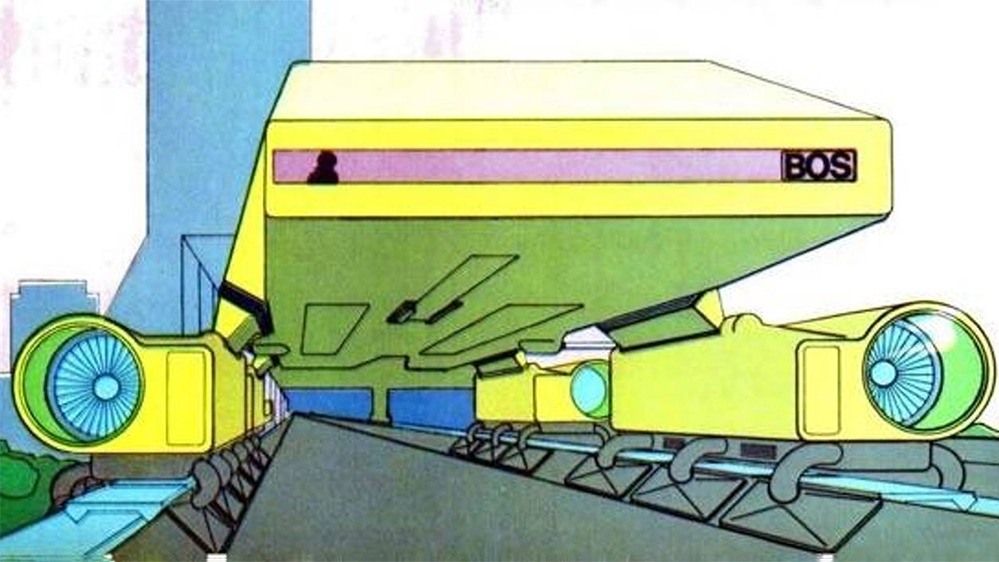
Craig Hodgetts is a professor in the UCLA Department of Architecture and Urban Design and is partner of Mithun | Hodgetts + Fung, a recently merged west coast architecture and design firm. He is known for employing an imaginative weave of high technology and story-telling to invigorate his designs, producing an architecture that embraces contemporary ideology, information culture, and evolving lifestyles. With a broad-ranging background in automotive design, theater and architecture, Hodgetts has created a spectrum of award-winning projects, which includes the temporary yet emblematic UCLA Towell Library, the new acoustical shell for the Hollywood Bowl, renovation of the historic Egyptian Theater in Hollywood, the LACMA exhibition “California Design, 1930-1965: Living in a Modern Way,” and Wild Beast Pavilion at the California Institute of the Arts. His latest book of essays, Swimming to Suburbia, is out now.
"It is rare these days to find a collection of critical writings on architecture that surprise the average reader of the genre. The opinions held by Jeffrey Kipnis, Ada Louise Huxtable, Sylvia Lavin and others can easily be found on bookshelves, and, with every new publication, the sharpness of their tongues can be predicted with relative accuracy over time. As these are the voices known for giving language to familiar buildings as they were first completed, it is refreshing to hear from those that happened to be there all along.
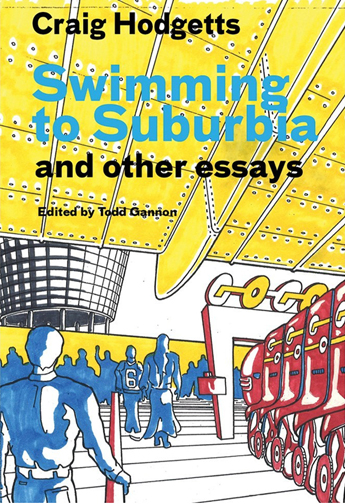
Cover of Swimming to Suburbia and Other Essays, by Craig Hodgetts Enter Swimming to Suburbia and other Essays, by Craig Hodgetts. A collection of writing starting from as early as 1970 to the present, Swimming to Suburbia shows a rarely seen side of the architect known for his meticulously detailed buildings completed with his partner Hsinming Fung. While the work of Hodgetts + Fungmay reflect the sensibilities of a team, the writing of Hodgetts alone reveal a fiercely independent voice, one that is shockingly more candid and informal than those more familiar to the genre of architectural criticism. At times deliriously poetic and other times refreshingly informal, the recently-retired UCLA professor has apparently put as much effort into his writing as he does in his structures.
His description of John Lautner's process is a glowing example of the latter style of writing, full of imagery and inventive onomatopoeia : "The pieces of a Lautner house KA-CHUNK! together with the inevitable force a fallen tree..." And his take on Frank Gehry's house in 1978 (written one year before it was complete!) provides thoughts not expressed by more highbrow critics: "His house echoes with memorials to the American lifestyle: if one cooks in the driveway it's what used to happen on Saturdays in the summer; if the living room feels like an attic it's probably more fun to be there anyway; if the terraces end in backstops you can at least play catch..."
It appears to be a virtue that Hodgetts does not adhere to the traditions of the field. Given a generous editorial provided throughout by The Ohio State University's Todd Gannon, the reader learns that Hodgetts adopted his style of writing by refusing the titles normally attributed to people in his position: "Though the texts collected here are replete with profound insights in the nature of architecture and the working of the contemporary city, Hodgetts would resist being labeled a theorist. Nor, despite his careful presentations of the work of Stirling, the Eameses, and other key figures of twentieth century architecture, would he consider himself a historian." Gannon asserts that Hodgetts writes with such delightful idiosyncrasies because he "writes as an architect." — Shane Reiner-Roth, Mar. 13, 2019


This post is an excerpt. Read the full article on the Archinect website.
Stay engaged. Use #UCLAarts to stay connected.


