The art of daily existence: Meleko Mokgosi's provocative show at the UCLA Fowler Museum
Meleko Mokgosi: Bread, Butter, and Power is on view through July 1
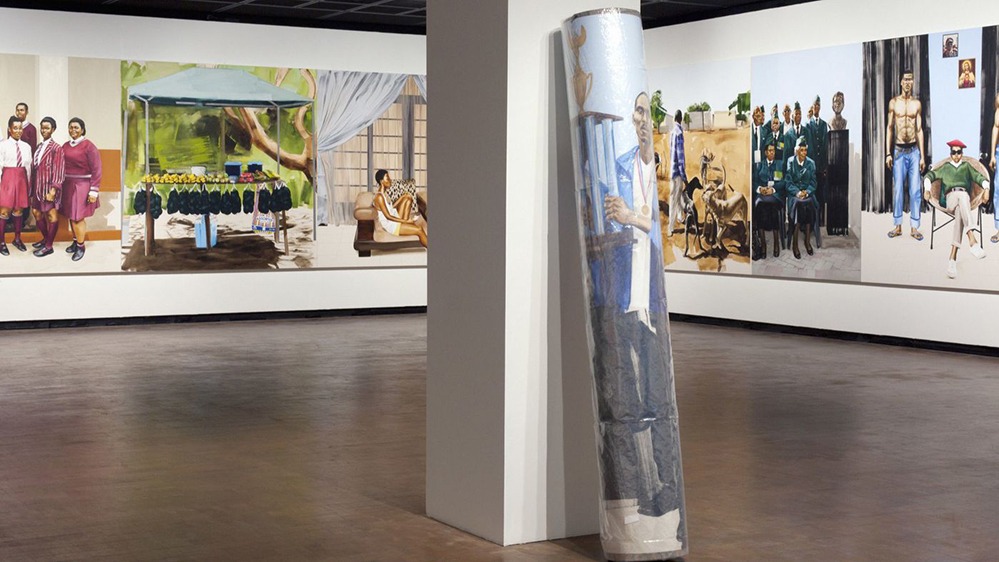
Department of Art Alumnus Meleko Mokgosi’s large-scale episodic painting cycle Bread, Butter, and Power forms the newest chapter in his ongoing series Democratic Intuition, which seeks to explore ideas about the many ways that democratic concepts influence our lives, loves, and relationships on macro- and micro-levels. This twenty-panel installation interrogates the theme of feminism in the context of southern Africa, and considers the consequences of dividing labor practices by gender. Mokgosi describes himself as a history painter, a term not used by many contemporary artists. Bread, Butter, and Power is on view at the Fowler Museum through July 1.
"Meleko Mokgosi describes himself as a history painter, but what he considers to be historic is what sets his work apart. Kids at school, people lounging at home, a young woman getting her hair done — ordinary life is offered with the same focused intensity of classical history and myth, history painting’s usual subjects.
At the UCLA Fowler Museum, curator Erica P. Jones is presenting the Botswana-born, New York-based artist’s first West Coast museum show. (Mokgosi, who completed his master’s at UCLA, won the 2012 Mohn Award in conjunction with the Hammer Museum’s “Made in L.A.” exhibition.) In “Bread, Butter and Power,” daily existence and stamina interact.
A gallery is lined with 19 large canvas panels, while a 20th — neatly rolled and wrapped in plastic, as if awaiting its eventual display — leans against a post in the center of the room. The rolled painting offers a tantalizing glimpse of a man clutching a large trophy, delighted winner of we-know-not-what. (Maybe the Mohn Award?) The rest are snapshot-like scenes based in unidentified places in southern Africa — in schoolyards, bedrooms, at the market, at a gathering of military veterans and more.
Most of the panels are installed edge to edge. Sometimes the image in one slides into the panel adjacent, as when a grinning girl dressed in a bright-red school uniform shares pictorial space with an unrelated scene of a woman on a patio grooming a young woman’s hair. A stylized presentation of formal and informal education comes into view."— Christopher Knight, May 7, 2018

This post is an excerpt, read the full article on the Los Angeles Times website.
Read more about Meleko Mokgosi here.
Stay engaged. Use #UCLAarts to stay connected.


