Supporting Emerging Artists: CAP UCLA Presents AteNine
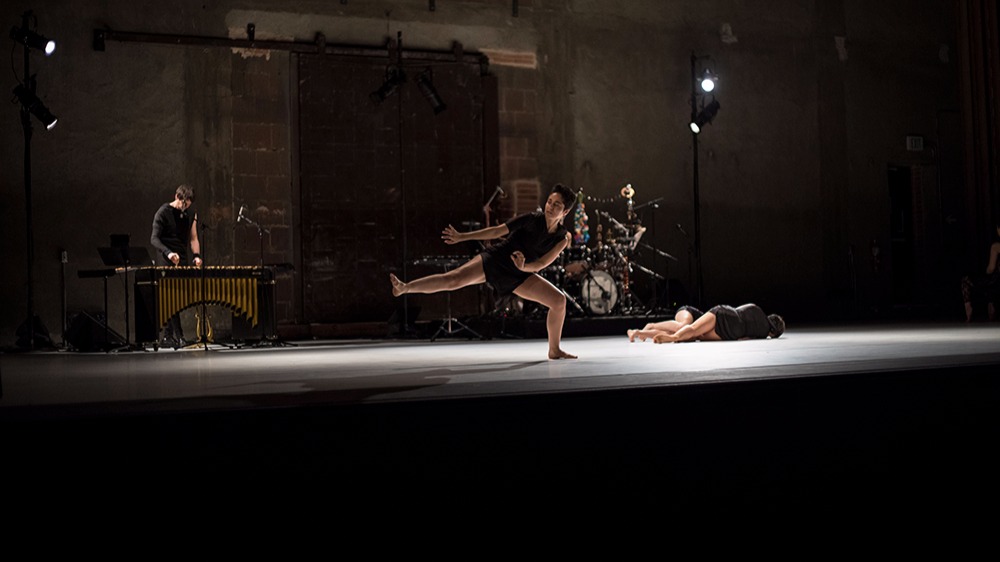
It was 2004, at a small venue in Seattle, when Kristy Edmunds first saw Danielle Agami perform. Now, some thirteen years later, Edmunds is executive and artistic director of UCLA’s Center for the Art of Performance (CAP UCLA) and has presented Agami’s full length work, calling glenn, on the main stage at UCLA’s Royce Hall.
This is not an unusual story for Edmunds and CAP UCLA.
Since assuming leadership in 2011, Edmunds has significantly grown the Center’s artist residency and fellows program, fostering a rich environment that allows both emerging and mid-career artists to further their practices, create new works, and connect with adventurous public audiences. In addition to Agami and her company, AteNine, Edmunds has brought more than a dozen artists into the residency and fellows program at CAP including LA Performance Practice, Poor Dog Group, Ann Carlson, Somi, ContraTiempo, Lars Jan, Sussan Deyhim, and fellows Ann Bogart & SITI Company, Kronos Quartet, Laurie Anderson, and Robert Wilson.
What the CAP UCLA residencies offer emerging artists like Agami is “a kind of estuary inside of one's professional life,” says Edmunds. “We offer unfettered time in a studio setting where they have my attention, the attention of my team, where they can ask any kind of question: ‘How do I market this?’, ‘Can I use your Xerox machine?’, ‘How do I document my work, so that I can get it out there?’, ‘Who are your peers around the country who can help me take my work to the next level?’. We help them find all of those tributaries and provide them the support and encouragement they need to take the next step.”
“Just like art and artists give hope to the public,
presenters give hope to an artist."
Danielle Agami, Artistic Director, AteNine This type of support is difficult to come by and is vital to the survival of a thriving and sustainable arts community. “Just like art and artists give hope to the public, presenters give hope to an artist,” Agami says. “Not having responsive presenters can mean that you have to pack your bags and move elsewhere.” Having a trusted and committed presenter can make all the difference, especially for emerging artists, she notes. “The only way to cultivate a healthy environment in the arts is to have people who are willing to take chances on emerging artists, rather than wait until they are already a success story. That delay could take exactly the amount of time it takes for the artist to decide to leave the city.”
Supporting artists early and often throughout their careers is something Edmunds believes in whole-heartedly. “I'm paying very close attention to emerging sensibilities,” she says. “I'm spending time in tiny clubs and small studio spaces, and I stay connected to the underground. As a curator, you're not just going shopping and booking things that you know are going to fill your venue. You're really working in a very entrusted way with an artist, to bring that work to a broader public, a larger light, a deeper platform.”
And this is where CAP UCLA, Royce Hall, and the support of the university comes in. UCLA has a long history of presenting performing arts programs for patrons across Los Angeles. Since the 1930’s, some of the most celebrated artists of the 20th and 21st centuries have graced Royce Hall’s stage: George Gershwin, Duke Ellington, Arnold Schoenberg, Jimmy Dorsey, Frank Sinatra, Ella Fitzgerald, Leonard Bernstein, Twyla Tharp, Frank Zappa, Mikhail Baryshnikov, Philip Glass, Laurie Anderson, Meredith Monk, and many more.
Edmunds continues to hone the mission and expand the reach of UCLA’s performing arts program by forging connections with new audiences and developing relationships with venues beyond the UCLA campus. In May, for example, CAP UCLA announced a collaboration with The Theatre at Ace Hotel in Downtown Los Angeles, moving select performances east for their current season. Through supporting residencies and presenting work at venues on and off-campus, CAP UCLA connects these artists with audiences that Edmunds says are “adventurous, interested, and curious. They seek discovery, they want to be part of a conversation, they want to find one another through that connective tissue of the arts.”
CAP UCLA’s position within a university creates a unique environment for these residencies to percolate. The Center provides both an engaged public audience and academic setting. Artists-in-residence have access to the university’s resources, and in turn become a resource for its students. “The School of the Arts and Architecture’s students come to learn with these master artistic practitioners in one way or another, in order to find their voice, and form, and new skills and techniques that allow them to crack into, discover, what it is that they will offer as emerging artists.”
"...we have been fooled into thinking that we can have art
or we can have better roads, or we have safer hospitals…
it's art or this, instead of both and all.
I want to try and show a public the way in which the arts
actually amplify and connect to our biggest concerns,
and our deepest cares, and also steel us against
our greatest fears as a place of both resilience and relief."
Kristy Edmunds, Executive and Artistic DirectorUCLA's Center for the Art of Performance
And what artists have to offer can make all the difference. When asked about her primary goals for the future, Edmunds says she is most interested in trying to “shift the narrative that pits the arts against other kinds of social causes, cultural causes…we have been fooled into thinking that we can have art or we can have better roads, or we have safer hospitals…it's art or this, instead of both and all. I want to try and show a public the way in which the arts actually amplify and connect to our biggest concerns, and our deepest cares, and also steel us against our greatest fears as a place of both resilience and relief. When you can join an arts community together with any other social cause that there is in our democracy, which is a cause unto itself, we amplify our capacity to carry that culture into its next future.”
“We live in a very intense time right now,” says Agami. “If we can deal with it through our work, onstage, offstage, there is a chance we can process what’s happening. Then, there's a chance we can change it…I have had Kristy’s support from day one 'til this moment. We’re really coming to her arena and getting this final push, and she's saying, ‘Please. Do it. Go.’”
Funding for CAP UCLA’s Artists-in-Residence and Artists’ Fellowship is provided by Susan & Leonard Nimoy.
Funding for AteNine's performance of 'calling glenn,' was provided by the Kevin Jeske Young Artists Fund and Fariba Ghaffari. Additional funds were provided by Murray Hidary in support of CAP UCLA’s Artists-in-Residence program.
AteNine rehearsal, Oct. 30, 2017
Read more about CAP UCLA's Artist in Residence Program
Read reviews of calling glenn at Royce Hall