Studio Visit: Use All Five
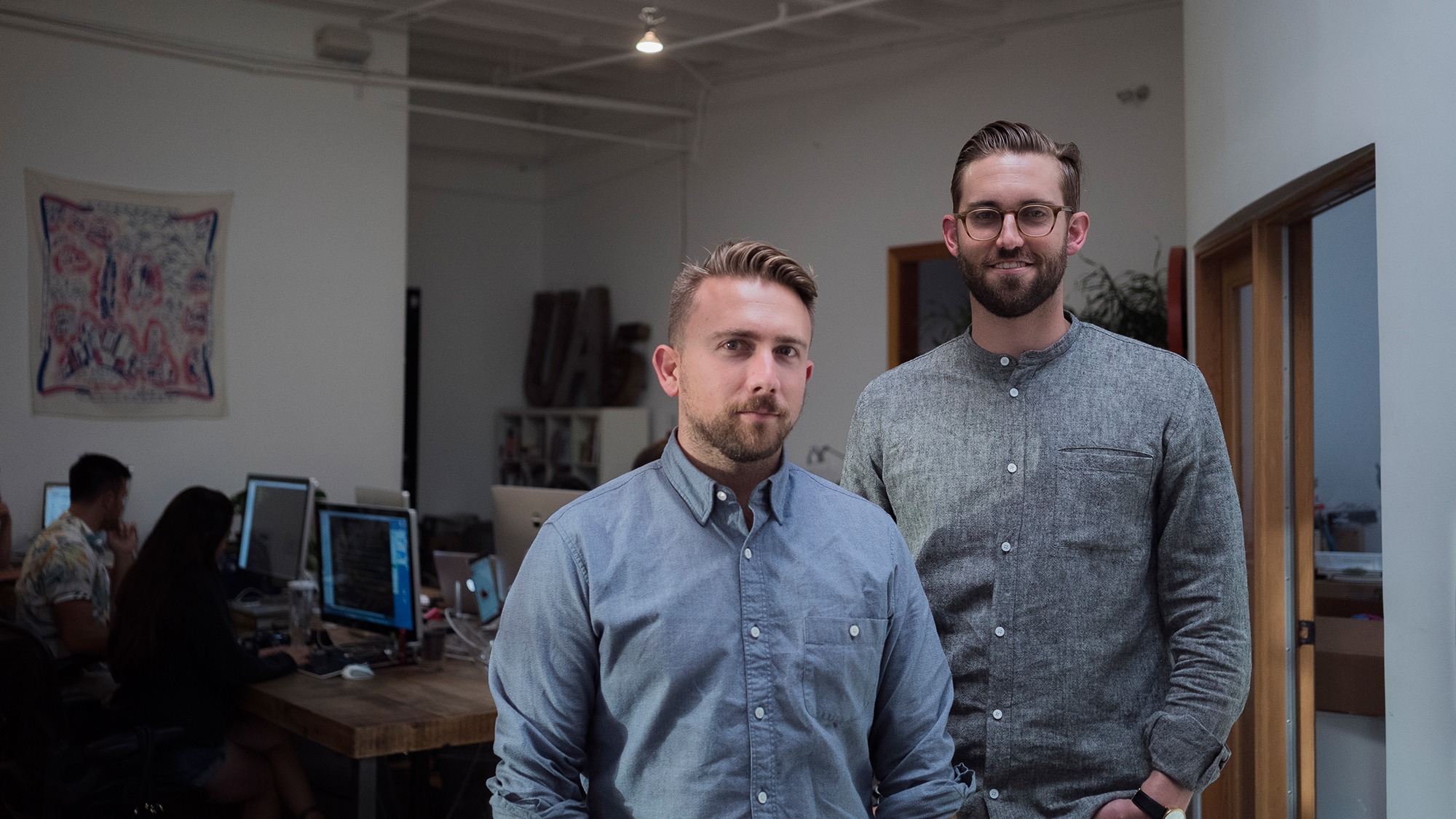
Over this past year, UCLA Arts has worked in close collaboration with design and technology studio, Use All Five, to radically reconceive the UCLA Arts website. Founded in Venice, CA by Levi Brooks and Jason Farrell immediately after receiving B.A. degrees from the UCLA Department of Design Media Arts in 2006, Use All Five has built a practice developing interactive projects for a broad range of clients including Morphosis Architects, MOCA, the Guggenheim Museum, Google, YouTube, Spotify, Disney, artist Doug Aitken and many more.
Earlier this fall, Anne Marie Burke (M.Arch '98) stopped by the Use All Five studios to talk to Levi and Jason about their work, their studio, and how their education at UCLA helped establish their philosophy and approach.
Anne Marie Burke: How did you guys meet?
Levi: We met at freshman year orientation before college actually started. We ended up becoming close friends and moved in together as dorm roommates in 2003, during our sophomore year. At that point, we were doing a lot of creative projects together. Then by the senior year, we were comfortable doing what we were doing and said to ourselves, "We don't have to work for another company. We could start our own company and really launch out into the world and see what happens.” I think it was a little naïve but we did get a lot of support and mentorship from the department, and especially from Henri Lucas—one of our professors. Henri helped us to really focus ourselves, name ourselves and worked with us in an independent studio course to develop who we were going be and what we should do. And then, literally the day after we graduated UCLA, we started Use All Five. Ten years ago.
AMB: How did you come up with the name Use All Five?
Levi: We were experimenting with names. I forget exactly how Use All Five came up but it was the first name that was available as a dot com, both written out and Use All 5 the number. So, we took that. I'm a big believer in the naming process and think it can be a catalyst for a lot of things. It was for us. Use All Five as a name fit for us: we wanted to do experiential work using all five senses. That was part of the inspiration. Use All Five being all five senses. If we could digitally and through the five senses kind of control the entire environment, it'd be a very powerful thing. We were too naïve to know then that that the immersive environmental work we aspired to do was not the kind of work that came easily just starting out. Luckily we knew digital very well.
AMB: When you were at UCLA was there an ‘aha’ moment that shifted your world order or opened up your mind?
Levi: For me, one was Benjamin Bratton’s Design and Society course. The reading material covered everything from philosophy to static semiotics—things that I wondered about the world. I think I still have those books in my collection. That was probably the best reading list I've ever had. But, what was so eye opening for me was how this professor, and the material he presented, encouraged me to think differently.
Jason: I think it was more of an evolution for me. There was not just one ‘aha moment.’ Just the process of going through the whole DMA curriculum helped me to evolve. We started out doing fine arts—the foundation courses—and that was kind of tough to get through for the two of us because we were both really good on the computer and not really good at—
AMB: Color and form and drawing?
Jason: The physical ... Yes, and it was a struggle. Then as soon as I got into the type class, things started to click.
Levi: Henri Lucas' typography class, in particular, where we were able to create an overall world in a print document opened my eyes. He pushed us not to be safe. It was actually really fun for Henri to push us and for us to see how far we could go and how much we could get away with. That really had an effect on me. I think before that I'd been very safe in everything I did.
AMB: How would you explain what it means not to be safe in that creative space?
Levi: Using a lot of your personal material in the work and not being afraid to include your point of view in the work itself, even if it's client work. You can use design almost like an art medium and express yourself in subtle ways through the work. Henri really opened our eyes and showed us that you can do that and it actually makes a bigger impact on people if you don’t go the safe route or the clean route. He has a knack for pushing people yet making you feel comfortable while you’re doing it. Sometimes it's a little nerve wracking going to class knowing you're going to present something that is very personal or ‘out there’ but he would always react in an interesting way. He would find things in your work that you didn't see in it.
AMB: What was the first joint project that you two worked on together?
Jason: Paying project? We did Henri's website.
Levi: Henri Lucas’ website.
Jason: That was our first project as Use All Five.
Levi: That was an interesting project because Henri’s work is all print based, a lot of books, so the challenge was to figure out how to show works like his. We came up with the idea of using video to capture the experience of flipping through his books. We thought that that if we flipped through fast enough—using the web as a medium—it might be an interesting way to experience the work. This was before YouTube existed, so it was a website with video that we conceived in order to showcase the structure, the design, the color of his books in a dynamic way that would not be reduced to just a couple of static images. People could actually see the breadth of his design. That was an interesting solution and the execution was a lot of fun. I remember we hand recorded everything in our own apartments, shot all the books, experimented. It ended up coming out really well.
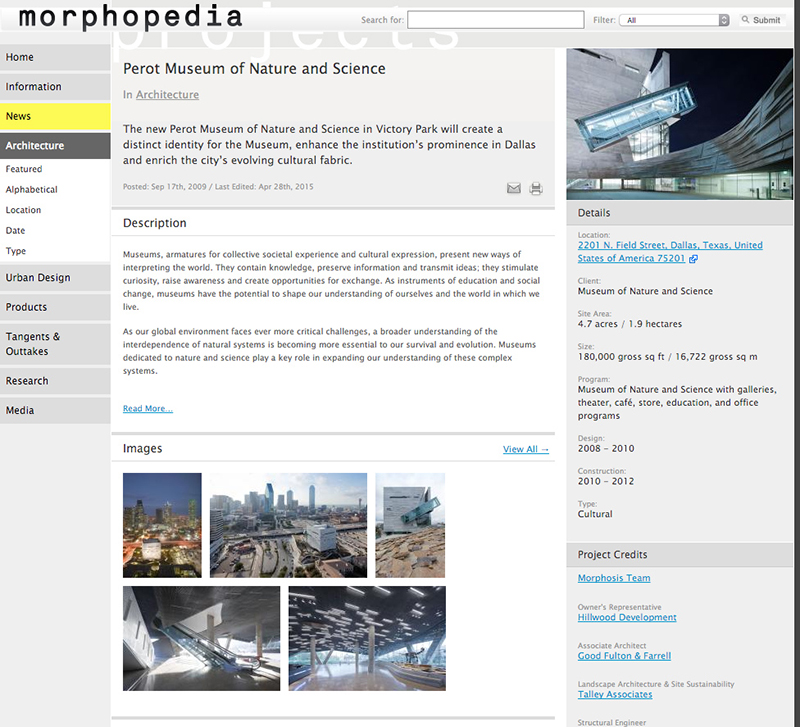
Morphopedia, a website designed for Morphosis Architects by Use All Five in 2009 and still active today
AMB: Was the Morphosis website for Thom Mayne your first big project?
Levi: Yes. I think the Morphosis website, if you go back to the trajectory of our company, opened up a lot of doors. I thought the solution we came up with was a great idea at the time and I think it still stands today, which is kind of interesting.
AMB: Why?
Levi: The web is a quick medium, so usually a site doesn't stay up for more than, I'd say, two years max. The Morphosis site has stayed up for almost eight years and it is still serving its purpose. It was also the first time we were written up in a magazine.
AMB: Because it made such an impact on the architectural world?
Levi: It influenced that culture. That community. A lot of the sites changed dramatically overnight. We see that with a lot of projects we do. We will put something out in the world and six to twelve months later we will see other people kind of catching little pieces of what we did, and bringing that into their fold. We see that more and more now as our work reaches larger audiences. That’s exciting.
AMB: How did you get those early projects?
Jason: It was always word of mouth. We can still probably trace back every project to a family tree of how we got them through a network of relationships and word of mouth references.
Levi: I think we can literally trace it all the way back: the Guggenheim back to MOCA back to Morphosis. You can trace it all the way for ten years, which is very interesting. I think word of mouth kept us going in the beginning. And then cultivating good relationships and doing good work helped us to build over time.
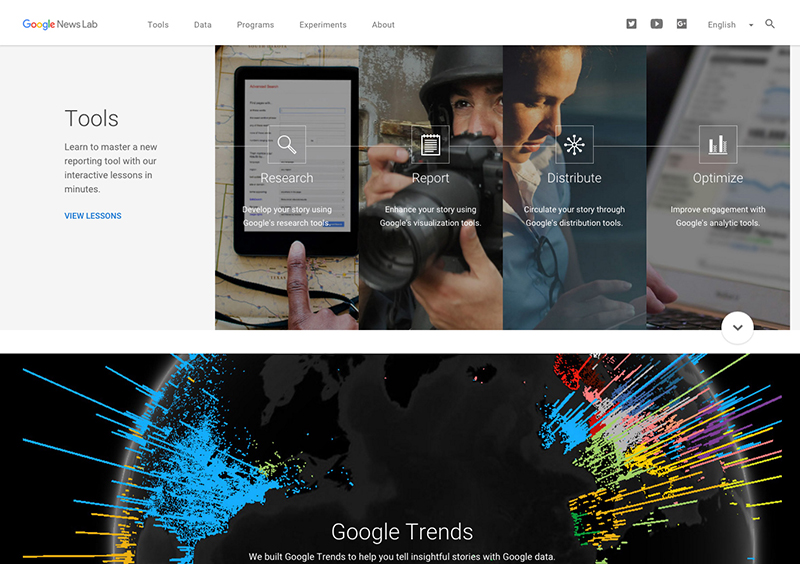
Google News Lab designed by Use All Five in 2015
AMB: How do you get work nowadays? Do you do any marketing?
Levi: No marketing. No advertising, and I think we've even shifted it more to where we just try to meet people that are interesting to us. We might start out with a small project with someone and then build off that relationship. Earn trust.
Jason: When we started out with Google we did a really small project with a really small budget—a Google Chrome plug-in that translated whatever someone was reading—specific words, little pieces of Spanish throughout a New York Times article—to help you learn a language. For Google, this was a really small project. It got put on hold for about a year, but then they published it and came back to us to do another project. They really liked working with us so one project led to another project and that led to something even bigger, and it kind of snowballed.
Levi: We're doing three projects for Google right now.
AMB: And what do you think is key to having a client come back to you over and over again?
Levi: I think the foundation of this comes from our education at DMA—from the creative problem solving skill set that we got at UCLA. I also think that we are really good at communicating with clients and have the ability to move very quickly with them. I think you really have to collaborate. There are so many mediums and technologies involved. It necessitates a very collaborative process. It's not just one or two people involved, it's multiple people, multiple teams just to get a project done.
Jason: And it's about constantly being excited to work on these projects, too. I think that plays a big role in why we have the relationships we do with our clients. We were working on this one project for Toyota some time ago that simply needed some minor updates. Before we came on board, I think the team that was working on it just kind of threw it back to the ad agency who then reached out to us. I would show up to the calls really excited about it, just to be working on it, and they loved working with us just because of our overall attitude towards the project. I think that plays a big role for clients, just being really happy about working with you because you're excited to do even these really small, minor details.
Levi: Working with people. I think first and foremost, it’s about the people that you're working with. There's the collaboration. They're pushing you. You're pushing them. Everybody's coming to the page equally with energy and creativity and problem solving and excitement about what you're doing. And then there is a second part that has to do with being aware of the bigger impact a project can make on culture. Is it going to resonate? Is it going to be a staple in the space and impact a larger audience? I think the third thing is scale. Can you have a project that's not just going to be isolated to a small little area, but actually reach a ton of people? That's why I appreciate working with Google. They come to the table with people that are very, very talented and exciting and interesting and passionate about the project and then the scale of it is always massive. You don't launch a site and have, say, five people go to it. You launch a site and ten thousand people or a hundred thousand or a million people go to it and then they email you directly sometimes and go, "Why did you do this?" or "This was amazing," or "This sucks." That’s exciting even when the response is negative. The feedback is essential to us.
AMB: When you look back at the vision you had when you founded Use All Five, what still resonates? What has remained and what has evolved or changed?
Jason: I think we were a little rebellious when we started out. I mean launching your own company right out of college—that's not something that a lot of people would do. I think we still have a little bit of that in us now. We go against or we differentiate ourselves a lot from the rest of the competition.
AMB: How?
Levi: I would say our focus on culture, injecting culture as much as possible into the creative work, but also being able to move fast and free in order to understand how the world reacts to it. We didn't know exactly what Use All Five was in the beginning other than we wanted to create stuff for clients. I think we were naive enough to not know exactly what we were and I think that's okay. People feel like they have to know exactly who they are, what they do, before striking out in the world and that sometimes makes sense, but I think, that can also sometimes inhibit discovery and growth. It was fun, just trying to find our way. And, while I feel like we know our way a little bit better now, the finding and the experimenting is part of who we are still. We've experimented a lot over the years, just to learn. It feels like it's been school for ten years since then. An education post education.
AMB: What do you think it is that you're known for? What distinguishes you?
Levi: Basically, I think over the last ten years we’ve cultivated an identity and reputation for occupying a space where design and technology meet. Technology keeps changing, but for the most part it's been where design and maybe the internet have met and from a creative standpoint, how people use that to either tell a story or convince people of something or get information across. We found out through years of doing work that the work that has done the best, resonated with the most people in the world, either has light utility touch and/or some cultural touch to it. Those are the two things that people really see in our work. When the Guggenheim came to us, they thought we could think different from the other studios in New York and really push them beyond what they were used to. I think it's just a ... I think culture is a big part of it.
AMB: When you say culture, what do you mean?
Levi: There are two parts of culture that we look at when we're doing a project: "small c" culture and "big C" culture. The "small c" culture is communication: how we interact as humans, the little things, how we eat, what we eat. How we're communicating is a big part of that and a lot of our work has to be about communication and how we're using texting or email or all those kind of things.
That’s a big part of how we came up with the concept for the Morphosis site. Seeing how people were using the internet differently than how architecture sites were set up to use the internet at the time. They were not set up to answer the needs of “small c” culture at the time. When we did the Morphosis site, architecture sites were very flashy and fluffy. It was confusing, but for the most part, it was architects trying to communicate a certain feeling. We knew that in order to communicate Morphosis better, there were two things that we were going to need to address. There was the big philosophy about Morphosis, but also the information, the people, the background, how Morphosis built the projects, how Morphosis constructed their work. That was the bigger idea. We came up with the concept of displaying that in two different ways through a very experimental, but very educational site. I think that answers to the "small c" side.
The "big C" side of culture is in the musicians, the entertainers, the artists, art in general. That "big C" culture resonates with us a lot. It informs our work—that's where a lot of the ideas come from in terms of the aesthetics and how things look and feel in the world and if they fit correctly with the current cultural standpoint.
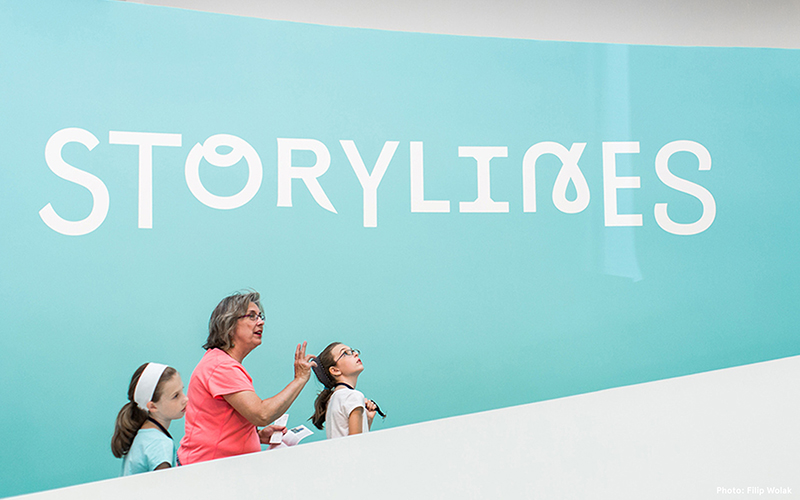
The Guggenheim's Storylines exhibition, the visual identity for which was created by Use All Five in 2015
AMB: In other words, you are attuned and responsive to contemporary culture?
Levi: Yes. I think a good analogy is looking at where a building is situated in a city or urban landscape. How does it interact with everything around it—other buildings, activity, infrastructure. We're constantly thinking about how a project will fit in a bigger cultural sphere. With the UCLA Arts website, I'm very fascinated—from the "small c" side—by how people use it, how people interact with it, how people share it, but also from the "big C" side, how it will impact web design or maybe design in general, maybe arts. How it impacts UCLA as an institution? How does it fit into the cultural sphere? It may piss people off and may create tension or it may create excitement. I think that that's really important to us. These two parts of culture.
Jason: For the Guggenheim website and branding that we did for the recent Storylines exhibition, we took seven different typefaces and made our own typeface from these seven. We thought that was going to really upset the design community and we were really looking forward to seeing if people were going to really hate it, but it seemed like everyone liked how it turned out. What am I trying to say? We went in there intentionally breaking a design rule and we were going to see how culture was going to receive it or reject it. And they accepted it.
AMB: Is that connection to the culture simply implicit in your design philosophy? Or is this something that you guys consciously talk about as values and principles of the firm?
Levi: It's both. I think we talk about it while we're developing projects. How is this going to fit into a larger cultural context? How is this going to fit in a bigger fabric of things?
AMB: Those are the questions you're asking?
Levi: We're asking that in different ways depending on the client and nature of the project. Sometimes, we might even decide if we're going to take a project or not by considering these questions as well. Does it fit into the fabric of what we believe in and the things that we enjoy? Does it resonate with our points of view? Jason brought up the Storylines typography example. The original concept for that was kind of inspired by emojis and hieroglyphics and how those, in a longitudinal way, are connected culturally. It’s kind of a communication time warp. And then we pitched that as an idea to Guggenheim and they pushed back saying, "Go back to the drawing board, but there is something there." Then we explored typography from 2005 and later only, which was parallel to their curatorial concept of featuring artwork developed since 2005. And, it actually worked in a very strange way. But that came about through experimentation and collaboration back and forth, on both sides. We're thinking about those things. Sometimes we just stumble on them through iteration. We don't mind throwing things out there to the client and seeing how they respond or throwing things out to people that are our friends or family and seeing how they respond. Kind of watching them closely if they react badly or get inquisitive about what we are doing. I think that even happened with the UCLA site. How are people reacting to it when there's a navigation they're not used to? That's unusual. Not all sites do that, but it's not so far out of the realm that we aren’t confident that people will get it.
AMB: It sounds like your UCLA education—your exposure to professors like Henri Lucas—was really formative in shaping your philosophy.
Levi: Yes.
Jason: I think our design style comes from what was presented to us that at such a young age.
Levi: But it's also an attitude.
Jason: Yes.
Levi: Injecting a strong point of view even in client work. I have always found it interesting how you can identify a point of view in all of Henri’s work. If you look at his work, there's always subtlety there. Sometimes more overtly depending on the client. I am sure he doesn't want me mentioning this, but even in some of the advertising work he did, you can see the injection of his own point of view. He has really influenced us in this way. We go for it, put our point of view on the world out there and either that's going to inspire the world or, if we get lucky, maybe make a dent in the world for the better.
AMB: What would you guys say to your younger selves or a younger generation just getting a start in the design field?
Levi: It’s worth starting your own studio and, even if you fai, it's probably one of the best educations you can have. You learn so much having to do all the different facets of running a studio. You can walk away from that experience and it will look amazing on your resume. It's hard. And, I think we were a little naïve when we did it, not knowing or understanding how long it actually takes. I say that to a lot of startup founders too. Nobody really realizes how long it truly takes to get something off the ground. It's not going to take three months. It's going to take years to really start. I don't think we as a studio, really saw any kind of traction until the Morphosis project happened, which was probably about two years in. If we were to do that now, to have to wait a year or two to see traction, I might have quit, but being naïve and young…
AMB: You were young.
Levi: Yes. It's exciting. It's freedom. No responsibilities. No overhead, really. I think we worked in a very, very small office, very low overhead and—
Jason: We were roommates for a while, too. It was pretty small. Low rent. We were pretty scrappy at the beginning.
Levi: Our total overhead for survival for both of us—at the beginning—was something like $3,000 per month.
AMB: As a business?
Levi: Yes, as a business. As individuals. Both.
Jason: Yes. Something like that. It was crazy.
Levi: Looking back at it, it looks really scary but those were very fun years.
Levi: There were some challenges there. Some bad clients, but you learn from those and you move on.
AMB: And now? Ten years down the road, where do you locate yourselves in the design world?
Jason: We're always wherever a new technology is breaking or where new design shifts are taking place. As soon as a new technology relevant to our work launches that then becomes our benchmark and sets our standard. We're constantly dancing between the new and the last six years, making sure our work is up to date but still functional on the old platforms. And then, sometimes, there is new technology that we're skeptical about, like—
Levi: Virtual reality, I think. We're trying to find opportunities to do virtual reality with clients. Right now we're in talks with some people, pushing them to try it, to give us a way to experiment with it, find out if we like it, enjoy it. Our work usually involves internet in some capacity. Internet touches at least a piece of it. I'm a big believer that it doesn't always have to be a website or an app, but you kind of have to be a problem finder to discover what the real solution is. People may give you VR for the sake that it's VR. It's cool. It's fun. It's a new thing, but I think there's a lot of skepticism as well. VR may not be the right solution for people or may not be that next future leap.
AMB: You are skeptical that VR is not necessarily the next frontier?
Levi: Yes. It may not be. It may be a singular activity that doesn't make a bigger impact on the world. It may be too advanced for people to actually make that bigger leap in terms of impact. Cell phones made that leap. The iPhone made a huge jump in culture if you look at how it's changed how we operate in the world and how ubiquitous they are. So, I can see both sides and I think we like to straddle the line until we actually are able to create with a new technology. Sometimes we don't get the opportunity to do that, but we've created iPhone apps. We've created Android apps. We've created websites. We've created experiential spaces, interconnected spaces, and some of that stuff is really good and exciting and, sometimes, it just doesn't make sense for the future to continue working on certain things either.
AMB: What's the thing you haven't done that you want to do?
Levi: I'd definitely like to experiment with film--but more interactive film. I do think this is the future. There's an element of that that I'd like to explore more of. Apps are interesting and I'm a little scared about Apple and Google's kind of control over things. Especially the cell phones.
AMB: People you rely on and people you work for.
Levi: Yes. They're so big and they know that. I get nervous about the app ecosystem. Essentially, if you look at it, it's killing a lot of the open internet, what we had before. We were talking as a staff recently; we only use three or four apps on our phones. They're mainly big companies like Facebook or Snapchat or something like that. I get a little nervous about that. We were born on the internet and really have used the internet our entire lives, so I'm a big fan of that early 1990s open Wild West where anybody could do anything. I'm starting to see that disappear a little bit.
AMB: Really? For you, do you see it like Amazon closing all the small, independent bookstores?
Levi: No. I think it's…it's a different way they're strangling that. It's scary even though they are opening the internet to more people, they want those people to use their platforms. But those platforms are prohibitive for people to be more creative. When was the last time you saw anything very creative on Facebook? It's very flat.
AMB: What you're saying is because these places are the portals through which they're reaching the world—
Levi: Exactly.
AMB: They have control over how you’re reaching the world and-
Levi: Yes.
AMB: The way in which they're structured.
Levi: It's almost reversing back to the way AOL was. It was like…we had AOL and you didn't really go out to the open internet from there and you played in AOL's playground and that's kind of scary to us. It's like how far are Google or Apple going to go to control...or Facebook for that matter?
AMB: Why aren't you guys trailblazing a space in which that creativity can happen?
Levi: It's almost like we may have missed that. That's kind of the scary part is they [Google and Apple] are so big that when people clamor to push browsers, push technologies to see how far they can take it, if those guys don't support it, it kind of kills them off. I think, before, in the Wild West of the internet, you had a lot of people pushing Netscape and Microsoft Internet Explorer and then Firefox to be better and do more exciting things, but now you're starting to see that shift—ending, per se. It kind of scares us.
Jason: There's still good competition. I think Google and Apple are just constantly pushing each other with their browsers to support new, open technologies. There's something called WebGL, which I think would have broken older computers if you ran it in the browser, and now it's really fast and it's really good. If it wasn't for this competition between Google and Apple, we wouldn’t have it.
AMB: Would you say that an education at DMA instills in its graduates, in its community, a commitment to and hunger for a freedom to explore?
Levi: That's why we started the company. That's the first word that comes to mind when you ask, “Why did you start Use All Five?” Freedom. Freedom to control your destiny a little bit. Decide where you want to go with your life and how to be creative. Creative freedom, freedom to push the boundaries of what technology can do, freedom to put a point of view out into the world. I would say DMA definitely instilled this in us. When a lot of younger students ask me why we started a studio instead of going to work for a big ad agency, or going to work for a big design studio, I mainly say freedom. The freedom not to have to listen to somebody else. The freedom to have a little bit more control of the situation, whether that's in the work for clients or in how the business is being run, or in what influences we're going to use or how things are going to look. That was why. Hands down, freedom is the first word I say to students when they ask why to start a studio.
Jason: For the first few years you're not going to experience that until you get through the first hurdle of your initial clients. When we were starting out, we wanted to push things creatively and were too young and too inexperienced to get the kind of projects that we had in our minds. Then, eventually, it took a lot, a lot, a lot of work and a lot of experience and now we're just doing the kind of creative work that we've been wanting to do. We're at the point now that we envisioned when we were starting in terms of what we wanted the company to be.
AMB: You agree with that?
Levi: Yes. I think the last year has really shifted. It's been interesting to get the kind, to more easily get the kind of work that we want to get now.
AMB: Do you see yourselves as artists?
Levi: Not so much. I say communicators.
AMB: What about you, Jason?
Jason: Probably not. I think we're communicators. Collaborators. We work closely with people. We were saying earlier that we bring our point of view to things, but we don't bring our own agenda.
Levi: That's a good way to put it.
Jason: We do what's going to be successful for that project and for that client and for the audience of the project. There is a lot of feeling, art direction, and creativity to provide an original solution, but I wouldn't call it art.
Levi: Yes. That's actually pretty good.
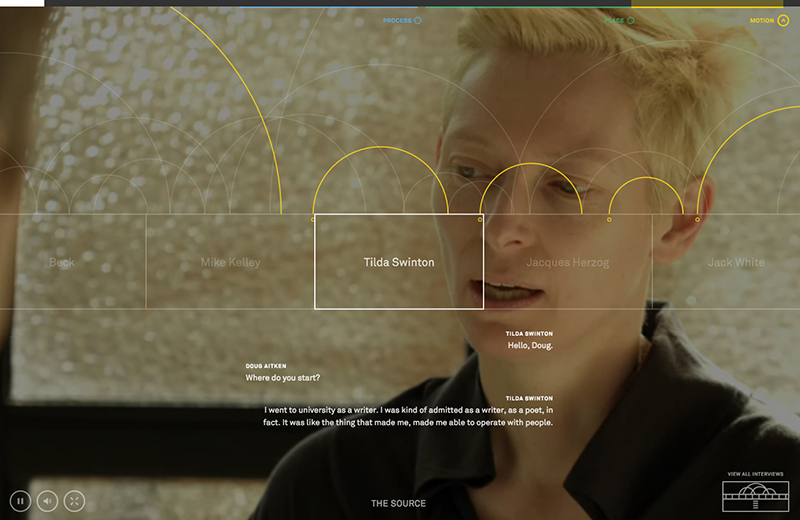
The website for artist Doug Aitken's film installation, The Source, created by Use All Five in 2014
AMB: As alumni of the School of the Arts and Architecture and as people who are really engaged with culture, what purpose do the arts serve?
Levi: I think it is to wake people up. Right? That's the biggest thing. It's just to stop doing the same thing over and over again and actually stop and think. I almost see the arts as a stop sign, especially in this world that is so chaotic and moving so quickly. I think that's literally the first thing and almost the last thing I always think about when I encounter and engage with art. It stops you and makes you think about things. Stimulating reflection, I think, is a big part of what art can do for humans.
Jason: We love working within the arts. The Guggenheim project and the Doug Aiken project and the MOCA project are my personal favorites. The cultural projects give us a lot of inspiration for the rest of our projects. I think what makes our work with Google and those kind of more technology-based projects compelling—why people like working with us—is because we bring this distinctive cultural or artistic point of view to their projects that you might not necessarily get working with another tech design agency.
AMB: What do you think your role is in society?
Jason: My role is I help people create, make sense out of design and technology, or I use design and technology to help people make sense of things.
Levi: To capture people's dreams and bring them to reality, I think, is the best thing. Day in, day out to help people bring to life something they want to express or communicate to the world.
AMB: So you're translators?
Levi: I would say translators and collaborators. We don't one to one manufacture something from detailed plans, but we provide input and then actually create it together. And, as it's shaping it's almost like, I don't want to say ceramics, but it is multiple hands that determine how this thing comes together. Yes, I would say translators and collaborators for a medium that is not very easy to understand for a lot of people. Yes. I think that's the best way to put it.
AMB: What would be the five things you would have a younger person ask themselves before launching out into the world on their own as you two did?
Levi: Are you okay not making money for a while? Are you curious enough to explore multiple angles, and to iterate continuously on something that maybe others feel is already done? Do you have also the persistence to push yourself to keep creating when you don't have a lot of patience?
Jason: Can you be passionate about the little things?
Levi: Yes, that's a good one. Yes, and excited that each day is a fresh day. I come in pretty excited every day still, ten years later.
AMB: So, some of the qualities one must have if they want to do their own thing, from your point of view?
Levi: Fearlessness. Curiosity.
Jason: Persistence. Passion. Patience.
Levi: Yes. I think for Jason and me the most important is probably curiosity. I think we were both very, very curious. Always wanting to unpack things and figure out how they work or why they were designed or made.
AMB: So, you are dedicated to asking how and why?
Levi: Yes, questions are the most important part. It's not about if it looks pretty or it looks ugly, it's about why. That is always the bigger question. Why is there something like that? I think being able to answer that question is important, but being able to ask that question is essential.