Skyports unveiled for Uber’s flying cars
Designed by Architecture & Urban Design faculty member Craig Hodgetts's firm Mithun | Hodgetts + Fun
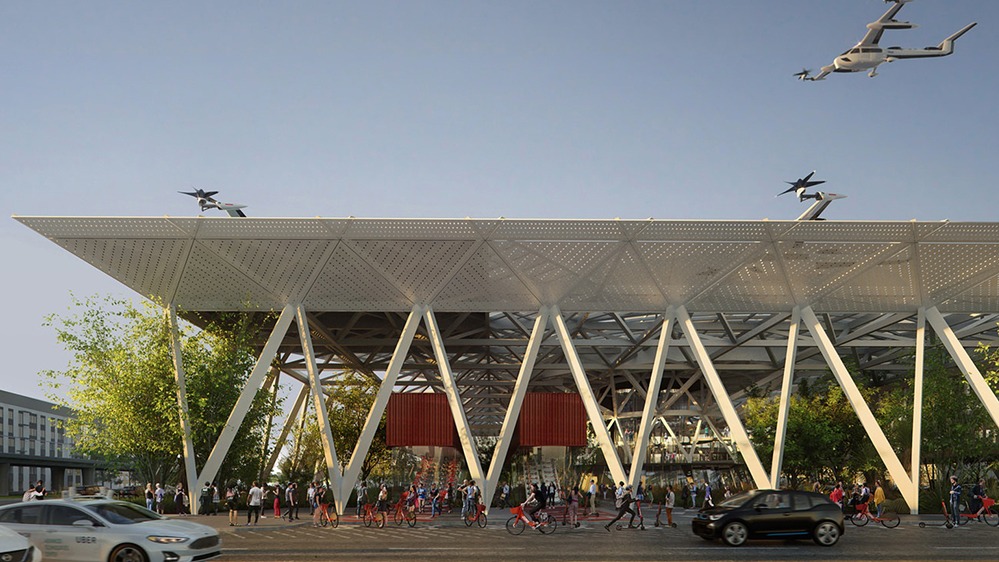
"Uber has “disrupted” taxi cabs, e-scooters and bikes. Now the company’s airborne division, Uber Elevate, wants to add a ride-hailing service in the sky, called Uber Air.
“Two years ago, the Elevate team was hardly a handful of people and most people in the world had only dreamt of flying cars. Now, today, the ever-elusive flying car future we have all envisioned, is one step closer, said Nikhil Goel, head of product at Uber Elevate, at their summit last week.
Uber Elevate claims Uber Air will be ready for lift off in 2023. And it’s thinking about where these app-based, flying taxis will take off and land.
To that end they tapped eight design teams to come up with concepts for what they call Skyports, to be located in Los Angeles, Dallas and Melbourne.
DnA talks to architects Craig Hodgetts of Mithun/Hodgetts + Fung, Gensler’s Terence Young, and Seleta Reynolds, head of LA’s Department of Transportation, about the viability of the technology, what a “Skyport” might look like and how flying cars might impact people on the ground.
An Uber Air vehicle is not an airplane. It is an eVTOL (electric vertical takeoff and landing) aircraft or air taxi. And that means, says Young, “it acts like a helicopter upon arrival and departure and it acts like an airplane in flight. It's engineered for multiple passengers; it’s engineered for electric power, which is the key to keeping costs down and creating greater sustainability; and also keeping noise down.”
Young and Hodgetts both attended the Uber Elevate summit and Hodgetts says he drank the Uber Air Kool Aid: “First and foremost, it's a transformative idea. It's an idea which Uber has been pursuing, much to my amazement, to kind of harness all forms of mobility and orchestrate them to maximize their utilization, [including] scooters, bikes, trains, buses, transit vehicles, aircraft and driverless cars.”
The concept is that these air taxis would race around the Southland, at a height of up to 400 feet, and they would follow transit channels, like freeways, so they would not be buzzing around indiscriminately. They would be part of a complete transit network interconnecting ground and air mobility at termini they call Skyports. The challenge to the designers was to situate these Skyports -- two football fields in size, says Hodgetts -- and figure out what role they would play in the urban fabric."— Frances Anderton, Jun. 18, 2019


This post is an excerpt. Read the full article on the KCRW website.
Stay engaged. Use #UCLAarts to stay connected.


