Signs of the Apocalypse at the Hammer Museum
Made in L.A. 2018 is the fourth iteration of the Hammer’s biennial exhibition, continuing to highlight the practices of artists working throughout Los Angeles and the surrounding areas. This year's lineup includes ten alumni from the UCLA School of the Arts and Architecture, representing more than 25 percent of the artists selected. The exhibition is organized by Hammer curators Anne Ellegood and Erin Christovale. The exhibition will be accompanied by a comprehensive catalogue, as well as a full roster of free public programming. Refer to the UCLA Arts Calendar for the full listing of events and exhibitions at the Hammer Museum and across the School.
"LOS ANGELES — There is no cracking of earth or buckling of concrete, but a small fault line is shaking up the Hammer Museum here.
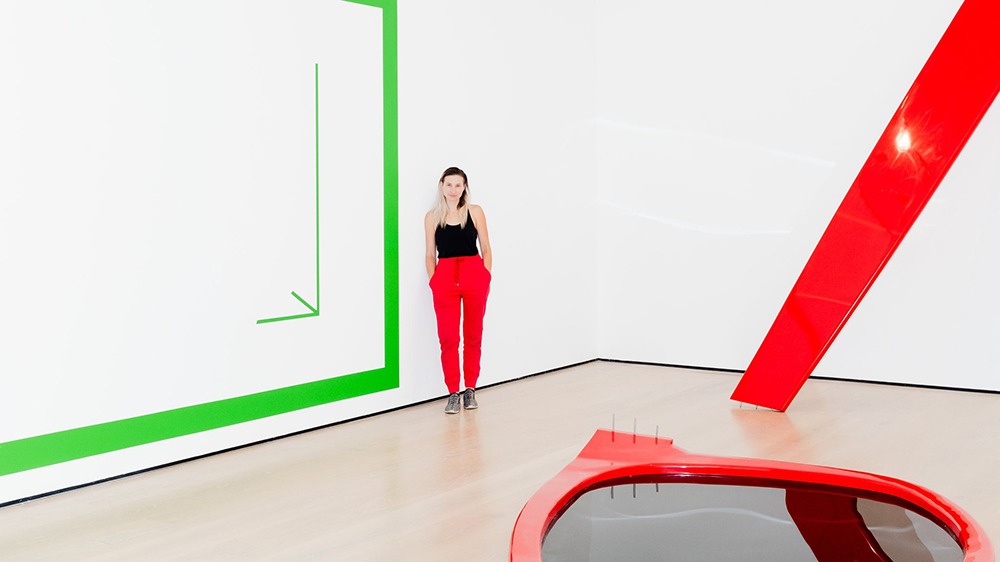
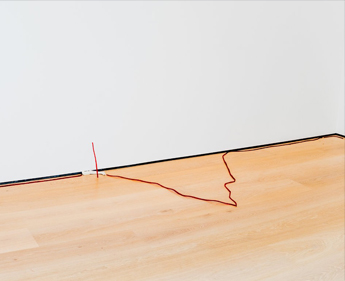
A detail of MPA’s work “Faultline” (2018), which snakes along the walls of a gallery space and out to a terrace. The artist is based in Twentynine Palms, Calif., on the Pinto Mountain fault line. This one, an artistic interpretation made of red resin sticks, is snaking from a museum gallery out to the terrace. “Faultline” (2018) begins underneath a giant sculpture of bright red plastic sunglasses that could symbolize California dreaming — only they’ve been split in half.
The artist behind this jarring installation, who goes by MPA, spoke of her artwork figuratively this week, in terms of “social fissures” and “the fracturing of political parties in the United States.” But she also spoke of a more literal inspiration, the Pinto Mountain fault that runs through her hometown, Twentynine Palms, where “you can see this apocalyptic fever brewing.”
She’s not the only artist in “Made in L.A,” the new Hammer biennial that opened Sunday, to explore the uneasy feeling of living in an epicenter for natural and man-made disasters. At least five of the 33 artists in the show, all based in the Los Angeles area, have made artworks somehow responding to the mounting environmental threats close to home.
As residents know too well, the region has recently suffered from a long stretch of extreme drought, a rash of wildfires, including the biggest on record to date, and some deadly coastal mudslides. That’s on top of the ever-present seismic danger: “The idea of the big one, the earthquake that could destroy the entire city, is a constant notion here,” said Erin Christovale, the Hammer Museum curator who along with Anne Ellegood co-organized the biennial, which is designed to promote under-recognized artists.
Of course there’s a rich tradition of environmentally minded art in California, from 19th-century landscape photography to 1960s land art to the current wave of artist-activists. In the case of these Hammer artists, though, the environment is not always an explicit theme or agenda. Concern for the health of the environment segues into, and sometimes stands for, anxiety about the current political climate.
“I think why we’re seeing this now has something to do with how the environment is politicized,” said Ms. Ellegood. “These artists are not just thinking about natural disasters but about resources, land development, genocide and climate change.”
Ms. Ellegood said she was especially surprised to see ecological images crop up from artists not known for that work. Flora Wiegmann made a piece called “Reduction Burn,” a six-channel video of a dance performance that she choreographed. Her title refers to “hazard reduction burns,” the planned fires often used to deforest areas on the verge of becoming tinderboxes.
The first section of her work establishes the dancers, wearing sleeveless green shirts, as a forest, swaying like trees in the wind. The third evokes a fire spreading (thanks to red accents in the costumes and more dynamic jumping and spinning movements), while the final sections show the fire collapsing into embers.
“This process is regenerating for the forest,” said Ms. Wiegmann, noting that it allows for “new growth.” For the artist the cycle is suggestive of individuals overcoming personal injury or trauma and “all the political and social flare-ups happening today,” she said."— Jori Finkel, Jun. 3, 2018


This post is an excerpt, read the full article on the New York Times website.
Read more about Made in LA 2018 here.
Stay engaged. Use #UCLAarts to stay connected.


