Senses of Time: a film-based exhibit opens at Wellin Museum
An exhibition curated by Professor Polly Nooter Roberts Opens in New York
Senses of Time, an exhibition that Department of World Arts and Cultures/Dance Professor Polly Roberts curated alongside Karen E. Milbourne of the Smithsonian National Museum of African Art, has opened at Hamilton College's Wellin Museum of Art in New York. The exhibition is also on view at Smithsonian American Art Museum and Los Angeles County Museum of Art (LACMA).
"Although African nations have many different cultural themes, these nations share a lot in terms of political issues. Historically, African nations have been affected by a rich combination of colonization, tyrannical governments and color-related identification, all of which became inseparable from their culture. The upcoming exhibition at Wellin Museum, Senses of Time, ties the video artworks of seven African artists into a compelling exploration of the obstacles that African cultural identity has faced across the ages. This exhibit, curated by Karen E. Milbourne of the Smithsonian National Museum of African Art and Polly (Nooter) Roberts, professor of world of arts and cultures/dance at UCLA, represents the cyclical perception of time in Africa, which is intrinsically different from the linear, developmental way time is perceived in the Western world. Senses of Time opens at Wellin Museum this Saturday, Sept. 10.
Egyptian artist Moataz Nasr created The Water, a record which captures the reflections of his compatriots on puddles in the streets of Egypt. After the viewers see all characters, boot-clad feet abruptly step on each reflection, completely distorting its features. The people’s goals and opinions have been rejected by their political leaders who used force to put an end to their voices. The Water stands as an eloquent expression of the coercion Egyptian society has witnessed before and after the revolution of Jan. 25, 2011. A real water pool has been installed beneath the wall on which the clip will be projected, where viewers will see the reflections of Egyptian citizens on its surface. The ability to have such a tangible and authentic exposure to The Water will indeed deepen the viewer’s understanding of the Egyptian ordeal at hand and make it an unforgettable experience.
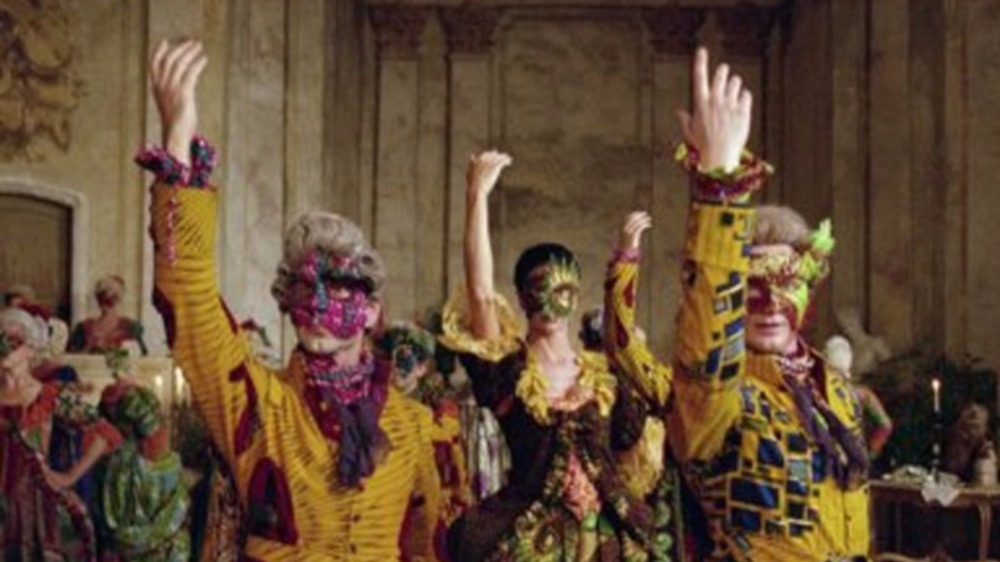
Through Un Ballo in Maschera (A Masked Ball), Nigerian artist Yinka Shonibare MBE introduces an uncommon representation of African elements as fundamentally inspired and created by European culture. Many African countries were colonized by different European empires in the late 19th century. The brightly-colored clothing that African culture has been associated with was originally invented by Dutch and English colonizers. The ball takes place in a large, breathtaking studio (a real one, not 3D-model) which allows for picturesque footage from various angles. Shonibare shows a male and female performing an old European dance in Victorian-style clothes for which the fabric is vibrantly-colored traditional African material. Surprisingly, one of the dresses has a Chanel emblem on it. Shonibare’s artwork astounds viewers with a complex, styled dance that presents “traditional” African clothing as an inheritance from European colonizers. "— Ghada Emish, September 8, 2016

Read the full article at the Hamilton College Spectator website.