Scientists Can Now Store Digital Images in DNA
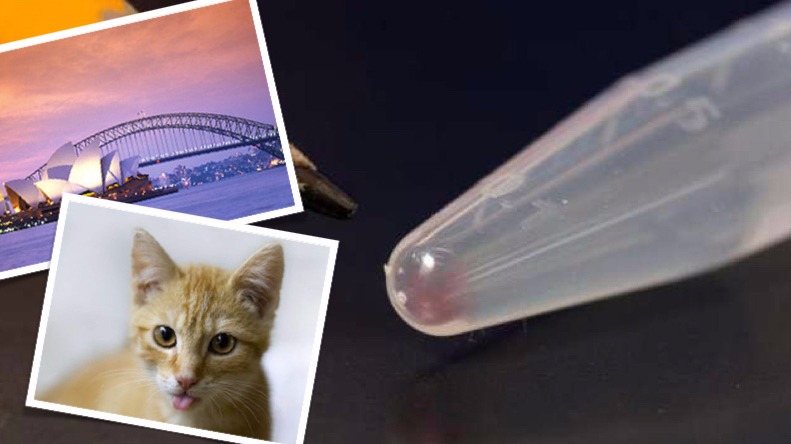
The amount of data in the digital universe — including vast collections of computer files, historic archives, movies, photo collections, and other digital information stored on devices worldwide — is expected to hit 44 trillion gigabytes by 2020. In other words, the world’s collective device storage is almost full. In an effort to free up space, researchers at the University of Washington have found a new way to store digital image files: in DNA.
In a recent experiment explained in a newly published paper, the team of researchers successfully converted the images pictured above into strings of DNA. They then retrieved them from the DNA and reconstructed the images perfectly, without a byte of information lost.
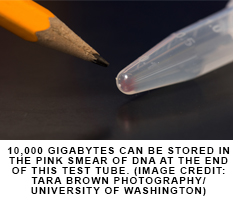
Why store images in DNA, though? Why not just get a bunch of new hard drives? As the researchers explain, this technique would greatly reduce the amount of space needed for data storage, and would provide a staying power that current digital storage systems lack. Currently, technology companies store all your selfies, emails, cat pics, etc. in sprawling data centers, but the world is producing data faster than the capacity to store it is growing. This new method could “shrink the space needed to store digital data that today would fill a Walmart supercenter down to the size of a sugar cube,” according to a press release. “All the movies, images, emails and other digital data from more than 600 basic smartphones (10,000 gigabytes) can be stored in [a] faint pink smear of DNA at the end of [a] test tube.” And while existing storage technologies, like flash drives and hard drives, degrade over time, DNA can reliably preserve information for centuries. — Carey Dunne, Apr. 11

Read the full article at the Hyperallergic website.