Rodrigo Valenzuela Opens ‘Closed Quarters’
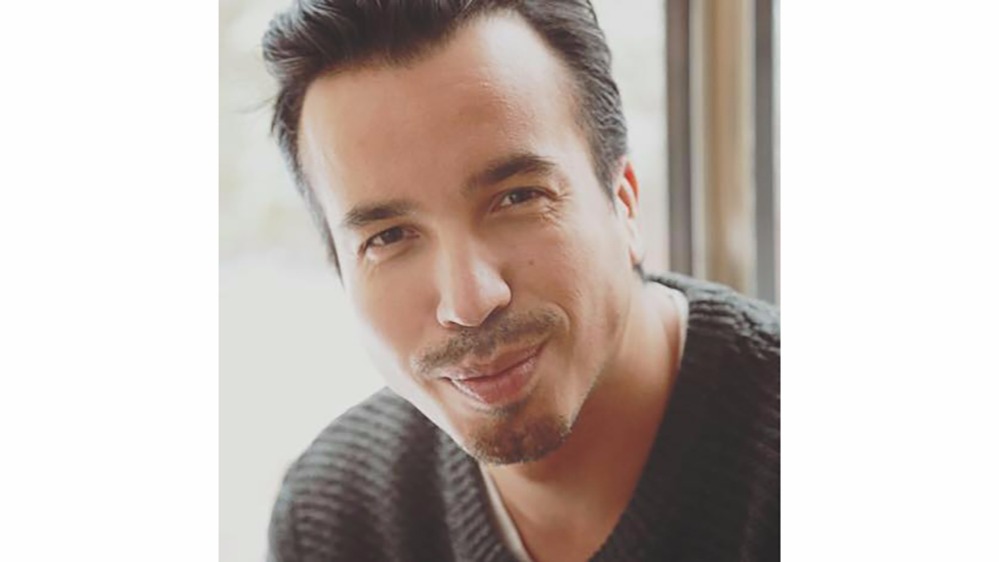
Assistant Professor Rodrigo Valenzuela joined the Department of Art July 2017. Valenzuela works in photography, video, painting, and installation. Using autobiographical threads to inform larger universal fields of experience, his work constructs narratives, scenes, and stories that point to the tensions found between the individual and communities. Much of Valenzuela’s work deals with the experience of undocumented immigrants and laborers.
"Rodrigo Valenzuela is pleased to be back in Seattle. This city is where the artist escapes the daily siren song of the ice cream truck passing his hot LA studio, where he finally gets to walk places, no longer trapped inside his car.“I put in 40,000 miles last year,” he says, smiling warily, his eyes squinting in the harsh sun, so out of character for Seattle. This past year, he drove from Los Angeles to Memphis, Kansas, Dallas, Houston and Seattle, working in different studios and setting up gallery shows.
Almost exactly one year ago, after a Seattle tenure that included solo shows at lofty institutions such as the Frye Art Museum, Valenzuela moved to the City of Angels. Recently, he was appointed an assistant professor in photography at the acclaimed UCLA Arts school. That’s a big deal.
Since graduating from the University of Washington with a degree in photomedia, Valenzuela—who first studied in Chile and spent his first years in the U.S. illegally working in fields like construction—has been all over the United States, as has his work. Currently, his work is on view in New York and the respected Aljira Center for Contemporary Art in New Jersey. In Seattle, two of his videos are part of a striking group show about labor and immigration at Greg Kucera until July 15, and three of his earlier videos are on view in the group show Untold Passage at Jacob Lawrence through Aug. 18.
This week, Valenzuela is back in Seattle to open an exhibition of video work he curated, Closed Quarters, now on view at Seattle University’s Vachon Gallery through Sept. 29. We talked with Valenzuela about the artists in the show and his current projects, and had some real talk about the Seattle art world.
How does it feel to be back in Seattle?
Seattle is home. It’s the place where I come to recharge, hang out with other people, step out and away from the studio—if I don’t, I end up working 15-hour days. It’s not a healthy lifestyle. But, I’ve lived in L.A. for a year. The time has come to put down roots. I’ve had my name on an apartment lease, the first time in over four years. That feels like the rootiest I can get for a while.You won’t be moving anywhere else soon?
That would be hard now that I’ve got this teaching position at UCLA. A dream job! Imagine: teaching at the same school as Andrea Frazer and Barbara Kruger, that’s kind of mind-blowing. I’ll be surrounded by stellar scholars, all so much smarter and more successful than me. Also, it’s a public art school, so it’s aligned with what I believe in. I don’t want to teach at a place of privilege.How do you like LA?
LA feels like the perfect average between Seattle and Houston: West Coast hipness mixes with a city where you have to drive a lot, that’s very money-driven. But I like it. Art-wise too. My gallery is facilitating meetings, taking me to more art fairs, making sure I meet new people and get curators from museums to visit my studio. You know, I’ve been getting more studio visits there in the last six months than I ever got in Seattle.Did museums end up buying your work? Any big solo shows we need to look out for?
Things are still secret. What I can tell you about is a talk I’ll be giving at the Hammer Museum in October, my first public thing in LA. The Hammer is a great museum, with excellent programming. They are doing what the Henry [Art Gallery] in Seattle, also a university art institution, should do but never quite does: staging a lot of contemporary shows, with different rooms for artist residencies or project space for young artists. It tells us a lot that the project room at the Henry is the lobby. I’m not saying the Henry needs to invite more young artists, but at least make room for people to play around. This is what I’m trying to do with Closed Quarters: bring artists that are never shown here to the Pacific Northwest. I feel like people need to know them. I mean, there’s almost no video art here. To me, that says a lot about the relationship of the city with money, and the way art is seen here."— Margo Vansynghel, Jul. 14, 2017

This post is an excerpt, read the full article at the City Arts website.