Rodrigo Valenzuela: New Works for a Post-Worker’s World at Luis De Jesus Los Angeles
Rodrigo Valenzuela joined the UCLA Department of Art faculty in 2017. Valenzuela is a Los Angeles-based artist working in photography, video, painting, and installation. Using autobiographical threads to inform larger universal fields of experience, his work constructs narratives, scenes, and stories that point to the tensions found between the individual and communities. Much of Valenzuela’s work deals with the experience of undocumented immigrants and laborers. At UCLA, Valenzuela teaches graduate and undergraduate students in photography.
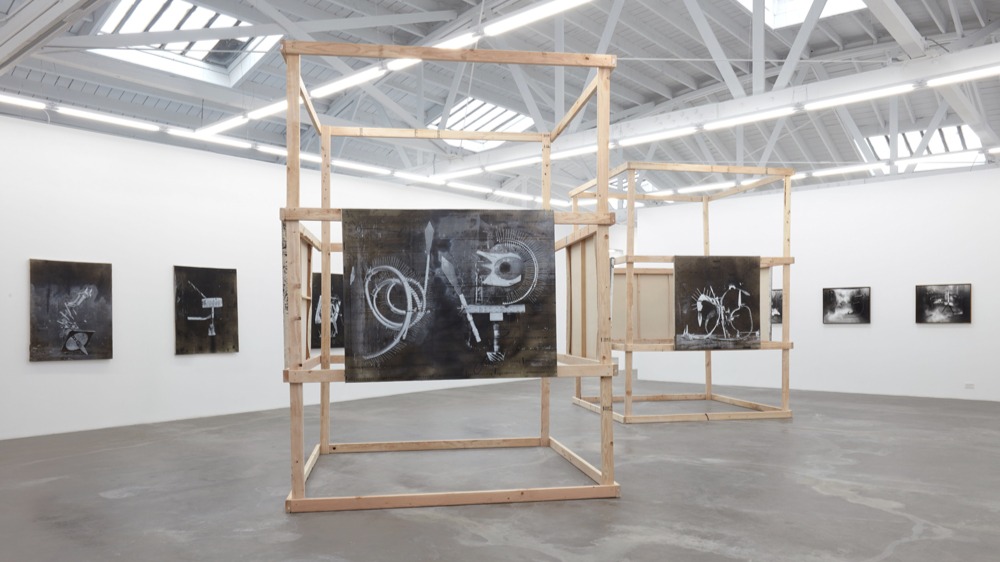
Rodrigo Valenzuela's futuristic vision of a mechanical world devoid of humans is so ominous, it makes us shudder - much like the surrealist films of Luis Bunuel. Valenzuela creates poetry from rebellion in eerie factory scenes that are filled with sinister machines and scary automatons – yet there are no humans in sight or glimpses of nature, except the mist which creates a surreal light. We do not know why the humans have gone or why they have turned machines into dangerous weapons. Was there a revolution? These puzzling, dream-like images are left open for the viewer to interpret. They are so visually well-organized that the underlying aggression and paranoia is almost subliminally felt. As Valenzuela told me, they are “memories from the future.”
Valenzuela is a Chilean-born, Los Angeles based artist who is steeped in film, photography, art history and philosophy. Even though he had a degree in photography from the University of Chile, he worked as an undocumented construction worker when he first emigrated to the U.S. He then earned a degree in philosophy from Evergreen State College and an MFA from the University of Washington before taking a teaching position at UCLA, where he is now the head of the photography department. As the son of a strong union member in Chile, Valenzuela’s experience as a laborer gave him a firm grasp of the plight of the working class in the U.S. today, with the decline of unions and diminishing workers’ rights. As a Latin American, Valenzuela deeply understands what he calls “the aesthetic of protest” which most of us saw for the first time in the Black Lives Matter demonstrations. Valenzuela’s work is also influenced by the Chilean surrealist painter Roberto Matta, and contains many references to the weapons seen in paintings by the Cuban painter Wifredo Lam.
The current exhibition is the third in a trilogy exploring labor themes and automation which contribute to a diminishing workforce. The first exhibition was at Orange County Museum in 2018, and the second at Asya Geisberg Gallery New York in 2020. In recognition of the significance of this ongoing project, Valenzuela was awarded a Guggenheim Fellowship in 2021. This current exhibition coincides with the Great Resignation, which makes it more relevant to the grievances of frustrated workers today.
Valenzuela’s photographs are not only politically important, but they also have a menacing beauty, as he is highly skilled at using composition and lighting to create a sense of mystery. Valenquela makes black-and-white photographic tableaux from fictional scenes he stages - rather like Joel-Peter Witkins, except without people. Inside an eight-foot by sixteen-foot plywood shed in his backyard, which he calls a “theater box,” Valenzuela makes contraptions out of found materials, including washing machine drums, television mounting brackets, computer chairs, styrofoam casing and other detritus he finds in his neighborhood and recycles. Using protruding nails, screws, blades and knives, he transforms this collection of debris into threatening weapons. He told me he goes into his theater box to fantasize, so he constructs things that are a “documentation of the imagination."— Lita Barrie, Feb. 3, 2022

This post is an excerpt. Read the full article on the Whitehot Magazine website.
Read more about Rodrigo Valenzuela.
Stay engaged. Use #UCLAarts to stay connected.


