Rodney McMillian and the poetry of the past
The artist, the subject of three retrospectives currently, finds history in abstraction
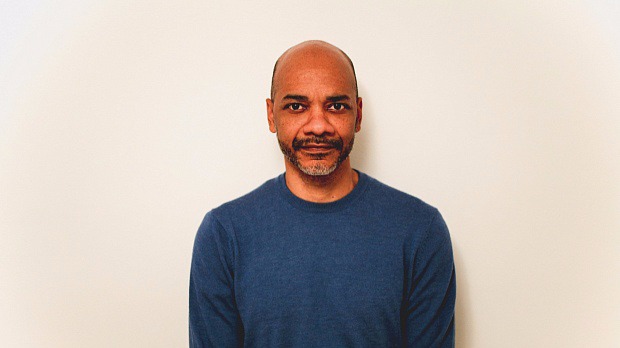
Rodney McMillian, associate professor of sculpture in the UCLA Department of Art, employsa wide range of media and techniques in his artistic practice. An overarching concern in his work is the relationship between language, aesthetics and content.
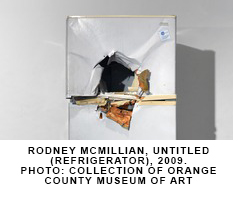
Most artists who get a big break have one major solo museum show. Rodney McMillian (b. 1969) is having three. In New York and Philadelphia, three museums are hosting retrospectives of his work, which addresses a range of subjects, from violence in the domestic realm (in Rodney McMillian: Views of Main Street at the Studio Museum in Harlem) to abstracted landscape painting (Rodney McMillian: Landscape Paintings at MoMA PS1) to the history and conception of “blackness” (Rodney McMillian: the Black Show at the Institute of Contemporary Art in Philadelphia).
McMillian began working as an artist in 1999, when he decided to go to art school instead of the business school to which he had recently been accepted. We spoke with him about his interest in history, his use of sheets as canvas and the complicated history of landscape painting.
The Art Newspaper: In 2006, you read, as a performance, the American president Lyndon Johnson’s Great Society Speech from 1964, which laid out a series of programmes to eliminate poverty and racial injustice. What interested you about that speech?
Rodney McMillian: Primarily, I was interested in the text itself. I was in agreement with a lot of its tenets. It calls for thinking about our education system, about economic and racial injustice; there are lots of things in that text from 1964 that still resonated in 2006. I also think it’s beautifully written and very lyrical. [The performance first happened] during the [presidency of George W.] Bush. I did not find his political rhetoric quite as inspiring, nor as lyrical—at least, it wasn’t a poetic I could relate to. — Pac Pobric, May 4, 2016

Read the full interview at the The Art Newspaper website.