Review: Five pandemic-postponed art shows worth seeing right now
The exhibition Aboriginal Screen-Printed Textiles From Australia’s Top End at the Fowler Museum "offers a gorgeous selection of textiles printed with silk screens in mostly bold patterns and vibrant hues" and is included in the Los Angeles Times' list of "five pandemic-postponed art shows worth seeing right now."
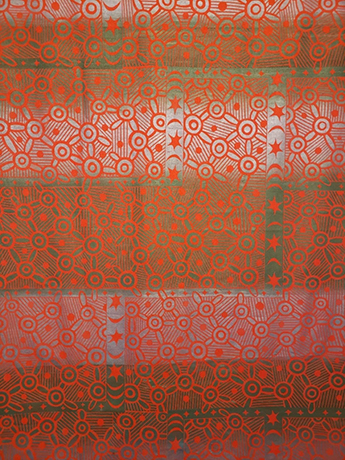
Bede Tungutalum, “Moon and Stars,” 1988, raw silk and ink(Christopher Knight / Los Angeles Times) Dazzling textiles printed with silk screens
Finally, at the Fowler Museum at UCLA, “Aboriginal Screen-Printed Textiles From Australia’s Top End” offers a gorgeous selection of textiles printed with silk screens in mostly bold patterns and vibrant hues. They have been produced since the 1980s by 45 artists working at five Aboriginal-owned art centers in northern coastal regions in the vicinity of Darwin (Australia’s “Top End”). The communities — Tiwi, Jilamara, Injalak, Bábbarra and Merrepen — are small, with populations ranging from a few hundred to a few thousand.
Printed on silk, cotton, linen and other materials using traditional screen-printing techniques — cut stencils or, on occasion, photo transfers — the imagery is figurative as well as abstract. It can represent simple survival objects (fishing traps, fruits, emergency vehicles, palms, burial posts) or esoteric symbols, some legible only to the Aboriginal clan. There’s something appealing about a secret sign language being manufactured into cloth used for commerce in clothing or furnishings — an International Clandestine style.
Among the dazzlers are fine linen panels by Susan Marawarr with copper-metallic striations printed over deep-black crosshatching. (The optical shimmer is like heat rising from the desert floor.) Sonia Namarnyilk layered three stencils to print complex patterns of mermaid-like water spirits, their fluid, bright orange undulations interspersed with playful turtles and rippling billabong plants.
Interlocking waves of blue and white lines punctuated with dots by Kieren Karritpul turn memories of knotted fishnets made by his mom and grandmother into patterns of immensely sophisticated spatial rhythms. The same goes for the crimson moon and stars over silver and gray bands in a Bede Tungutalum textile, which a wall label explains derives from a harvest ritual at the end of monsoon season.
Traditional Aboriginal bark and body painting gained international notice in the 1960s as jet travel shrank the world. In the 1980s, during an art market boom, the paintings entered the commercial mainstream, often to the exploitative detriment of the communities that made them. Textile printing became one means for some of those communities to regain a degree of control, putting their artistic skills to commercial use for their own benefit. The exhibition and its lush catalog, organized by Fowler curator Joanna Barrkman, is a measure of its success. — Christopher Knight, May 11, 2022


This post is an excerpt. Read the full article on the Los Angeles Times website.
Stay engaged. Use #UCLAarts to stay connected.


