Review: Calvin Royal III and Dormeshia Glow at Fall for Dance
Kyle Abraham joined the World Arts and Cultures/Dance faculty in 2016. Abraham’s choreography draws on social politics and personal history to create original work. Born into hip-hop culture in the late 1970s and grounded in an broad artistic upbringing in music and the visual arts, his unique, evocative, and interdisciplinary vision entwines a sensual and provocative vocabulary with an emphasis on sound, human behavior, and all things visual to create an avenue for personal investigation that comes to life on stage.
"The crowds at New York City Center’s Fall for Dance festival don’t applaud politely; they roar. So what happens in the absence of a live audience? In this case, at least, it creates a space to shine a brighter light on the poetics of dance.
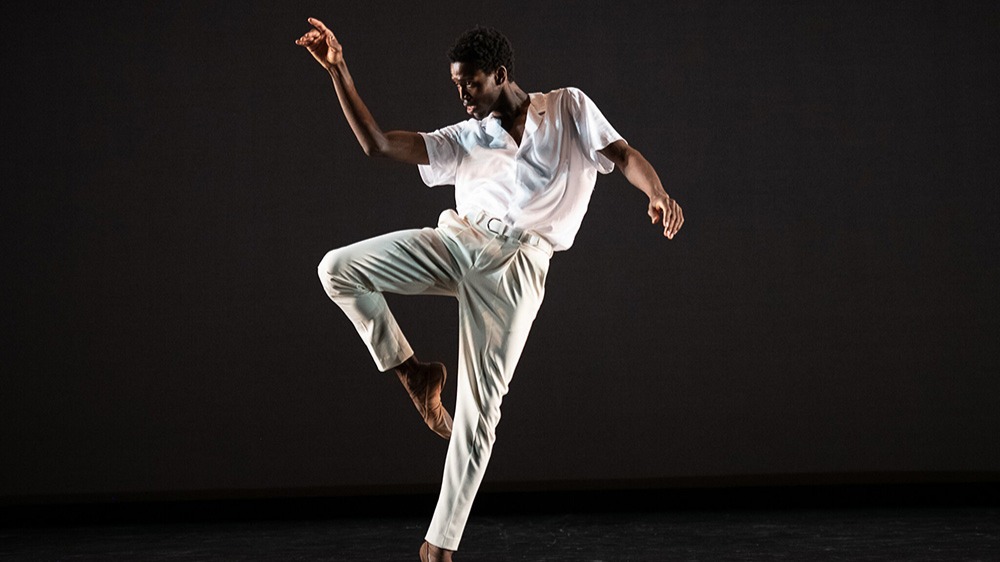
Calvin Royal III, an American Ballet Theater principal, in Kyle Abraham’s “to be seen,” one of two City Center commissions on Program 2. Credit: Christopher Duggan


Monday night’s virtual program, the second of two this year, provided many bright moments. And, similar to the first program, the City Center commissions, here by Kyle Abraham and Dormeshia, were the dances with the most resonance. They were also complete works; the older selections were excerpts, starting with three solos performed by New York City Ballet dancers from George Balanchine’s “Who Cares?” (1970)...
Mr. Abraham, returning to the festival with another solo for a ballet dancer — last year, it was Misty Copeland — showed how skilled he has become at mingling the ballet vernacular with other forms, from hip-hop to West African movement. In the new solo, “to be seen,” he also continued to do what he does best when working with ballet dancers: finding the person within the dancer and the bodies within a body.
This time the dancer was Calvin Royal III, recently promoted to principal at American Ballet Theater. Because Mr. Royal was unavailable for rehearsals, Mr. Abraham choreographed the ballet with the help of Taylor Stanley, a City Ballet star with whom he has worked in the past. The music, I have to be honest, scared me: Ravel’s “Bolero,” a magnet for clichés. But Mr. Abraham used it to his advantage, seemingly inspired more by its flow than its compositional buildup.
Mr. Royal began with his back to the audience, hands in his pockets. Slowly he turned, pulling up the hood of his sweatshirt before taking it off completely: Folding it, he tossed it into the wings like a bowling ball. The combination of everyday movement under Dan Scully’s gorgeous lighting was instantly arresting: Mr. Royal, in his flowing white top and pants by Karen Young, glowed like a god.
It might have been enough to see him glide to the music in any old way. His long, loose arms and elegance of line have a spellbinding grace. But from the start, Mr. Abraham created a breathtaking web of physical references, melding dance vocabulary with pedestrian elements — an urban walk, a shoulder brush. Mr. Royal’s dexterity was exacting in both his acting and dancing. It was also a dance about today: The same arms that had just painted the stage with luxurious strokes suddenly froze in the manner of “don’t shoot!” His hands clenched overhead; that turned into a single arm raised.
How do we move through the world, and how is our movement read? As a ballet dancer, Mr. Royal is much-admired on the stage; what happens when he steps outside? In the end, there was a reason “to be seen” was set to “Bolero.” It builds and grows, just like the social movements of today: Black people are demanding to be seen."— Gia Kourlas, Oct. 27, 2020

This post is an excerpt. Read the full article on the New York Times website.
Stay engaged. Use #UCLAarts to stay connected.


