Reflecting on COVID-19: A year in the pandemic life
As the UCLA community marks one year of working and studying from home, Tria Blu Wakpa, assistant professor of world arts and culture/dance, and other Bruins share what they’ve experienced and learned during the past year.
"It was about one year ago that the coronavirus pandemic brought day-to-day life on campus to a halt and most UCLA students, staff and faculty began a primarily at-home existence.
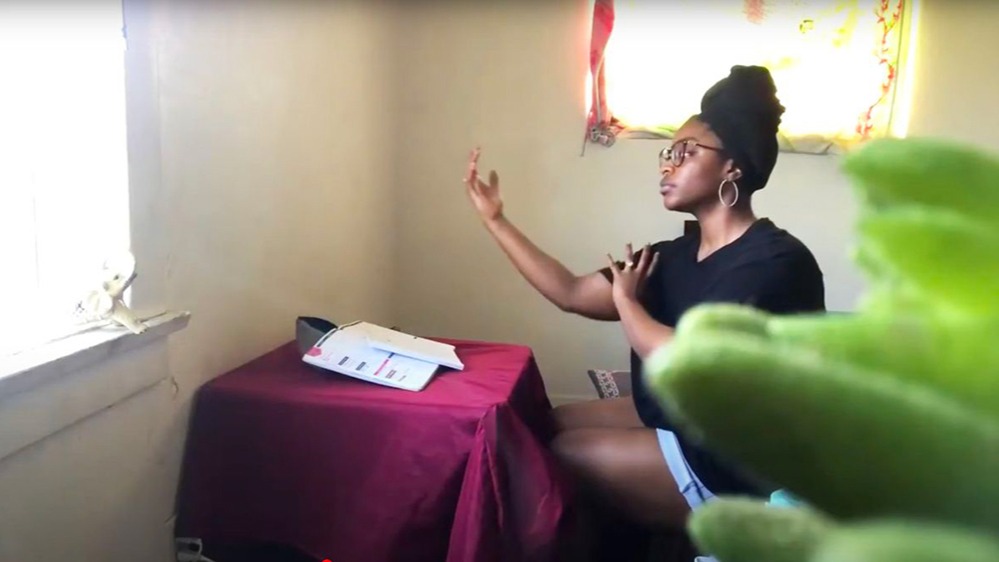
Screenshot from “Roads to College,” one of the projects created by students in Tria Blu Wakpa’s dance class. While isolation at home was the biggest challenge for some, others grappled with how to find enough physical and mental space to handle a full-time job while caring for and homeschooling children. Some empty nesters welcomed back college-aged children. People around the world faced anxieties about their own health, the health of loved ones and business shutdowns. Social engagements were abandoned and Zoom happy hours, Netflix, cooking, knitting, writing and board games filled people’s time. Many participated in the Black Lives Matter demonstrations against police brutality and murder, while others read or watched them on the news.
Below a few Bruins share some of their thoughts and feelings about how the pandemic has affected them.
Tria Blu Wakpa, assistant professor of world arts and culture/dance
"Spring was an exceedingly challenging time because it wasn’t only the COVID-19 context, but it was the murder of George Floyd. A lot of the students in my classes were out there in the streets protesting for social justice. In week nine or 10, one of the students turned on the camera and said, “The National Guard is right outside my window. I can’t do this, I can’t turn in my final paper.” There have been a lot of challenges for students. The university has encouraged us to consider the immense challenges that people are going through: loss of income, death, financial instability, George Floyd, the election, inauguration. Accessing stable wi-fi is a challenge, and navigating multiple things and levels of inequity, professors have to be aware of that and very understanding of that.
A year later, I am teaching “Dance 44, World Dance Histories,” a general ed course, where I have mostly undergraduate lower division students, a cohort of dance students, and students from all across campus majoring in the sciences. To me it feels like those underlying challenges are still there, it also feels like students are more comfortable in online learning, and I’m more comfortable in online learning. The remote environment has challenged students to make dances on screens, learn how to edit, think about close ups of different parts of the body. In “Dance 45, Introduction to Dance Studies,” students used to make these dances in groups in person, but now maybe someone does a solo, splits the screen, now there are people dancing in two or more places, students are really considering the screen dance component and utilizing Instagram in very different ways for them to work. Now, for the first time, many students have videos of the dances that they showed in class, which they can circulate and watch for years to come. We’ve also been able to bring presenters to the university without having to pay for expenses, and reducing our carbon footprint.
I share with my students, sometimes it can be useful when you’re making a list of everything that’s going wrong, to also make a list of everything going right." — Elizabeth Kivowitz, March 24, 2021


This post is an excerpt. Read the full article on the UCLA Newsroom website.
Read more about Tria Blu Wakpa.
Stay engaged. Use #UCLAarts to stay connected.


