Radical Latinx Artists Reveal The Violent Sides Of Pregnancy And Motherhood
Part of Pacific Standard Time: LA/LA, Radical Women: Latin American Art, 1960—1985 at the Hammer Museum reappraises the contribution of Latin American women artists and those of Latino and Chicano heritage in the United States to contemporary art. In a way that no other exhibition has done previously, Radical Women gives visibility to the artistic practices of women artists working in Latin America and US-born women artists of Latino heritage between 1960 and 1985—a key period in Latin American history and in the development of contemporary art. Fifteen countries are represented by more than one hundred artists.
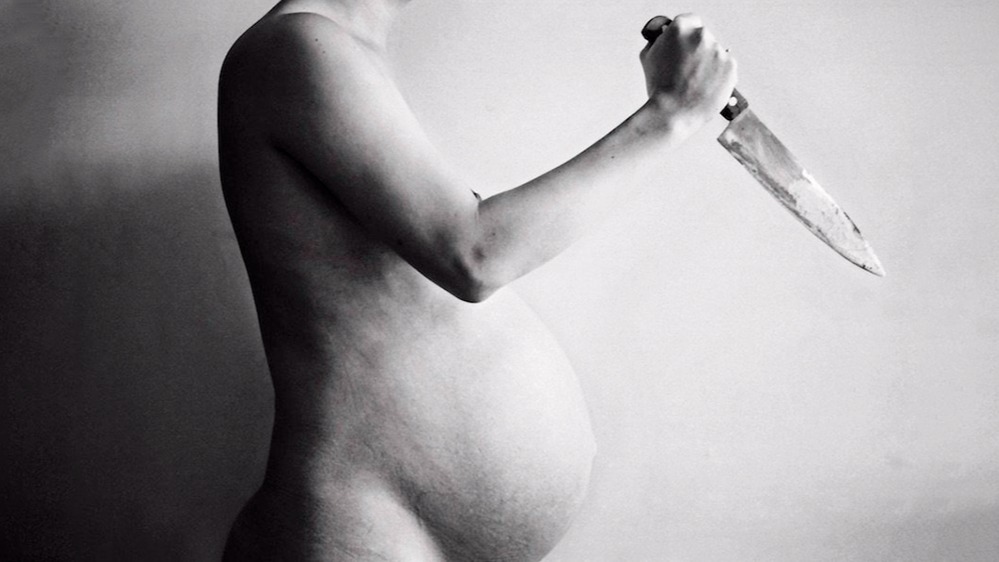
"In 1985, Cuban-born, Mexico-based artist Marta María Pérez held a knife to her naked, pregnant stomach and took a picture. The resulting black-and-white photo shows the knife-wielding mother-to-be, her face cropped out, her individuality erased. It’s a jarring representation of motherhood, a far cry from the sunny, idealized images that flood social media and lifestyle magazines. Images that suggest mothers are ― and should be ― docile, domestic, faultless and, more often, white.
“I immediately thought of the movie ‘Psycho’ when I saw this photo,” writer NeKelia Henderson wrote in 2010 of Pérez’s work. “Well, the maternity version anyway.”
Pérez’s photo is part of “Radical Women: Latin American Art, 1960-1985,” an expansive survey of work by Latinx women now on view at the Hammer Museum in Los Angeles. Together, the women paint a picture that diverges from the endorsed model of motherhood, blissful and devoid of complications or conflict. Instead, their moms are political, angry, salacious, outspoken, spiritual and experimental. Their images of motherhood welcome pain as well as love, truth as well as fantasy, horror as well as tranquility.
As Hammer guest curator Andrea Giunta, who organized the exhibition along with Cecilia Fajardo-Hill, put it: “They propose more realistic maternities, crossed by different cultural, social and political registers."— Priscilla Frank, Oct. 23, 2017

Read the full article at the Huffington Post website.
Read more about Radical Women here.