Race, justice, power: Finding new relevance in Kurt Weill's 'Lost in the Stars'
The Los Angeles Times reviews "Lost in the Stars" in Royce Hall
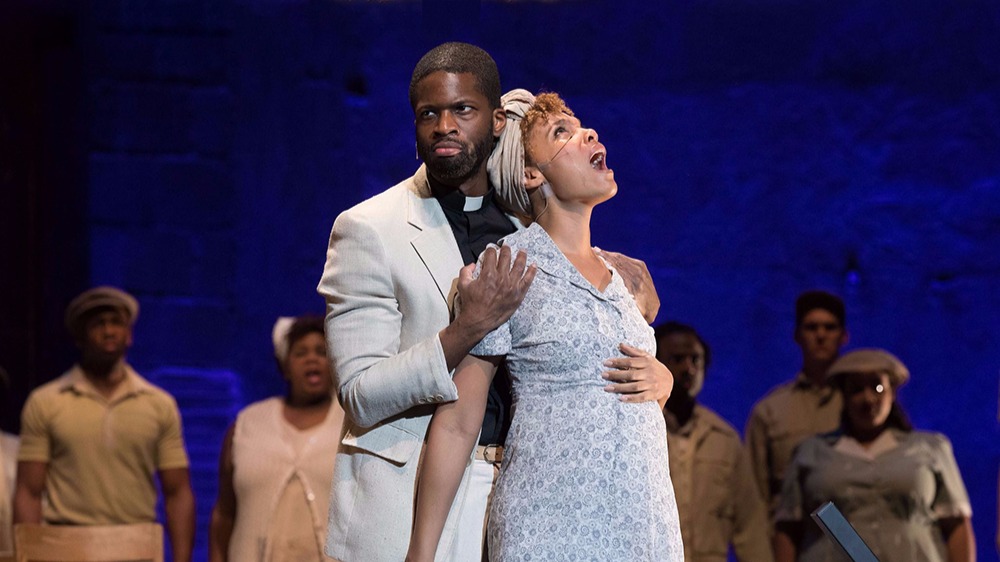
The Los Angeles Times says Kurt Weill’s “Lost in the Stars” fits the mood of our times as much as its own and describes David Roussève’s choreography as "stunning... as though warning how injustice thrives when events are allowed to control the will of the people."
The arts and entertainment communities — anticipating government cutbacks, harmed by a presidential travel ban, alarmed by an atmosphere of divisiveness and invigorated by mass protests — have already declared war on a new Washington. And if music theater, a potent vehicle for any opposition party, appears uncannily ready for a new era of protest art, it has had a lot of practice.
Los Angeles Chamber Orchestra had a good cry for a beloved country Sunday night at Royce Hall, where it performed the second of only two performances of Kurt Weill’s “Lost in the Stars,” staged by Anne Bogart and co-produced by the Center for the Art of Performance at UCLA.
Premiered on Broadway in 1950 and based on South African novelist Alan Paton’s anti-apartheid bestseller, “Cry, the Beloved Country,” “Lost in the Stars” is the theatrical collaboration between an émigré composer who had fled Nazi Germany and American playwright Maxwell Anderson. It was hailed as ushering in a new chapter in American opera, one that shared roots in Mozart’s politically astute Singspiel, Weimar Republic agitprop musical theater and the Broadway musical.
David Roussève’s stunning choreography was about propulsion, as though warning how injustice thrives when events are allowed to control the will of the people.
“Lost in the Stars” can seem a lot of things. Weill’s score has its popular elements and its operatic ones. But the tragedy and political motivation require the additional weight of the oratorio, with mighty choral numbers and an oracular solo tenor/narrator."— Mark Swed, Jan. 30

Read the full article at the Los Angeles Times website.