Q&A: Graduate student explores bounce dance’s link to traditional Louisianian parades
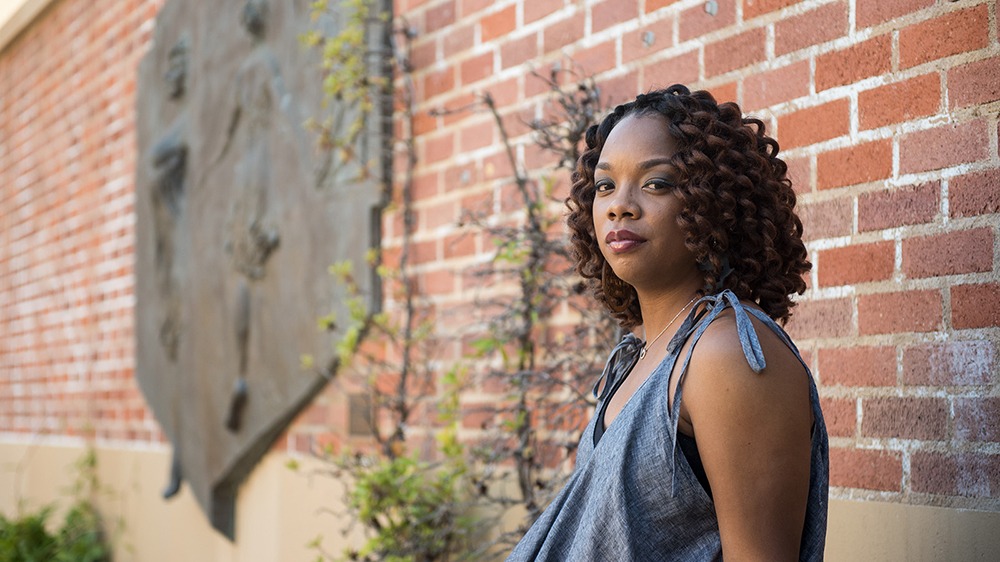
Saroya Corbett is a graduate student in world arts and cultures/dance conducting research on bounce dance in New Orleans and majorette performance in Baton Rouge. In this gallery talk, Corbett incorporates Pableaux Johnson’s photographs of Second Line parades as she reflects on her recent fieldwork in New Orleans for Mardi Gras 2019.
"Mardi Gras isn’t just a one-day event – it’s a whole season, said Saroya Corbett.
Graduate student Saroya Corbett will conduct a talk at Fowler Museum on Friday about traditional second line parades in Louisiana. She plans to discuss her research on bounce dance while incorporating the exhibit "New Orleans Second Line Parades: Photographs by Pableaux Johnson." (Eli Countryman/Daily Bruin senior staff) Corbett, a graduate student in world arts and cultures/dance, will conduct a talk at the Fowler Museum on Friday discussing her personal experience with the traditional second line parades of Louisiana.
Corbett said she plans on incorporating the museum’s exhibit “New Orleans Second Line Parades: Photographs by Pableaux Johnson” and her research on bounce dance.
The style developed from bounce – a genre of hip-hop that originated in New Orleans, Corbett said. Corbett, also a professional dancer and a dance educator, spoke with Daily Bruin’s Alexsandra Coltun Schneider about her findings on the impact and importance of bounce dance.
Daily Bruin: What do you plan on discussing in your gallery talk?
Saroya Corbett: I am new to (the) culture of the second line, as my research isn’t necessarily focused in second line. But part of learning the cultural landscape of southern Louisiana, and particularly New Orleans, I’ve taken the time to participate and learn about the practice. I am working on making it interactive … and give (the audience) a small sense of the feeling of what a second line is like, because it is something you can never really create. I’ll share some of the history that I’ve learned and some of the experiences that I’ve had during my three trips down to the region.
DB: What are some of the feelings you are trying to recreate for the audience during your talk?
SC: Second line is definitely a celebratory tradition, and so the music is important, and the dance is important. Those are the two main elements of the parade. I’m going to play some music and encourage people to move throughout the exhibit with me. Encouraging people to do what they do and just enjoy the music and the sense of community that is built around second lines … is a major part of it. What is really wonderful about second lines is that it’s kind of a takeover of space, being that New Orleans, in particular, is going through gentrification. Particularly, it has been accelerated after (Hurricane) Katrina, and outsiders have come in, bought our property (and) completely skyrocketed the cost of living there.
(Second line) is an African-derived tradition, or black tradition, where they take over the street, and for that time period on the parade route, it becomes about this beautiful tradition."— Alexsandra Coltun Schneider, Apr. 24, 2019


This post is an excerpt. Read the full article on the Daily Bruin website.
Stay engaged. Use #UCLAarts to stay connected.


