Q&A: Filmmaker Astra Taylor explores democracy in documentary to be shown at UCLA
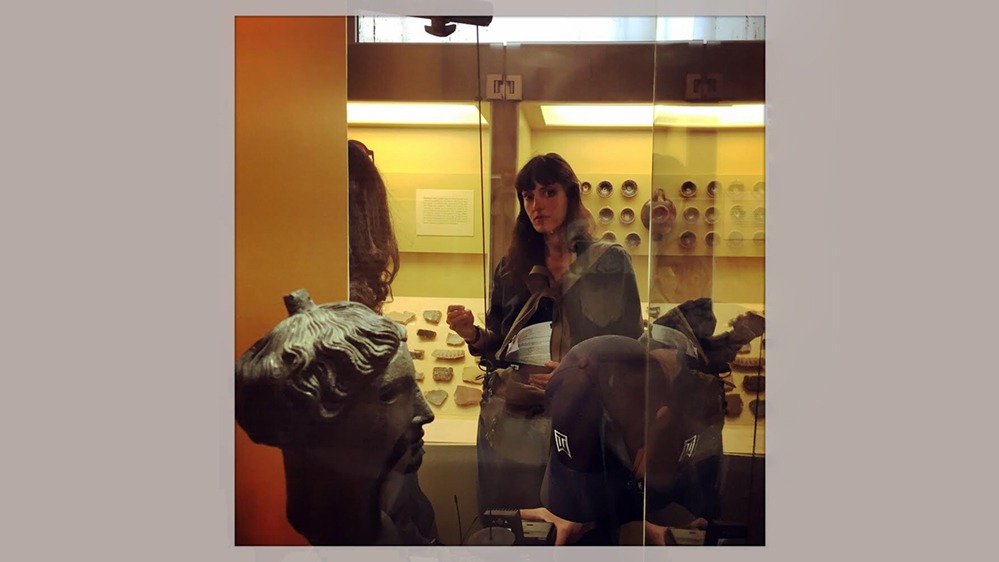
Canadian-American writer, documentarian, and organizer Astra Taylor is known for exploring philosophy, politics, and culture. She is a fellow of the Shuttleworth Foundation, for her work on challenging predatory practices around debt. She will present her documentary “What is Democracy?” and a UC Regents Lecture in the UCLA Broad Art Center.
"Astra Taylor discovered that democracy takes on different meanings depending on whom you ask.
Regents Lecturer Astra Taylor created the documentary "What is Democracy?" It follows Black Lives Matter protestors, refugees and the works of classical philosophers to explore the titular question. (Courtesy of Astra Taylor) The Regents Lecturer and filmmaker of the documentary “What is Democracy?” will showcase her work to UCLA students at the Broad Art Center on Tuesday. Taylor said she used her background in political activism against student debt as her inspiration for the project. The film explores the titular question by engaging with Black Lives Matter protesters, refugees and the works of classical philosophers. It takes on the goal of starting a conversation about the complexities of the issue of the successes and failures of democracy in the past as well as today, she said.
Taylor discussed her filmmaking process and her own definition of democracy with the Daily Bruin’s Brooke Cuzick.
Daily Bruin: How would you describe “What is Democracy?”
Astra Taylor: The film asks the question, “What is democracy?” And it’s not a film that then says, “Okay, democracy is elections, democracy is the rule of law, democracy is the constitution, democracy is the rights of minorities,” even though democracy does contain all of those things. The film instead is philosophical in its purpose and its whole structure. … And so I go around in the film and ask this question of all sorts of people. … It looks at the problems of economic inequality and racism in the United States, and it looks at the global financial crisis and the refugee crisis in modern Greece. But then it also goes back to democracy’s ancient roots in Athens. … There are interviews with famous philosophers: Cornel West and Wendy Brown and Silvia Federici and Angela Davis. But then there are also interviews with all sorts of regular people, including kids. And so you get this sort of very kaleidoscopic portrait of a world in crisis, but also a world where there’s still a lot of democratic potential.
DB: What inspired you to make a film about this topic?
AT: For me, it was being an activist myself and thinking about why democracy is such a difficult principle to put into practice. It’s also a word that a lot of people say. So political leaders – whether they’re right wing or left wing – will say it. … The majority of countries in the world right now actually describe themselves as democracies, even if they don’t live up to that standard, even according to official measurements. … So it’s just this word that is everywhere, to the point where I felt like was almost meaningless. And I knew that it was a word that should be meaningful. … So I wanted to make this film to sort of give myself an opportunity to think more deeply about the concept and invite other people to think with me about it."— Katie Gerfen, Feb. 12, 2019


This post is an excerpt. Read the full article on the Daily Bruin website.
Stay engaged. Use #UCLAarts to stay connected.


