Play adapting untold stories of John Fryer’s LGBTQ+ activism takes UCLA stage
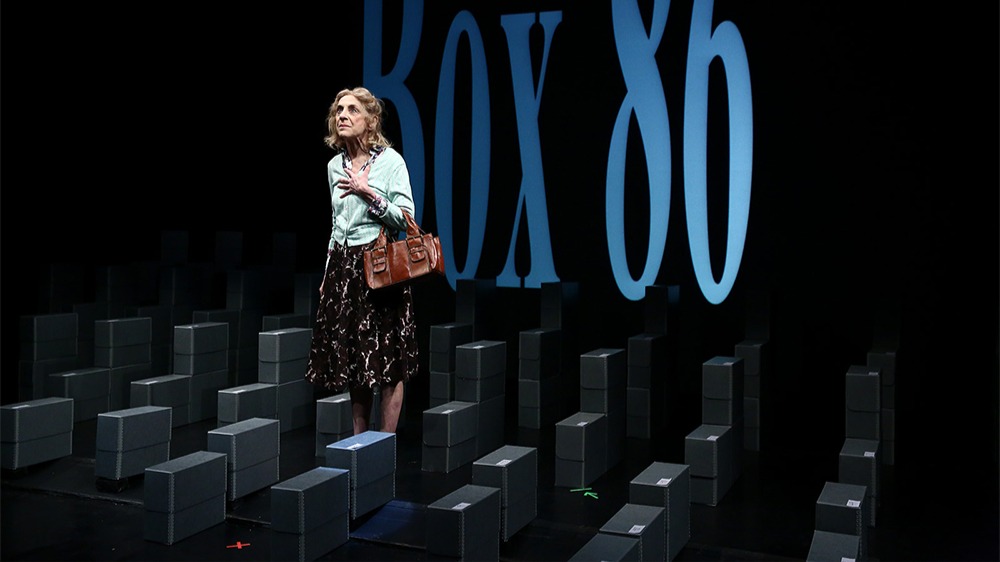
217 Boxes of Dr. Henry Anonymous, presented by UCLA's Center for the Art of Performance and the UCLA School Of Theater, Film And Television tells the largely unknown story of a courageous gay psychiatrist whose activism made a profound and lasting impact on LGBTQ civil rights. Disguised in a mask and using a voice modulator, John E. Fryer testified as Dr. Henry Anonymous on a homosexuality panel at the 1972 Annual Meeting of the American Psychiatric Association (APA). Facing the loss of his medical license should his identity be discovered, Fryer’s testimony resulted in the APA’s removal of homosexuality from its Diagnostic and Statistical Manual of Mental Disorders (DSM) in 1973. Drawn from 217 boxes of Fryer’s personal papers, Obie Award-winning writer/director Ain Gordon re-imagines this historic moment through the eyes of three key figures in Fryer’s life, bringing it to UCLA to coincide with the 50th anniversary of the Stonewall riots. Featuring Laura Esterman, Derek Lucci, and Ken Marks.
"Sometimes a single box can hold the answers to a pivotal moment in history.
Laura Esterman stars as Katherine Luder in the Center for the Art of Performance at UCLA's newest production, "217 Boxes of Dr. Henry Anonymous." The production, written and directed by Ain Gordon, tells the story of John E. Freyer through the secondary characters in his life like Luder, his personal secretary. (Courtesy of Paula Court) The Center for the Art of Performance at UCLA’s production of “217 Boxes of Dr. Henry Anonymous” addresses a vital-yet-hidden figure in the history of LGBTQ+ rights. Running at the Freud Playhouse until Saturday, the play focuses on the story of psychiatrist John E. Fryer when he professed his homosexuality at an annual meeting for the American Psychiatric Association in 1972.
Donning a rubber mask and oversized tuxedo to conceal his identity, Fryer gave a speech that would pave the way for the destigmatization of homosexuality as a mental illness in the following years. The play, written and directed by Ain Gordon, sheds light on the relatively unknown doctor from the lens of three important figures in his life – his ally, his secretary and his father.
“One of the things that interests me is the ways in which communities, … people of color, queer people, women at various times, needed to fly under the radar in order to to survive and to gain power,” Gordon said. “They didn’t leave behind the kind of trace that mainstream history requires in order to historicize them, because they were trying not to be seen. Therefore, their stories remain untold.”
Under a fellowship from the Historical Society of Pennsylvania, Gordon said he had access to large archives of U.S. historical documents to base a story on, with the only requirement being that it addressed a personal battle for public liberty. Starting with around 80 million documents in archive materials, Gordon said he first came across a photo of Fryer in his disguise, unaware of who he was. When Gordon asked the front desk of the archive room about Fryer, they were able to produce every document acquired from Fryer’s home following his death – 217 boxes of documents, to be exact."— Phillip Leung, Oct. 10, 2019


This post is an excerpt. Read the full article on the Daily Bruin website.
Stay engaged. Use #UCLAarts to stay connected.


