Pioneering video artist Ulysses Jenkins on creating new images of Black life
The retrospective Ulysses Jenkins: Without Your Interpretation at the Hammer Museum recognises the artist’s groundbreaking role in the video art movement when the medium emerged in the 1970s. His works are marked by a pointed critique of mainstream media, specifically dealing with the representation of Black people and members of other marginalised communities.
Jenkins studied under artists including Charles White and Chris Burden, and spearheaded several art collectives, including Studio Z, alongside David Hammons, Senga Nengudi and Maren Hassinger. This overdue exhibition recognising his contributions premiered at the Institute of Contemporary Art in Philadelphia last year and has been organised by the curators Erin Christovale and Meg Onli.
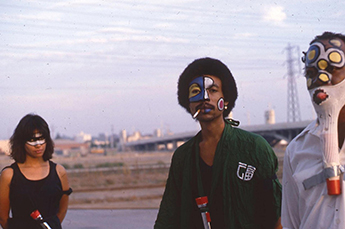
Participants rehearse for Without Your Interpretation (1984). Jenkins’s video works critique the representation of Black people in mainstream media. Courtesy of the artist and The Hammer Museum What propelled you to become an artist?
My first interests were drawing and painting. I saw my father doodling and thought it was fascinating. I used to draw these characters and landscapes for my siblings and make cutouts, not realising at the time that I was making installations. From that point forward, I was painting and drawing all the time. When I was getting through my undergraduate education at the Southern University in Baton Rouge, Louisiana, I became interested in Charles White and started doing ink drawings and etchings and fashioning my work behind that stylisation.
You returned to Los Angeles in 1970 and enrolled at the Otis Art Institute in 1977. What happened in between?
When I came back home, the idea of having an art career was circumspect, primarily because there weren’t many galleries interested in exhibiting Black artists. I briefly worked in the Los Angeles Probation Department as a counsellor and began making murals as I was leaving probation work in 1972. The first one was on Venice Beach, called The Rat Trap. It showed Los Angeles on top of a mouse trap as a metaphor for the trappings of finance and materialism. There were skulls to indicate that these things were killing us, and also marijuana fields to express that you could maybe understand this concept if you got high.
What inspired your shift from painting and mural-making to video work?
When I was making the Venice Beach mural, a friend of mine, who was also a painter, told me about this video workshop on the boardwalk. I was interested, in a sense, because I was interested in the rise of independent filmmaking in the 1960s-70s. Two films in particular that inspired me were Easy Rider and Sweet Sweetback’s Baadasssss Song. I caught the video ‘jones’ and ended up recording Remnants of the Watts Festival (1972-73) using a Portapak, the first portable video recording device. I thought the festival was misrepresented, and this was a chance to create my own visual expression. That footage received a lot of attention and still does, not surprisingly.
The title of the exhibition, Without Your Interpretation, is drawn from a work you made in 1983. What does it mean?
I had reached a point where I thought I had to tell the people who were not understanding my work that the work lives without your interpretation. Primarily because these people would not want to learn anything about the Black experience that I was commenting upon, and because they seem to not allow me to have a voice outside of the hood. I recognised the way they characterised and restricted what the Black voice could be in
the arts. It was proclaiming: “This work is without your interpretation because you seemingly don’t want to understand what I’m trying to say.” — Gabriella Angeleti, Feb. 18, 2022


This post is an excerpt. Read the full article on the The Art Newspaper website.
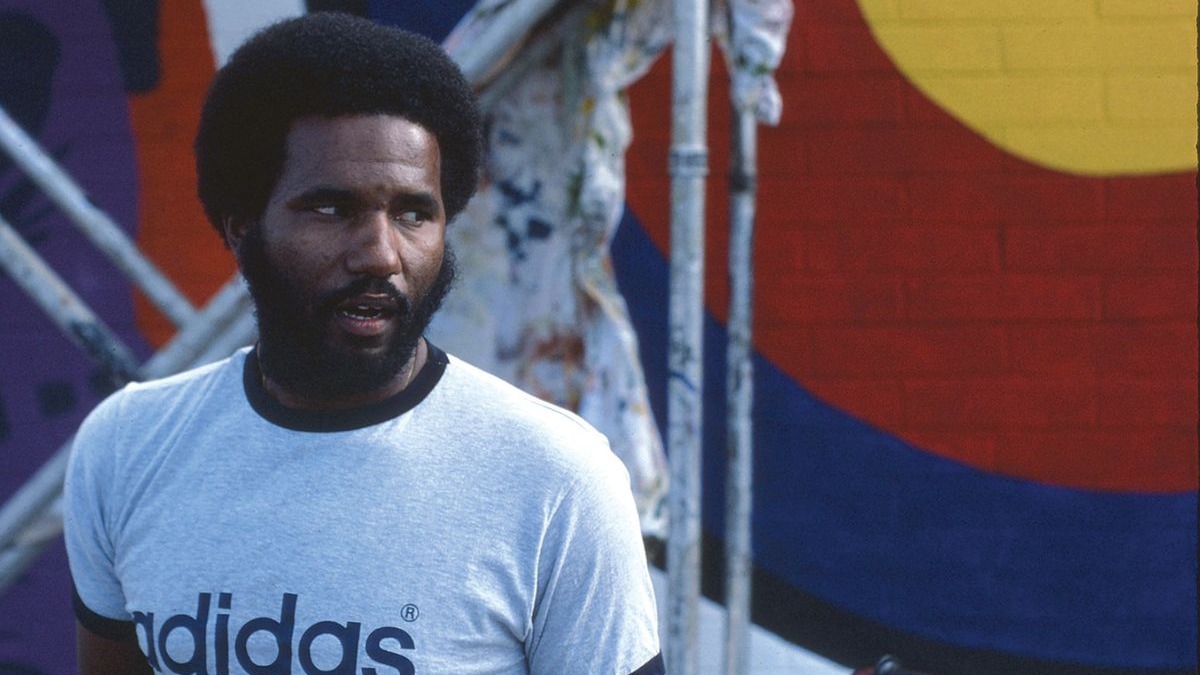
HEADER IMAGE: Ulysses Jenkins’s Centinela Valley Juvenile Diversion Mural Project documentation (1976). Courtesy of the artist and The Hammer Museum
Stay engaged. Use #UCLAarts to stay connected.


