Photographer to speak on his images of traditional New Orleans parades
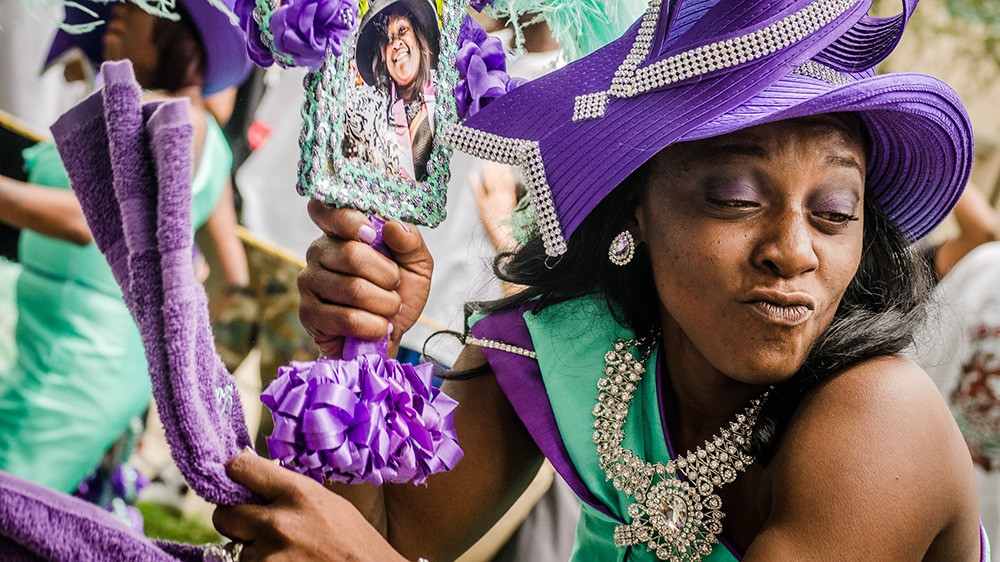
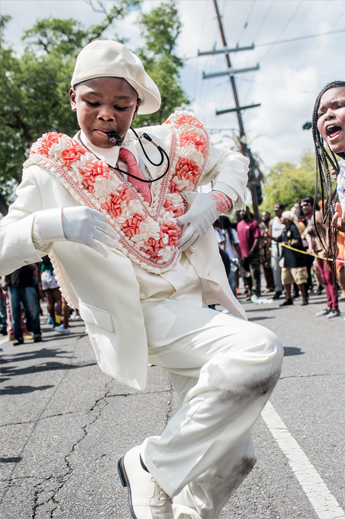
Louisiana native Pableaux Johnson has been photographing Second Lines—or Sunday brass band parades—in New Orleans for over a decade. This exhibition presents more than 40 color portraits of members of African-American Social Aid & Pleasure Clubs (SAPCs). Originating as benevolent associations dedicated to charitable work within the black community, the clubs have taken to the streets on special occasions for generations. Unmistakable in custom-tailored suits and gowns, matching hats and shoes, and colorful accessories such as parasols, sashes, and feathered fans, they parade through their neighborhoods accompanied by local musicians playing trombones, trumpets, tubas, and drums. Mixing together with crowds of all ages, the procession embodies a rich tradition of music, movement, and the demonstration of cultural pride.
This exhibition is organized by Patrick A. Polk, Curator of Latin American and Caribbean Popular Arts, Fowler Museum and guest curator Jeri Bernadette Williams.
"A staple tradition in the streets of New Orleans will parade its way to UCLA.
Second line parades are put on by social clubs in New Orleans once a week 40 times a year, a tradition that has been signature to the city since the 1800s. Social club members dress in bright costumes and dance to New Orleans brass bands during the parades. (Courtesy of Pableaux Johnson) On Saturday, Pableaux Johnson, a Louisiana native who photographs second line parades in New Orleans, will be conducting an artist talk at the Fowler Museum at UCLA. At the event, he will lead attendees through an exhibition featuring his photographs of second line parades and speak about the culture he documents. The parades are put on by social clubs each week, a tradition that has been a signature of New Orleans since the 1800s. Johnson approaches photographing the parades as a means of intimately documenting an aspect of New Orleans culture that isn’t found anywhere else, he said.
“You’re lucky enough to put your eyes toward what’s going on in your city and how these traditions are changing and evolving on your watch,” Johnson said.
Social aid and pleasure clubs, or simply social clubs, in New Orleans began as a form of quasi-insurance. During the 1800s, much like an Irish-American club in Boston, African-American communities would pool funds together and lend out money when a member of the community was in need, said Patrick Polk, a world arts and cultures lecturer and one of the curators for the exhibition. These organizations thus historically became rooted in a community-based, philanthropic identity that has survived to the present day.
Today, there are 60 to 80 social clubs in New Orleans, Johnson said. On 40 Sundays of the year, a different club puts on a second line parade full of grand displays of fashion, music and culture. Members of the club dress in bright and intricate costumes and show off elaborate dances, all to the tune of New Orleans brass bands, which combines many elements of African-American music since the turn of the century, including jazz, hip-hop and funk. Johnson documents these bright and exuberant moments with his camera, preserving the traditions found in the parades, Polk said."— Deirdre Klena, Jan. 23, 2019


This post is an excerpt. Read the full article on the Daily Bruin website.
Stay engaged. Use #UCLAarts to stay connected.


