New exhibition at Fowler Museum highlights Maroon arts from Suriname
The show of works from the permanent collection runs until Sept. 9
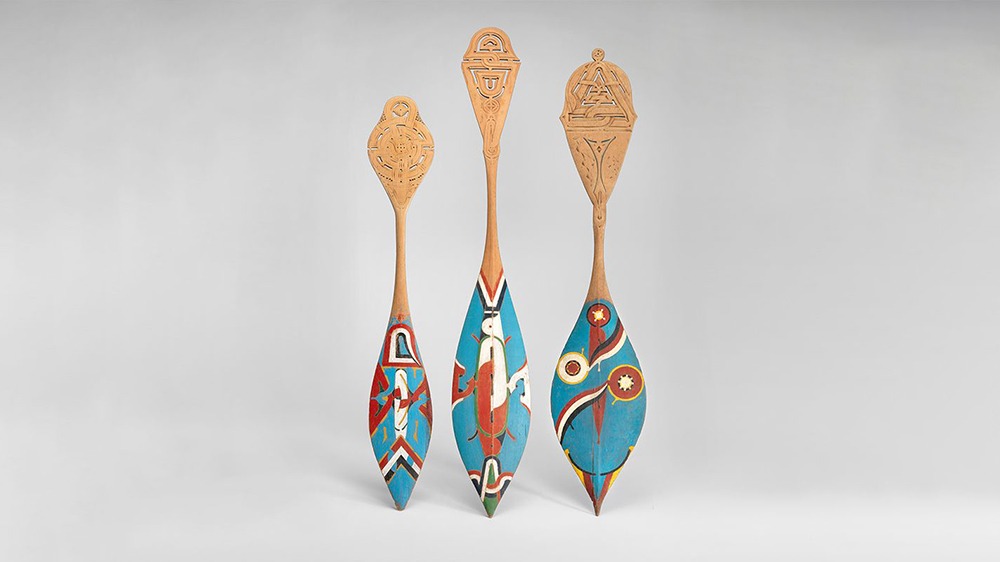
"Maroons hold a special place in the history of Africans and their descendants in the Americas. From the mid-1600s, their enslaved ancestors escaped the coastal plantations of the Dutch colony of Suriname and established free communities deep in the interior where the riverine and forested landscape provided both mobility and security.
Maroon peoples have long been renowned for tembe, traditional art forms including domestic architecture, vibrant textiles and intricately carved household objects. The works included in this exhibition are drawn from the Fowler Museum’s permanent collection and date from the last century. They exemplify ways in which sculptors and textile artists utilize color and geometric pattern to transform items meant for daily use into works of art infused with personal and communal meaning. Today, while Maroon is the most widely employed ethnonym, some prefer to describe themselves as Fiiman, meaning “Freemen” or “Free People.” Both terms evoke a legacy of resistance and self-determination that remains critically relevant; we use them interchangeably in this exhibition.
Since Suriname’s independence from the Netherlands on Nov. 25, 1975, Maroon populations have faced major economic, political, and social challenges that have significantly affected many aspects of their way of life, including artistic practices. Nonetheless, tembe remains an important element of being Fiiman. The exhibition, “Fiiman Tembe: Maroon Arts from Suriname,” opens with an array of objects carved in wood, studded with tin or metal nails, or painted in the colors of Suriname and the Netherlands. These embellishments derive from African, European, and indigenous Amerindian artistic traditions — often seamlessly — as reflected in three meticulously carved canoe paddles on view. Perhaps the most widely recognized genre of Fiiman tembe, canoe paddles are representative of personal independence and mobility, and are prized possessions as well as symbols of leadership."— Eric Conners, May 25, 2018

This post is an excerpt, read the full article on the UCLA Newsroom website.
Stay engaged. Use #UCLAarts to stay connected.


