MoMa to display UCLA alum’s work exploring identity, portraiture
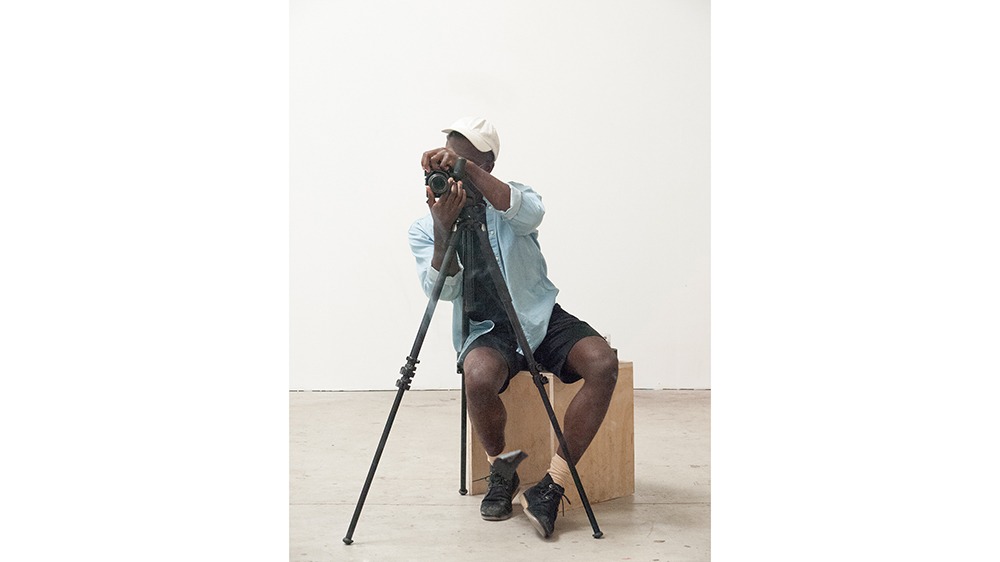
Paul Mpagi Sepuya (M.F.A '16) makes photographs, books and installations rooted in portraiture, homoerotic visual culture and the function of the studio. Sepuya says, "My working process plays off of what Brian O’Doherty calls the “collage of compressed tenses [within] studio time.” Every photograph contains within it the instances of what preceded it. In thinking of photography this way, I am able to bring together and embrace the contradictions that photographic production generates: in its accelerated gratification of desire and simultaneous displacement of its subjects by the resulting image-objects. It allows me to hold, within the studio, all material as potential. Each enters into the frame of another within a chain of production, revision, destruction and re-production."
"Paul Mpagi Sepuya’s photos of cameras, mirrors and fragmented bodies will take over the walls of the Museum of Modern Art in New York.
The six photos are a part of MoMa’s “Being: New Photography 2018″ exhibition, which opens Sunday and runs until Aug. 19. The exhibition assembles works of 17 photographers that express the concepts of personhood in relation to identity, community and psychology. Sepuya, a UCLA alumnus, said his work features photographic equipment and studio space as a means of examining the ways identity and individuality – of both the image-maker and the subject – manifest in the construction of an image.
“I am interested in how we let images, identity and subjectivity go into the construction of an image,” Sepuya said. “How central elements of photography break it apart and how it relates to ideas of gender, race, sexuality, community and friendship, and how all those come together.”
In “A sitting for Matthew (_R2A9192),” which was shot in 2015, a black drape swallows two-thirds of the composition. A sliver of space at the top reveals a collage-like compilation of a hand, a face, a lower body and a tripod leg.
Sepuya said the staging props in the photo – fabrics, mirrors and the camera equipment itself – are typically found in photography studios and reference the history of photography, from its beginnings in the early 19th century to modernist practices.
“(The elements) are tied to a point in time starting in the 1920s and ’30s with (the emergence of) a more self-acknowledged gaze in photography,” Sepuya said. “You put a drapery and a column and mirror, and it’s art instead of a naked person.”
More recent pieces, such as “Untitled,” a self-portrait of Sepuya sitting on the edge of a bench in the nude framed by a jet-black curtain, demonstrate this self-consciousness: The photographer is not a mere extension of their camera. Rather, their camera is an extension of themselves. The photo features Sepuya’s bare back turned to a smudged mirror in which viewers see the reflection of his body and a camera lens pointing out of the frame."— Lisa Aubry, Mar. 14, 2018

This post is an excerpt, read the full article on the Daily Bruin website.
Stay engaged. Use #UCLAarts to stay connected.


