Meleko Mokgosi's Democratic Intuition
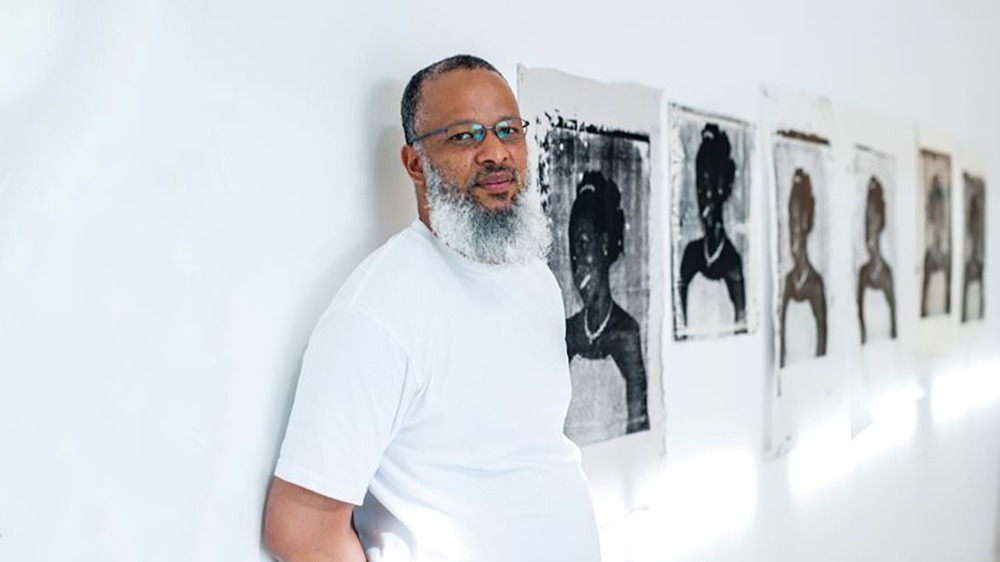
Department of Art Alumnus Meleko Mokgosi’s ongoing series, Democratic Intuition, seeks to explore ideas about the many ways that democratic concepts influence our lives, loves, and relationships on macro- and micro-levels. This twenty-panel installation interrogates the theme of feminism in the context of southern Africa, and considers the consequences of dividing labor practices by gender. Mokgosi describes himself as a history painter, a term not used by many contemporary artists.
"On the occasion of his first solo exhibition in Europe, Democratic Intuition, at Gagosian in London (29 September–12 December 2020), Meleko Mokgosi describes democracy as incompatible 'with the various systems and institutions that support dominant forms of subjectivity or humanism in general'.
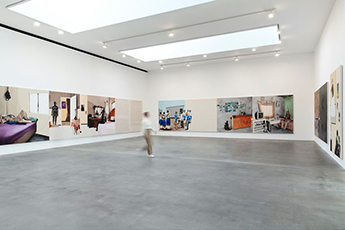
Exhibition view: Meleko Mokgosi, Democratic Intuition, Gagosian, Britannia Street, London (29 September–12 December 2020). © Meleko Mokgosi. Courtesy Gagosian. Photo: Lucy Dawkins. As democratic superpowers yield force through trade, currencies, and a weighted global financial system, economic and political influence not only remain incongruent with the nature of democracy, but also reproduce institutionalised violence. It has been the business of this Botswana-born U.S.-based artist and writer to challenge the structural racism embedded into democratic systems, which his figurations of blackness lay bare.
The ongoing eight-chapter project Democratic Intuition (2013–present) can be read as a response to such conditions: an extraordinary multi-panel epic composed of pulsing depictions of Southern African and Black American life on raw canvas backgrounds, along with confessionary poems, literature, and annotated canvas text.
Building on the techniques of photographic portraiture, there is a cinematic quality to Mokgosi's panoramic view of the world as he sees it. The artist paints people living in rudimentary or lavish homes, furnished with imported material culture and employing a multi-layered framework to report the significance of their communities."— Emmanuel Balogun, Dec. 1, 2020


This post is an excerpt. Read the full article on the Ocula website.
Read more about Meleko Mokgosi.
Stay engaged. Use #UCLAarts to stay connected.


