Mass incarceration touched their family. Las Nietas de Nonó tackle its legacy in performance
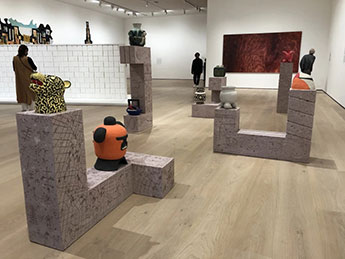
An installation view of “No Humans Involved” at the Hammer Museum, which was inspired by an essay by culture theorist Sylvia Wynter. (Carolina A. Miranda / Los Angeles Times) In May of 1992, the month after a jury in Simi Valley acquitted four LAPD officers of brutalizing Rodney King, and swaths of Los Angeles remained singed by the subsequent uprising, Jamaican cultural theorist Sylvia Wynter wrote a missive to her colleagues at Stanford University. “No Humans Involved,” as her open letter was titled, was in response to a radio news report about how the police often used the acronym “NHI” (No Humans Involved) to describe cases involving people on the fringes of society: Black people and Latinos, sex workers and the poor.
“Stephen Jay Gould argues that ‘systems of classification direct our thinking and order our behaviors,’” wrote Wynter at the time. “By classifying this category as N.H.I. these public officials would have given the police of Los Angeles the green light to deal with its members in any way they please.” The letter was a deeply erudite examination of the ways in which language, and the taxonomies it creates, affect how people might be accorded power or, inversely, denied their humanity. It also was a call to her fellow educators to consider the ways in which academia had supported these notions.
The ideas expressed in Wynter’s communiqué are ones that continuously echo in the culture. (A September essay in the Nation about Afropessimism, written by the beloved cultural critic Greg Tate, who died this week at 64, delved into similar themes of the less-than-human.) Her open letter has more directly inspired other cultural phenomena too — such as an ongoing exhibition at the Hammer Museum that likewise bears the title “No Humans Involved.”
Organized by Hammer associate curator Erin Christovale, with curatorial assistant Vanessa Arizmendi, the show brings together pieces by seven artists and collectives from around the world that dig into elements of what is considered human, inhuman and nonhuman. Though planned in advance of the COVID-19 pandemic and the uprisings of 2020, Christovale says its themes became more resonant.
“It was amazing to watch last year unfold and think about her text,” says Christovale of Wynter’s work. “The thing about the show is that the themes of it — around this idea of who is humanity in this Western society — I think those larger things, regardless of last year, really held up.”
The exhibition is small and its broad themes make it unwieldy in part, but it brings together some compelling works... — Carolina Miranda, Dec. 11, 2021


This post is an excerpt. Read the full article on the Los Angeles Times website.
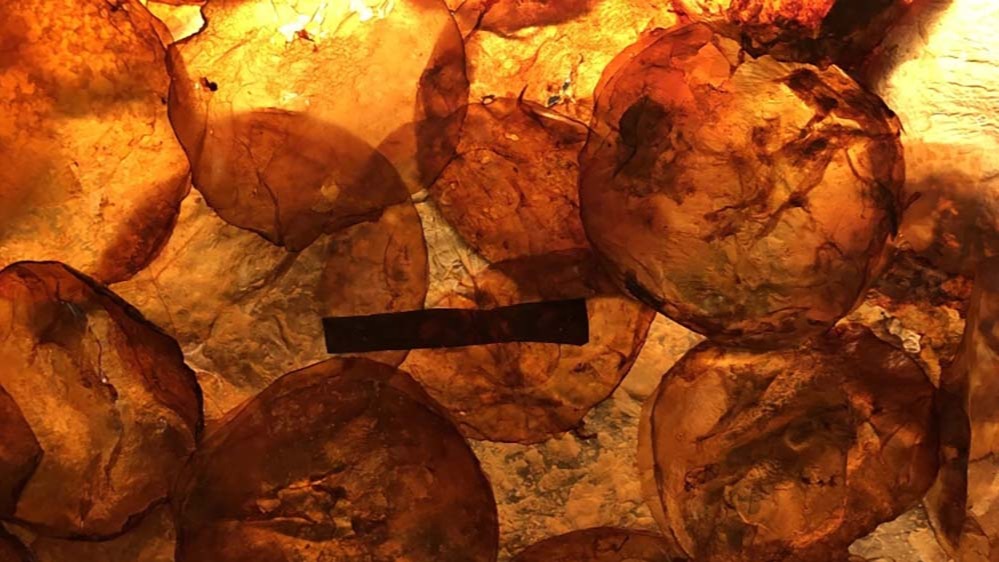
HEADER IMAGE: A detail from “No More Tears,” 2021, an installation by art collective Las Nietas de Nonó at the Hammer Museum. On Sunday, the pair will stage a performance inside the work. (Carolina A. Miranda / Los Angeles Times)
Stay engaged. Use #UCLAarts to stay connected.


