Mask observation: how artists are reinventing African masquerade
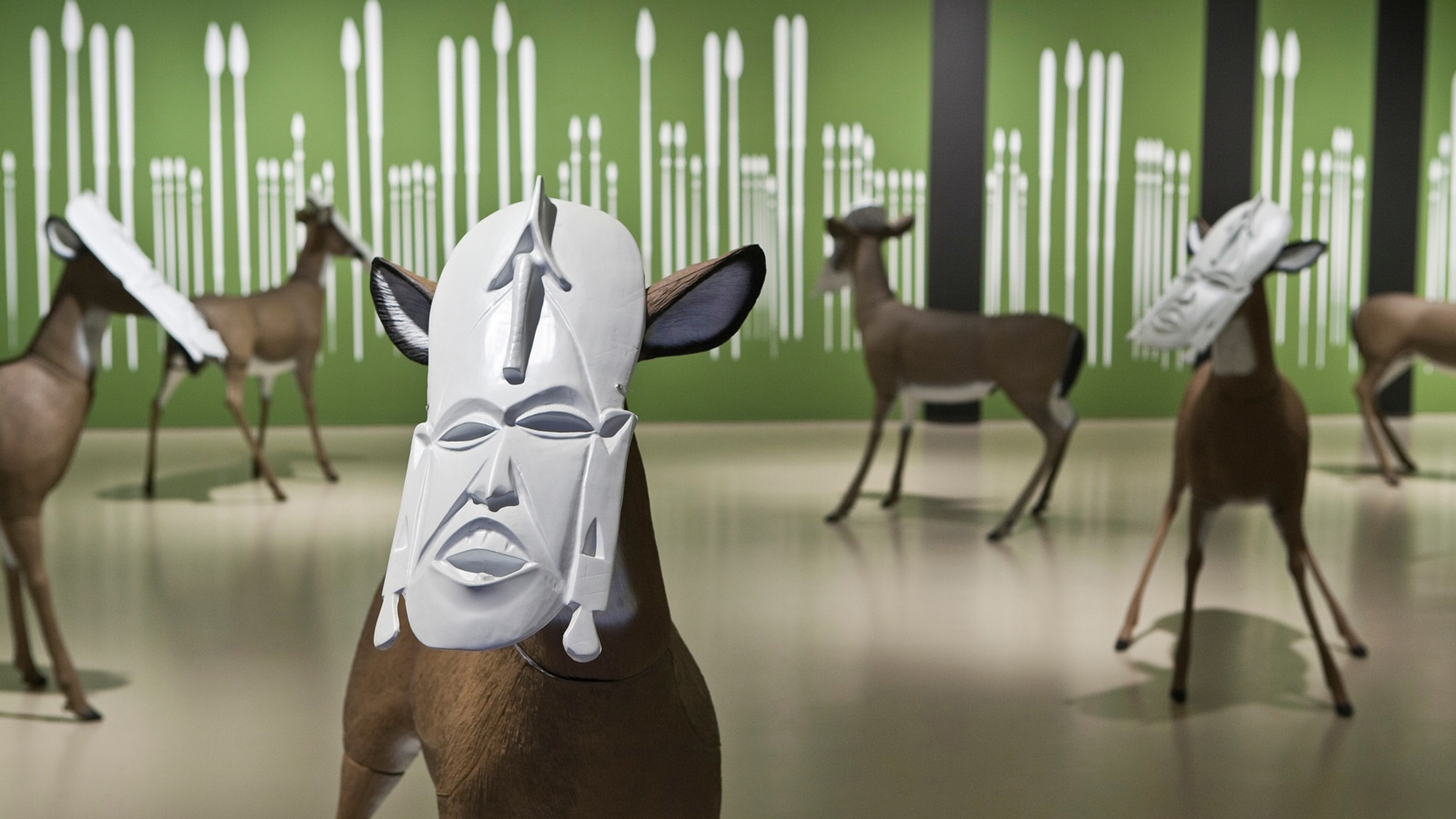
The Guardian reviews Disguise: Masks and Global African Art, an exhibition at the Fowler Museum that "brings together contemporary artists using the ancient form of masquerade to explore issues from politics to self-realisation."
“This debt we pay to human guile; with torn and bleeding hearts we smile,” wrote African-American poet Paul Dunbar in his 1896 poem, We Wear the Mask. About 100 years later the Fugees rapped, “Put the mask upon the face just to make the next day/ Feds be hawkin me, jokers be stalking me/ I walk the streets and camouflage my identity.” In both works, a mask is suggested to confront the indignity and oppression suffered on a daily basis in an unjust society.
But then there’s the testament of a woman in Nigeria, who participated in a masquerade as part of artist Wura-Natasha Ogunji’s video experiments on the transformative power of African masks: “Oh my God, it’s amazing! People moved out of my way. I could stand there and nobody was going to do anything to me or ask me for anything. I could move freely through space.”
In a parallel pursuit, fellow Nigerian artist/journalist Zina Saro-Wiwa sought a more personal form of catharsis after the execution of her father, author and environmentalist and human rights activist Ken Saro-Wiwa at the hands of military dictator General Sani Abacha in 1995. Ogunji and Saro-Wiwa are just two of the 12 artists featured in Disguise: Masks and Global African Art at UCLA’s Fowler Museum."— Jordan Riefe, December 30, 2015.

Read the full article at the The Guardian's website.