Lautner fans, be warned: Catherine Opie's 'The Modernist' will play like a horror movie
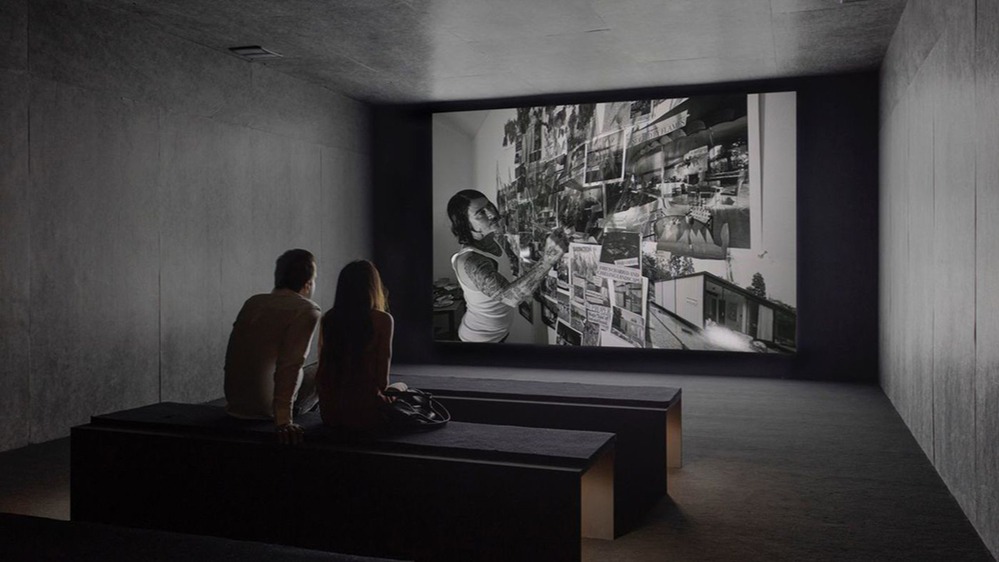
Professor Catherine Opie’s work has been exhibited extensively throughout the United States, Europe, and Japan. Her masterful portraiture and landscape photography studies the relationships between mainstream and infrequent society, with a large emphasis on sexual identity. The Modernist, Opie's first flim, is composed of over 800 black and white still images and captures the subject and his world from multiple angles and vantage points, creating a lyrical cinematic effect.
"Photographer Catherine Opie’s first film, “The Modernist,” follows the exploits of an artist-turned-arsonist who sets his sights on famous L.A. modernist homes.
Screening on a loop in a large, custom-designed theater inside the main gallery at Regen Projects, the 22-minute piece addresses our fascination with midcentury modern architecture and design.
The work is in the style of Chris Marker’s iconic 1962 film, “La Jetée,” told in a series of still images. Marker’s post-apocalyptic time-travel tale is well served by this disjunctive storytelling; the film feels like a series of documents from a strange time and place. Opie’s effort, while less disjointed, partakes of some of this estrangement, situating dystopian reality a little closer to home.
Played by Stosh, a.k.a. Pig Pen, a longtime friend and subject of Opie’s, the arsonist is a good Hollywood villain, plotting his targets out on a wall. (It’s worth noting that L.A.’s modern homes have often served as villain’s lairs in films such as “Diamonds Are Forever” and “Lethal Weapon 2.”) He clips newspaper articles about California fires and collages them with photographs of famous homes. Eventually he takes the next step, dousing houses, including John Lautner’s Chemosphere and Sheats-Goldstein residences, with lighter fluid and striking a match.
This progression from representation to reality — that art should become life — was the modern artist’s dream. It’s not unlike the American dream, the promise that one’s aspirations can be realized.
Some of L.A.’s postwar modernist houses were supposed to make this dream more attainable. They were to revolutionize home construction, making modern design and convenience mass-produced and affordable. Instead, these structures have become artifacts of a fantasy, mocking the current housing crisis from their hilltop perches."— Sharon Mizota, Jan. 22, 2018

This post is an excerpt, read the full article at the Los Angeles Times website.
Stay engaged. Use #UCLAarts to stay connected.


